A family budget planner is one of the most useful money management tools a household can have. It shows how much income you expect each month, where that money needs to go, and how much you can set aside for savings and future goals. If you have never made a household budget before, the free family budget planner templates below give you a ready-made structure so you can start tracking your money today. This guide includes nine downloadable budget planners, a simple step-by-step method for building a monthly family budget, practical saving tips, and answers to common questions.
Most families earn money to cover their needs and wants, but without a plan it is easy to lose track of where the money goes. A written budget gives you a clear overview of income and expenses, helps you avoid unnecessary borrowing, and makes it easier to save for big goals such as a home, a car, education, or a family holiday.
What Is a Family Budget Planner?
A family budget planner is a worksheet or spreadsheet that lists all of your household’s expected income and all of your expected expenses over a period, usually one month. It groups spending into categories such as housing, food, transportation, utilities, insurance, education, entertainment, and savings. By comparing planned amounts with actual spending, you can see quickly whether you are on track or overspending.
Benefits of Using a Family Budget Planner
- Clear view of your finances: you see exactly how much comes in and where every dollar goes.
- Less financial stress: knowing your bills are covered reduces worry and last-minute surprises.
- Helps you save: setting aside money for savings each month becomes a habit instead of an afterthought.
- Reduces debt: planning ahead lowers the need to borrow money for everyday needs.
- Better family communication: a shared budget helps everyone understand financial priorities and goals.
- Supports big goals: you can plan for large purchases or emergencies over time.
Common Family Budget Categories
Every family is different, but most monthly budgets include these categories. Use them as a checklist when you fill out a template.
- Income: salaries, business income, rental income, and other earnings
- Housing: rent or mortgage, property tax, maintenance, and home insurance
- Utilities: electricity, water, gas, internet, and phone
- Food: groceries and dining out
- Transportation: fuel, public transit, car payments, and repairs
- Health: insurance, medicines, and doctor visits
- Education and childcare: tuition, school supplies, and daycare
- Debt payments: credit cards, loans, and installments
- Savings and investments: emergency fund, retirement, and goals
- Personal and entertainment: hobbies, subscriptions, gifts, and outings
Free Family Budget Planner Templates
Preview each planner below and use the download button to save it or open its source.
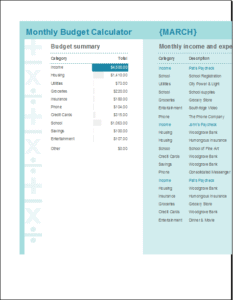
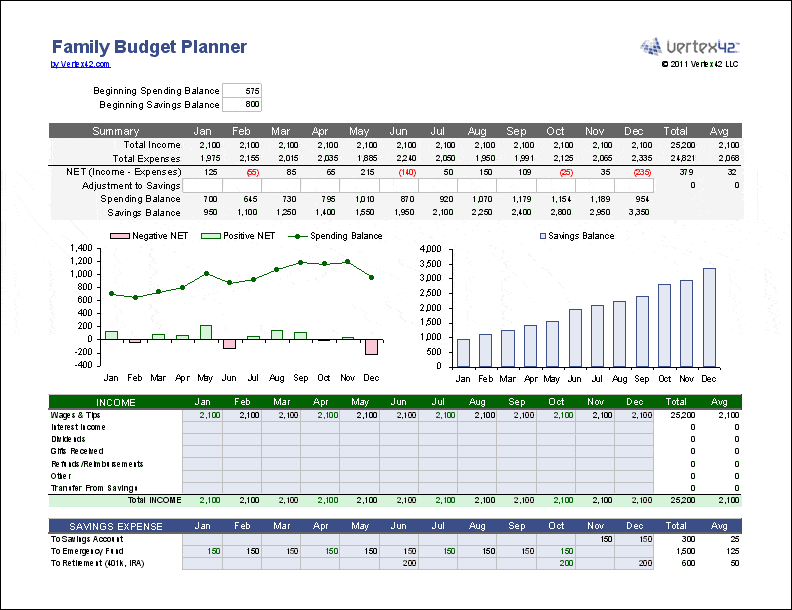
Family Budget Planner 1 – Simple Monthly Budget

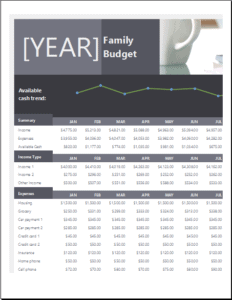
Family Budget Planner 2 – Household Expense Tracker
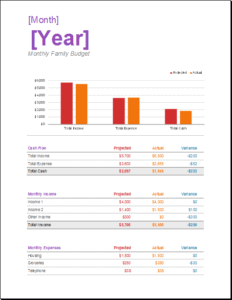
Family Budget Planner 3 – Income and Bills Worksheet
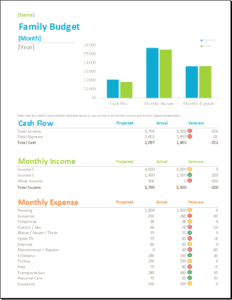
Family Budget Planner 4 – Monthly Spending Plan
Family Budget Planner 5 – Category-Based Budget Sheet
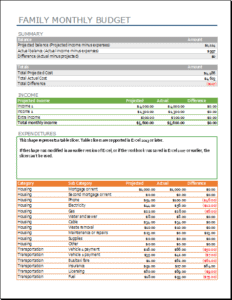
Family Budget Planner 6 – Savings and Expenses Planner
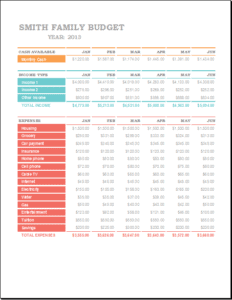
Family Budget Planner 7 – Printable Household Budget
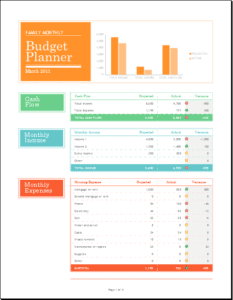
Family Budget Planner 8 – Excel Budget Spreadsheet
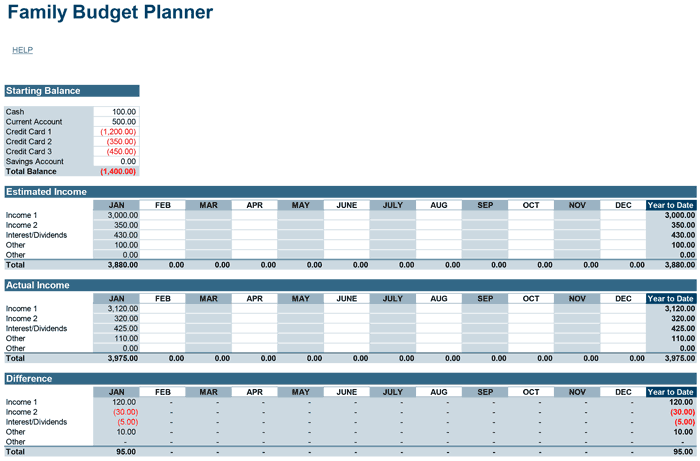
Family Budget Planner 9 – Detailed Family Budget Worksheet
How to Create a Family Budget Step by Step
- List all income. Add every source of monthly income for everyone in the household.
- Write down fixed expenses. Include rent or mortgage, insurance, loan payments, and subscriptions that stay the same each month.
- Estimate variable expenses. Look at past bank and card statements to estimate groceries, fuel, utilities, and shopping.
- Group expenses into categories. Assign a set amount to each category so your income is divided clearly.
- Set savings goals. Decide how much to put aside for emergencies, education, retirement, or big purchases.
- Compare income and expenses. If spending is higher than income, trim non-essential categories until the budget balances.
- Track actual spending. Update the planner during the month and review it at the end to see where you can improve.
Tips for Sticking to Your Budget
- Spend a few minutes at the start of each month to plan expected costs and income.
- Pay yourself first by moving savings out of your account as soon as you are paid.
- Build an emergency fund that covers a few months of essential expenses.
- Review subscriptions regularly and cancel the ones you no longer use.
- Involve the whole family so everyone understands the plan.
- Be flexible; adjust categories when your income or needs change.
Note: These templates are general budgeting tools and are not financial advice. For decisions about debt, investing, or taxes, consider speaking with a qualified financial professional.
Frequently Asked Questions (FAQs)
What is a family budget planner?
It is a worksheet that lists your household’s monthly income and expenses so you can plan spending, control costs, and save money for future goals.
Are these family budget planner templates free?
Yes. You can download or open each template for free and customize it for your household.
How often should I update my family budget?
Review it at least once a month, and update it whenever your income, bills, or family needs change. Weekly check-ins can help you stay on track.
How much of my income should I save?
A common guideline is to save around 20 percent of income, but the right amount depends on your situation. Start with whatever you can manage and increase it over time.
What is the difference between fixed and variable expenses?
Fixed expenses, such as rent, stay the same each month. Variable expenses, such as groceries or fuel, change from month to month.
Can I use these planners in Excel?
Yes. Several templates are spreadsheet based and can be edited in Microsoft Excel or Google Sheets, while others are printable sheets you can fill out by hand.
How do I get my family to follow the budget?
Share the plan, explain the goals, and set aside a small personal spending allowance for each person. When everyone understands the purpose, sticking to the budget becomes much easier.
Final Thoughts
A family budget does not need to be complicated. Pick a planner that fits your household, fill in your income and expenses, and review it every month. Small, steady habits will help you reduce stress, avoid debt, and reach your financial goals.


You must be logged in to post a comment.