A household budget is the simplest tool a family has for staying in control of money. Without one, it is easy to reach the end of the month wondering where your income went. With one, every dollar has a purpose: rent or mortgage, groceries, utilities, transport, school costs, savings and the occasional treat. This page brings together 13 free household budget templates in Excel and Word so you can start planning your family finances today, whether you want a simple one-page sheet or a detailed yearly planner.
What Is a Household Budget Template?
A household budget template is a ready-made worksheet that lists your income sources and your expenses in organized categories. You fill in expected amounts, then compare them with what you actually spend. Most templates calculate totals and the difference for you, so you can see immediately whether you are ahead, on target or overspending. Templates are usually built in Excel because spreadsheets handle formulas well, but printable Word versions are just as useful if you like to write by hand.
Why Every Family Needs a Household Budget
Many people skip budgeting because it sounds time-consuming. In reality, the first budget takes an hour or two, and every month after that takes only a few minutes. The benefits are worth it:
- Control over spending: you see exactly where money goes and can trim waste before it happens.
- Less debt: planned spending reduces the need for credit cards, loans and overdrafts.
- Stronger savings: you can set aside money for an emergency fund, a new car, a home deposit or education.
- Less stress and fewer arguments: when everyone in the family sees the same plan, money conversations become calmer.
- Clear goals: a written budget turns vague wishes into monthly targets you can measure.
Free Household Budget Templates You Can Download
Every template below is free. Click the Download button under the design you like, unzip the file, and open it in Excel or Word.
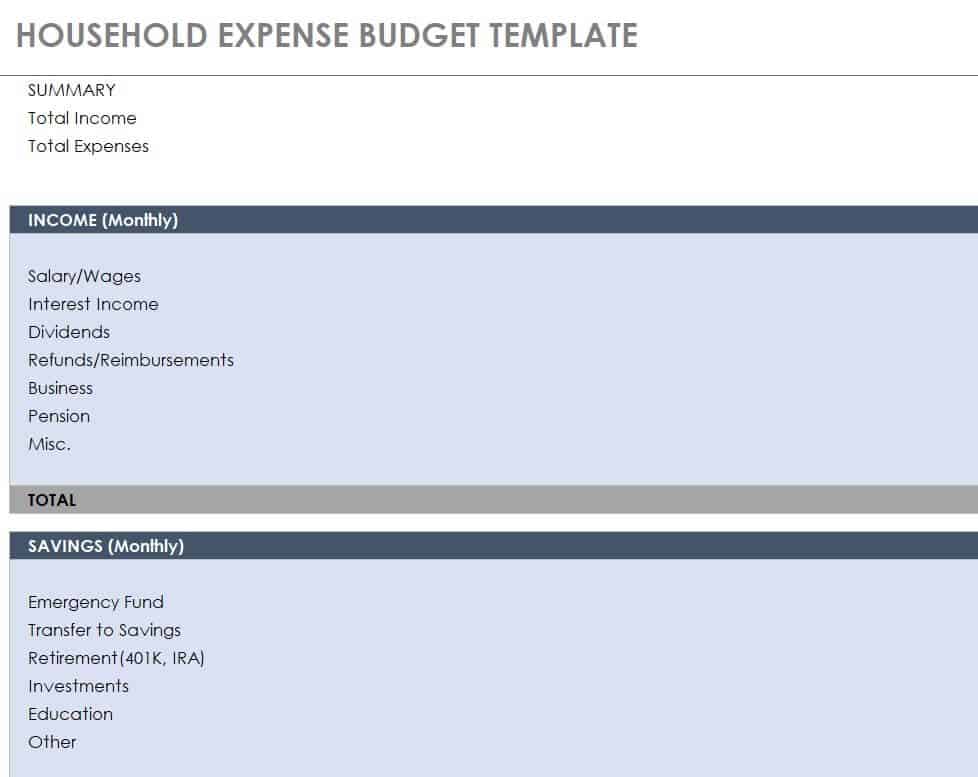
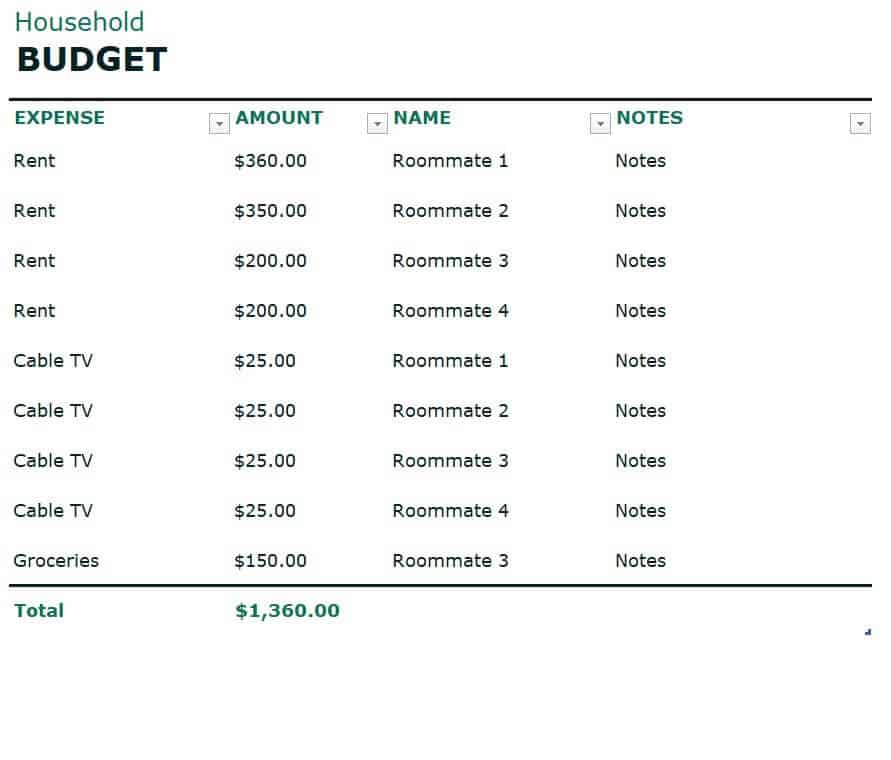
Household Expense Budget Template
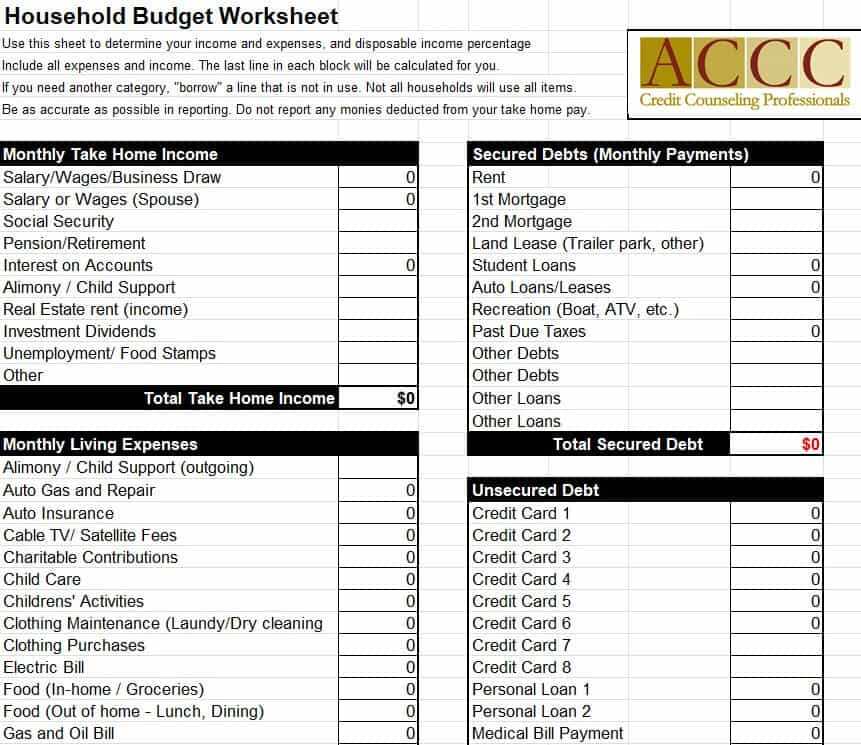
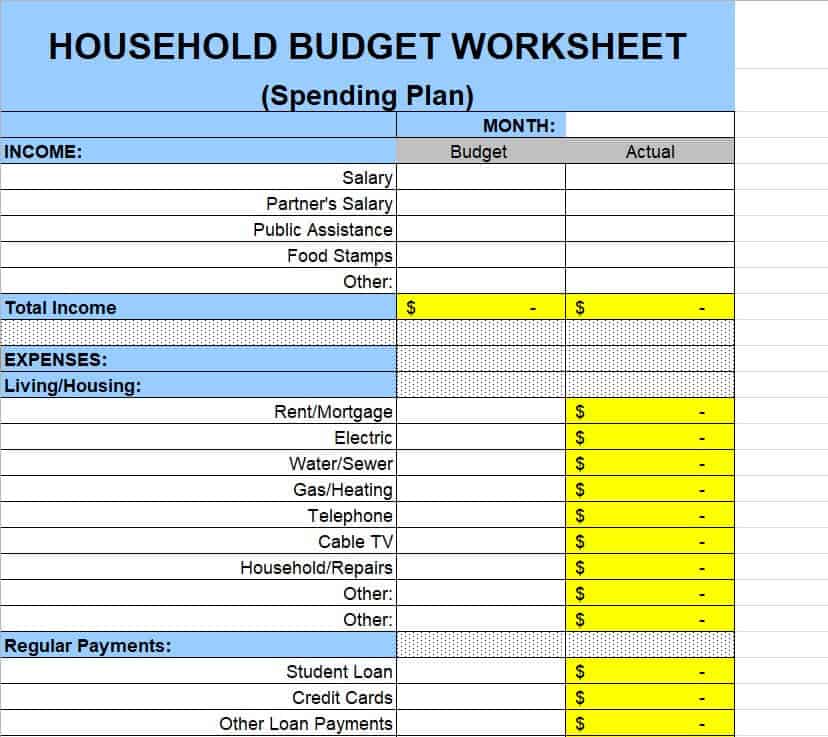
Household Budget Excel Worksheet
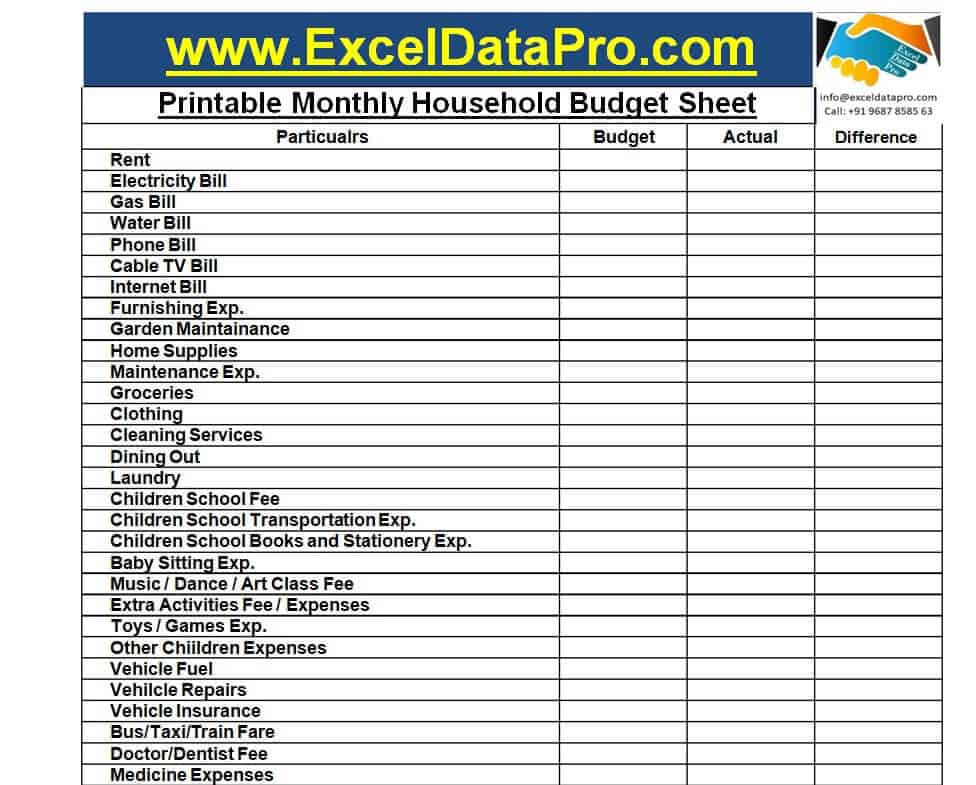
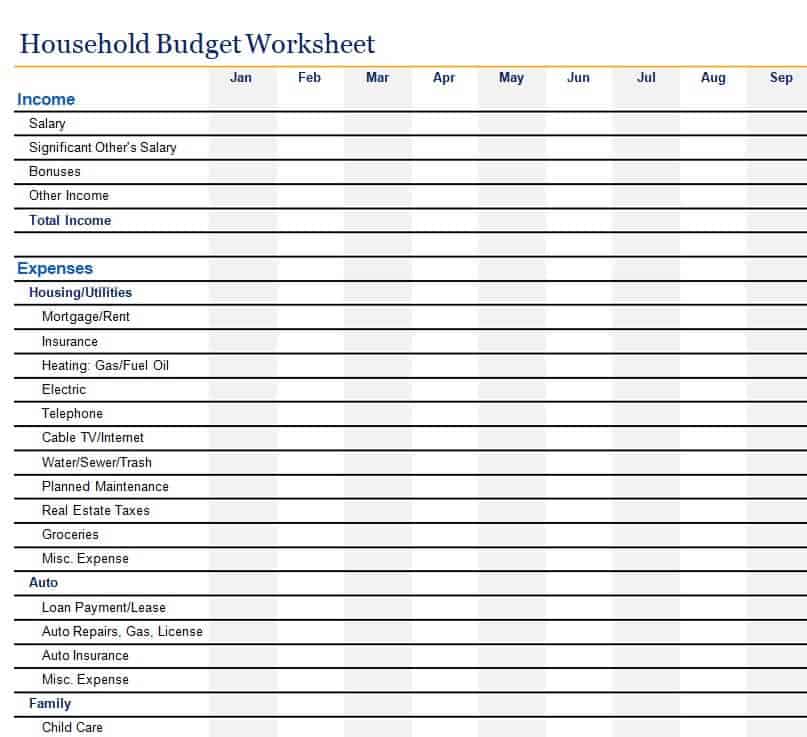
Free Printable Household Budget Sheet Template WORD
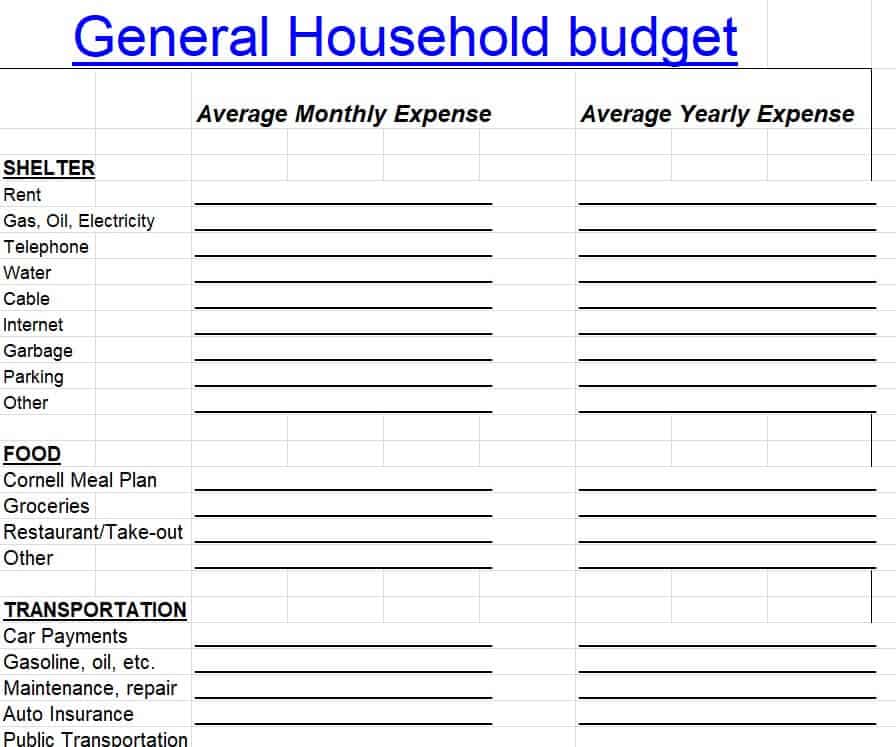
General Household Budget Excel Template
Free Editable Household Budget Worksheet Template
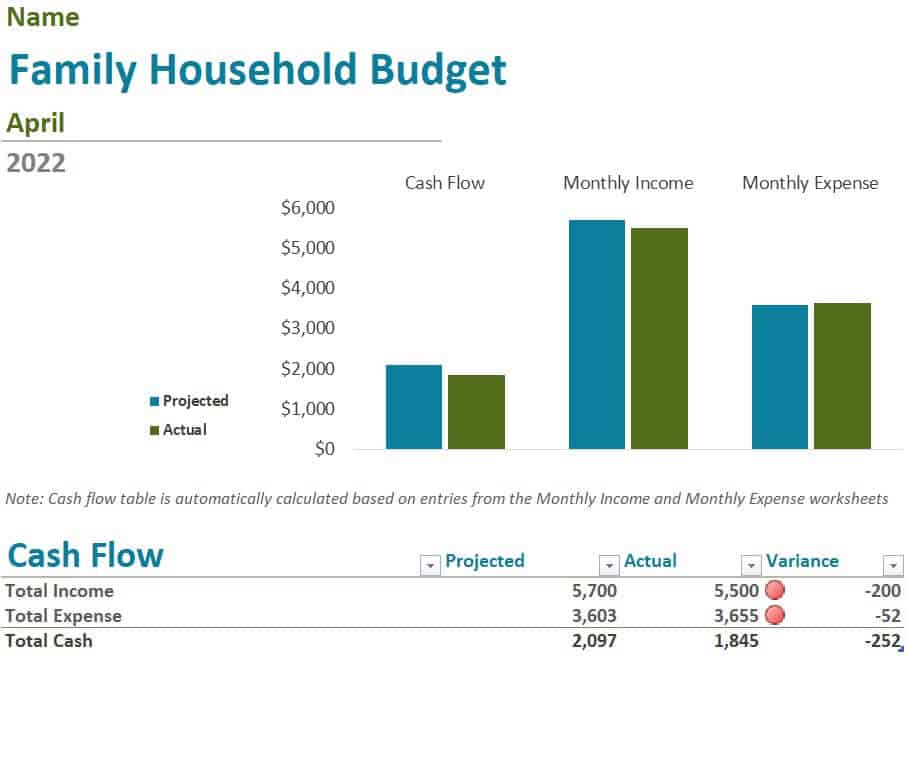
Sample Family Household Budget
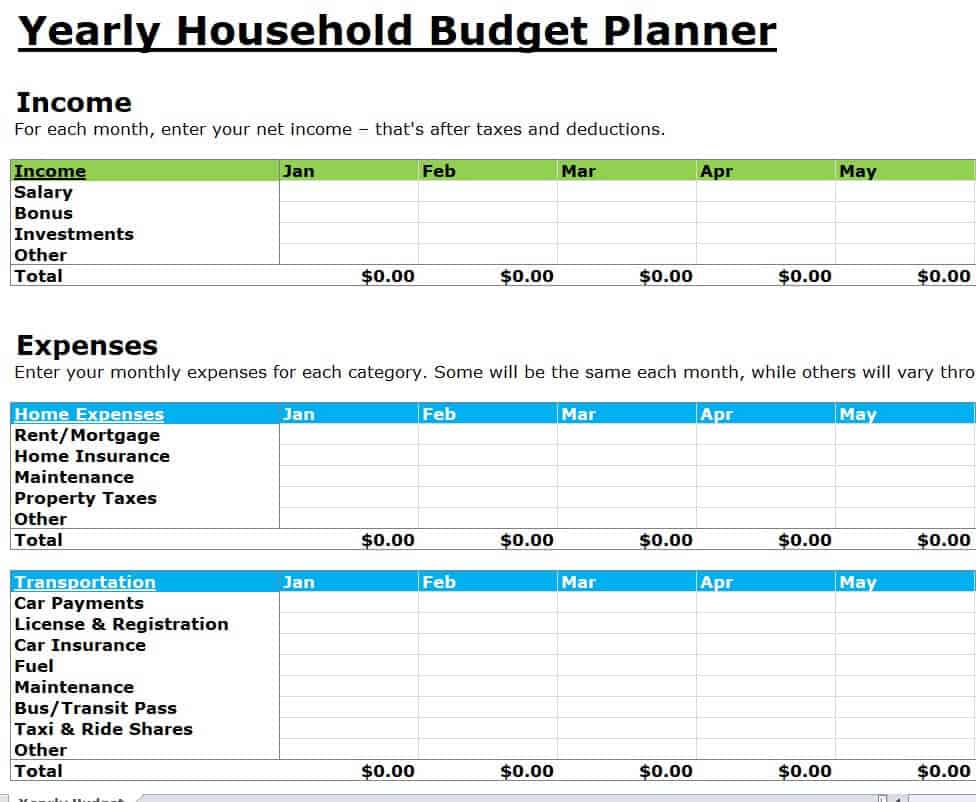
Yearly Household Budget Planner Example
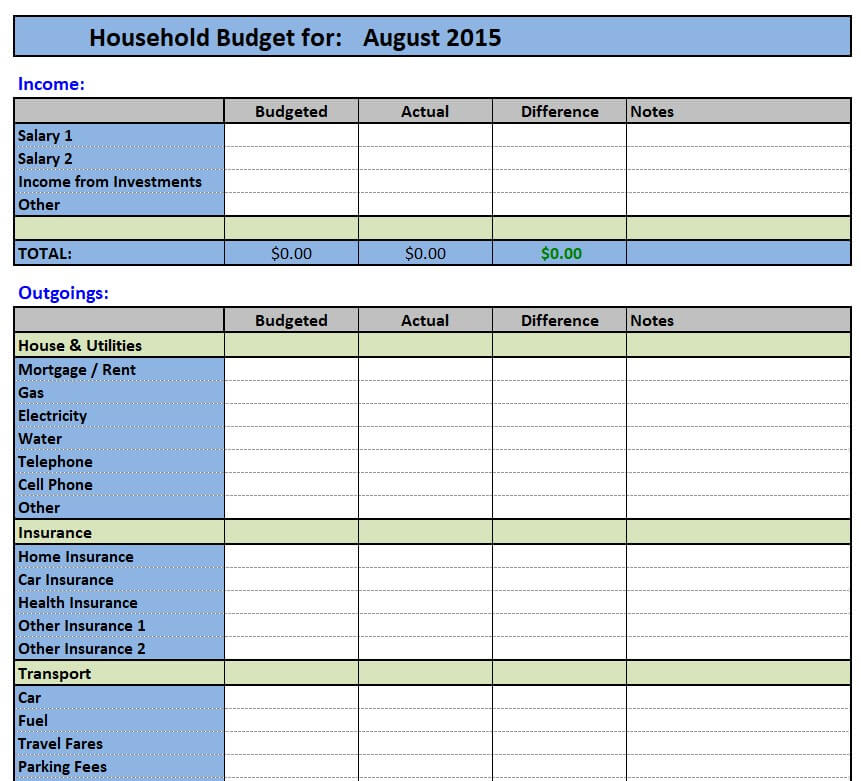
Monthly Household Budget Template in XLSX Format
Household Budget Worksheet Template in DOC Format
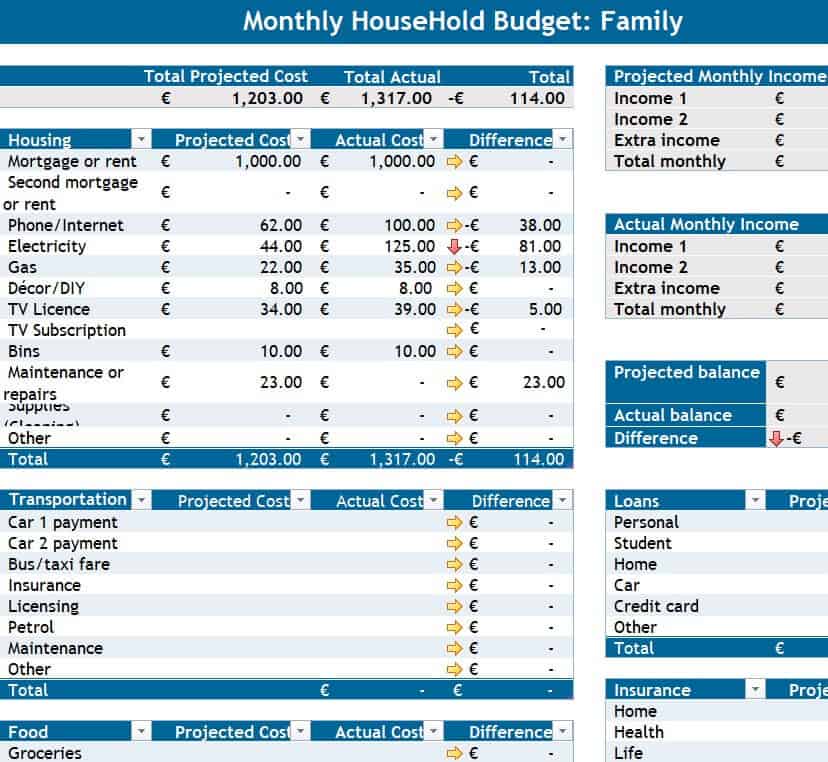
Monthly Family Household Budget Template in Excel
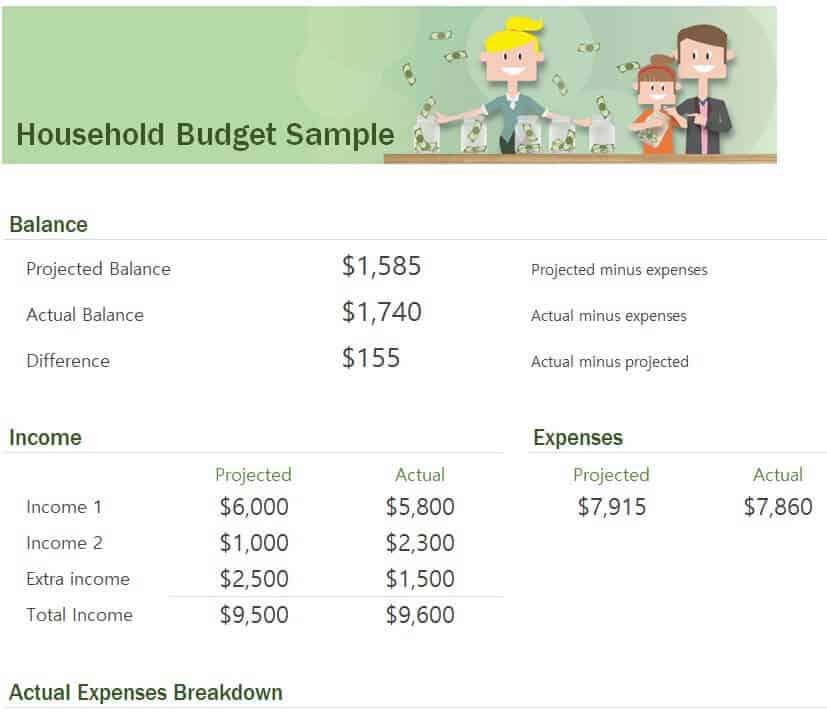
Practical Household Budget Sample
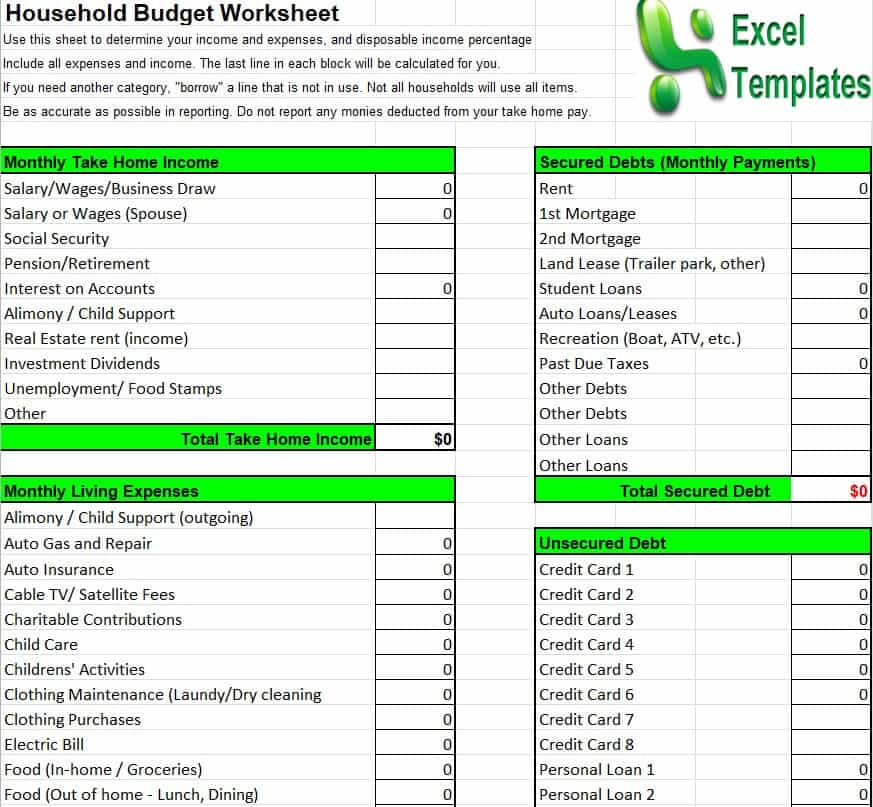
Online Household Budget Excel Worksheet
Simple Household Budget Template
What to Include in a Household Budget
A good family budget covers every category where money comes in or goes out. Use this checklist when you customize a template:
- Income: salaries, business income, rental income, benefits, side jobs and any irregular earnings averaged over the year.
- Housing: rent or mortgage, property tax, insurance, repairs and maintenance.
- Utilities: electricity, gas, water, internet, phone and TV subscriptions.
- Food: groceries, school lunches and eating out.
- Transport: fuel, public transit, car payments, insurance and servicing.
- Health and education: insurance, medicines, doctor visits, tuition and supplies.
- Debt payments: credit cards, personal loans and student loans.
- Savings and goals: emergency fund, retirement, vacations and big purchases.
- Personal and fun: entertainment, hobbies, gifts and clothing.
How to Make a Household Budget Step by Step
- Add up your income. Use your take-home pay, not the gross amount, and average any irregular income.
- List fixed expenses. These are bills that stay the same each month, such as rent, insurance and loan payments.
- Estimate variable expenses. Look at the last two or three months of bank and card statements to estimate groceries, fuel and utilities.
- Set savings goals first. Decide how much to save each month and treat it like a bill you must pay.
- Subtract expenses from income. If the result is negative, trim flexible categories such as dining out or subscriptions.
- Track actual spending. Enter real amounts weekly so you can compare them with the plan.
- Review and adjust monthly. Life changes, so update the budget when prices, income or family needs change.
Popular Budgeting Methods to Try
Some families like a clear rule to follow. The 50/30/20 method assigns roughly half of after-tax income to needs, thirty percent to wants and twenty percent to savings and debt repayment. Zero-based budgeting gives every dollar a job until income minus expenses equals zero. The envelope method sets a cash limit for categories such as groceries and entertainment. Any of these can be built into the Excel templates above by adding a column for your target percentage or limit.
Tips to Stick to Your Budget
- Review the budget together as a family at least once a month.
- Build a small buffer for surprises so one unexpected bill does not derail the plan.
- Automate savings and bill payments to avoid late fees and missed goals.
- Use cash or a separate account for discretionary spending to make limits easier to see.
- Celebrate milestones, such as paying off a card or reaching a savings target, to stay motivated.
- Keep last year’s budget to help you predict seasonal costs like holidays and school fees.
Frequently Asked Questions (FAQs)
What is the best household budget template for beginners?
The simple household budget template and the general Excel template are the easiest starting points. They use a small number of categories and calculate totals automatically, so you can begin without any spreadsheet skills.
Are these household budget templates free to use?
Yes. All templates on this page are free to download, edit and print for personal and family use. Just click Download, unzip the file and open it.
How do I create a monthly household budget in Excel?
Open a blank sheet, list your income and each expense category in rows, and add columns for planned and actual amounts. Use the SUM function for totals and subtract expenses from income to see what is left. Or download one of our Excel templates that already has the formulas set up.
How much of my income should I save each month?
Many people aim for about 20 percent of take-home pay, but the right amount depends on your goals, debts and living costs. If 20 percent is not realistic, start with a smaller amount and increase it as your budget improves.
How often should I update my household budget?
Track spending weekly and review the whole budget once a month. Do a bigger review whenever your income, rent, family size or major expenses change.
Can I use the Word templates on my phone or tablet?
Yes. Word and Excel files can be opened with the mobile apps or with free online editors. If you prefer, print a template and fill it in by hand.
What if my spending is higher than my income?
Start by identifying non-essential categories you can reduce, such as dining out, subscriptions and impulse buys. Then look for ways to lower fixed costs, negotiate bills, or increase income. Tracking actual spending in the template will show you exactly where to act first.
Final Thoughts
A household budget does not have to be complicated to work. Pick a template that matches your comfort level, fill it in honestly, and review it every month. Within a few months you will know your spending patterns, feel more confident about your money, and be far closer to the savings goals that matter most to your family.


You must be logged in to post a comment.