A shipping policy template helps an online store explain what happens after an order is placed. Customers need to distinguish order processing from delivery, understand available destinations and charges, and know whom to contact when a shipment needs attention.
The 12 templates and examples below include four editable direct downloads. Adapt every time estimate and service description to your actual fulfillment process before publishing. A clear policy should agree with checkout information, order confirmations, and the steps your support team can carry out when an address is wrong, tracking is delayed, or a parcel arrives damaged.
Go to the two editable templates and preview images, or continue below for the wider collection and practical guidance.
What Is a Shipping Policy?
A shipping policy is a page or document that explains how a business ships orders. It covers where you ship, which carriers you use, how long delivery takes, how much shipping costs, and what happens if a package is delayed, lost, or damaged. It is usually linked in the website footer, on product pages, and at checkout.
For freight shipments, a bill of lading documents transport details separately from the customer-facing policy.
Benefits of Having a Shipping Policy
- Sets expectations: Customers know delivery times and costs before they order.
- Reduces disputes: Clear terms help resolve delays and damages fairly.
- Increases conversions: Transparent shipping details reduce cart abandonment.
- Cuts support workload: Fewer “where is my order?” messages.
- Supports compliance: Some marketplaces and payment processors require a shipping policy.
Link the delivery terms with a clear return policy so customers know what happens after an order arrives.
What to Include in a Shipping Policy
- Processing time before an order ships
- Shipping methods and carriers (standard, expedited, overnight)
- Delivery time estimates for each method
- Shipping rates or free shipping thresholds
- Shipping regions, including international shipping and customs or duties
- Order tracking information
- Restrictions on items, such as hazardous goods or PO boxes
- Handling of lost, delayed, or damaged packages
- Address change and cancellation rules
- Contact details for shipping questions
Note: These templates are general examples and not legal advice. Consumer protection, tax, and customs rules vary by country and state, so have your policy reviewed by a qualified professional if needed.
Keep dispatch information consistent with the accepted sales order.
2 New Editable Templates with Word and PDF Downloads
Choose from two different designs below. Each includes an editable Word file, a matching printable PDF, and a preview of the actual template. Older entries marked Preview Only are reference images without a downloadable template file.
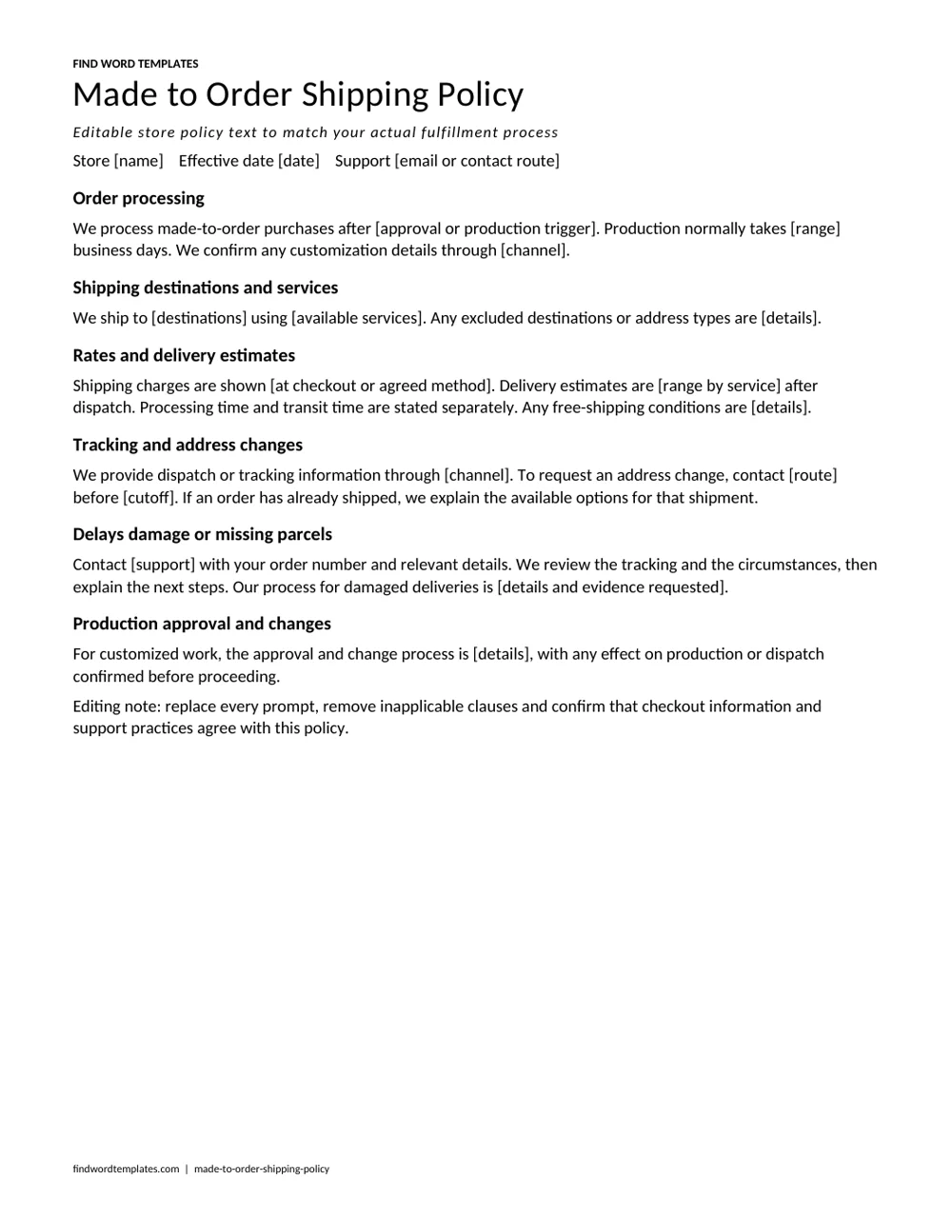
Made to Order Shipping Policy
A made-to-order store shipping policy with complete editable clauses for processing, dispatch, rates, tracking and exceptions.
Download Editable Word Template Download Printable PDF
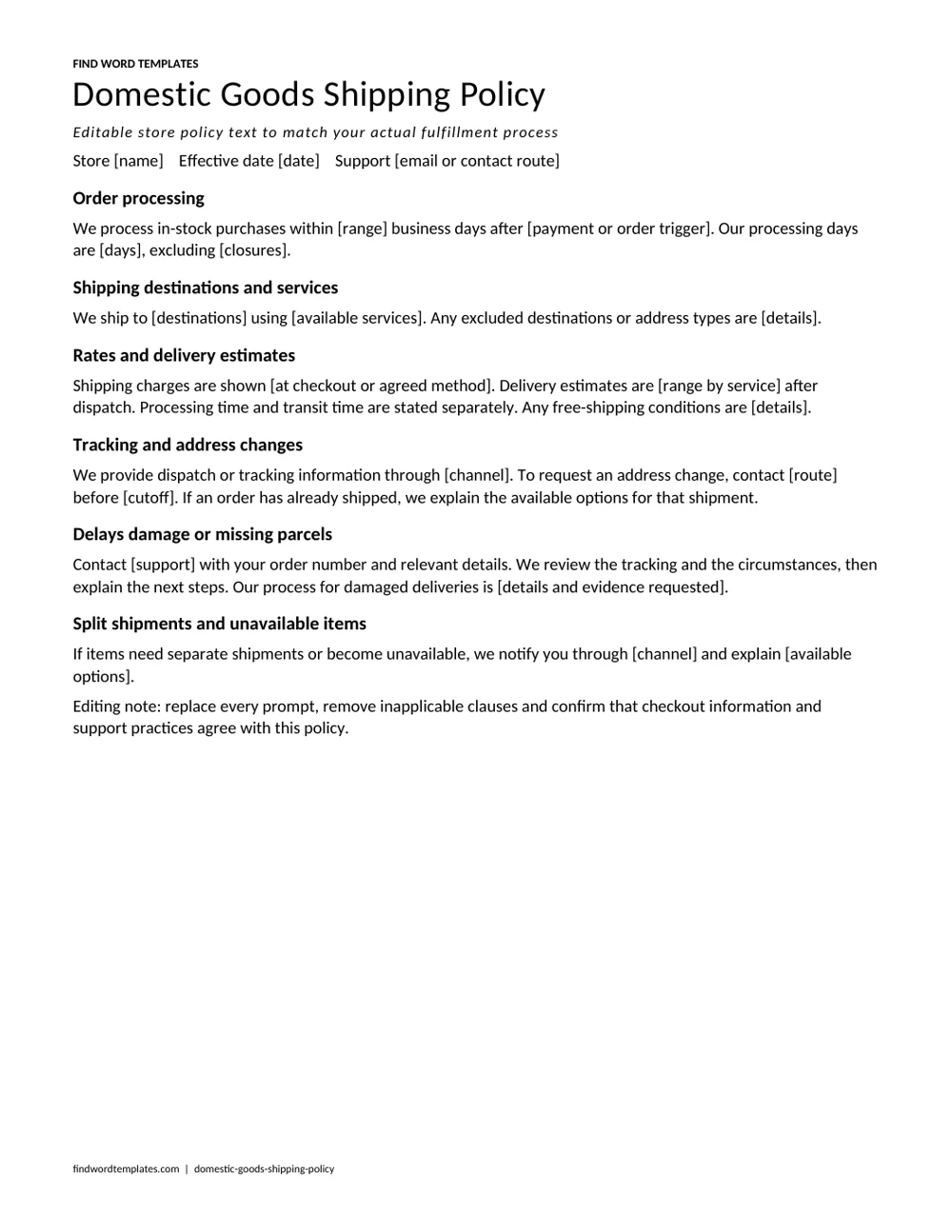
Domestic Goods Shipping Policy
A domestic in-stock goods shipping policy with complete editable clauses for processing, dispatch, rates, tracking and exceptions.
2 Editable Templates with Direct Downloads
Choose one of the two layouts below to suit your needs. Each preview shows the actual editable file, which you can download directly.
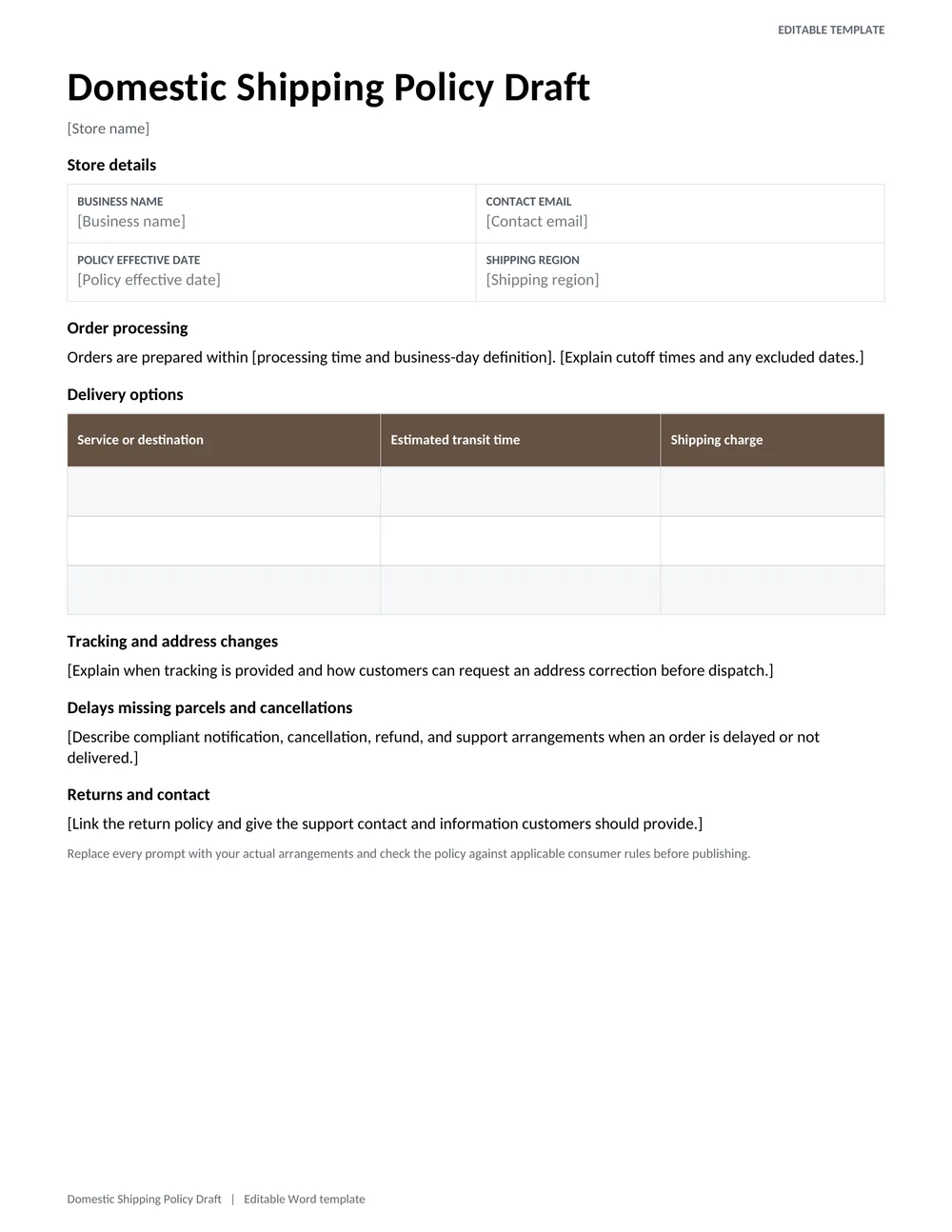
Domestic Shipping Policy Draft
A store policy draft with editable processing times, delivery options, prices, tracking, address corrections, and delay handling.
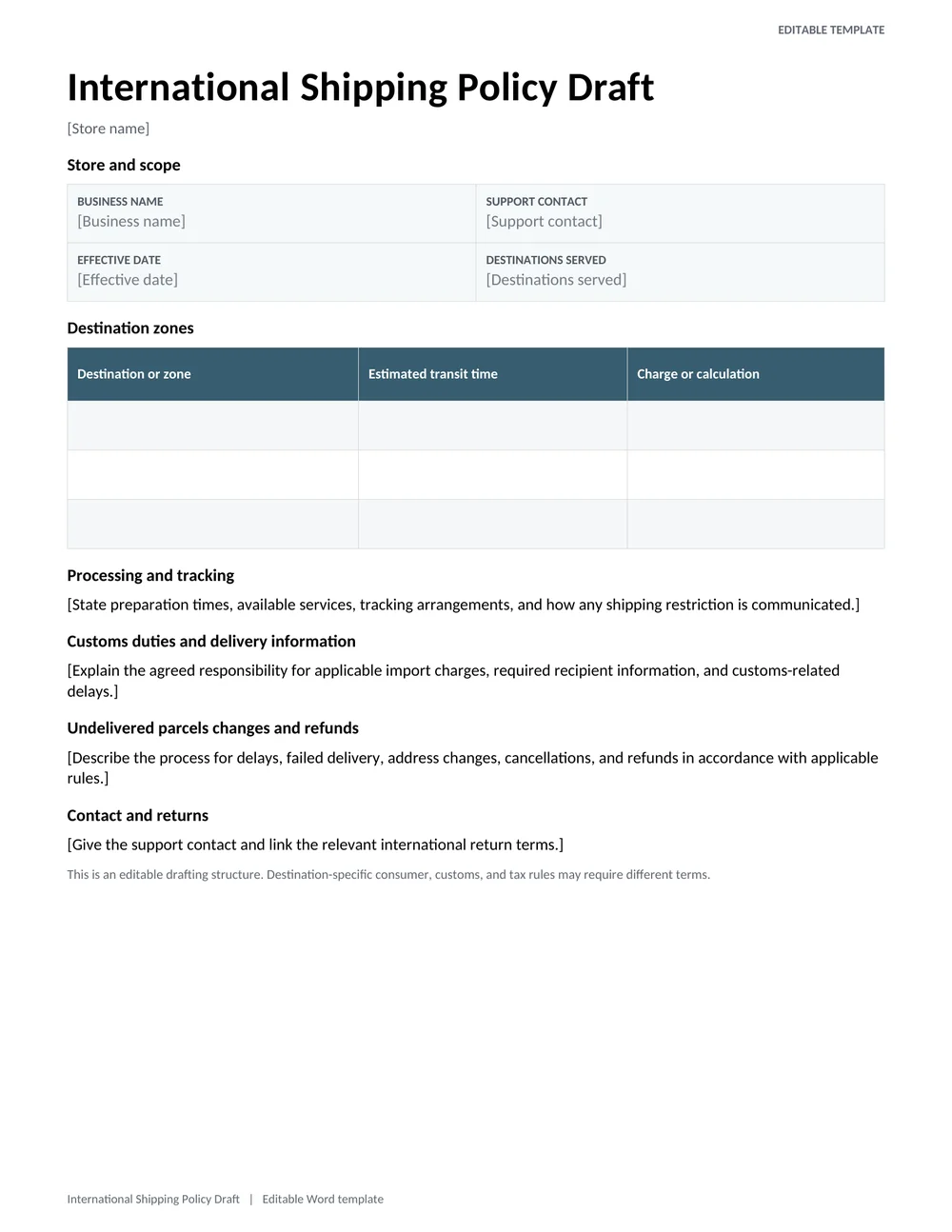
International Shipping Policy Draft
A separate cross-border policy draft covering destination zones, processing, customs information, delivery estimates, tracking, and support.
Free Shipping Policy Templates and Examples
Each download button leads to the source of the example on the provider’s website.
Shipping Policy Template 1


Shipping Policy Template 2

Shipping Policy Template 3

Shipping Policy Template 4

Shipping Policy Template 5

Shipping Policy Template 6

Shipping Policy Template 7 (Preview Only)

Shipping Policy Template 8

How to Write a Shipping Policy
- Decide where you ship. List domestic and international destinations, and any exclusions.
- Set processing times. Say how long it takes to pack and hand orders to the carrier, for example 1 to 2 business days.
- List shipping options. Include carriers, service levels, and estimated delivery windows.
- Explain costs. State flat rates, weight-based rates, or free shipping thresholds.
- Address international orders. Mention customs, duties, and taxes that the buyer may need to pay.
- Describe tracking. Explain when and how customers receive tracking numbers.
- Cover problems. Say what happens with delays, lost packages, damaged items, or wrong addresses.
- Add contact information. Give an email or phone number for help.
- Review and publish. Have a professional check it, then link it in your footer and checkout page.
Sample Shipping Rate Table
| Method | Estimated delivery | Example cost |
|---|---|---|
| Standard | 5 to 7 business days | $5.99 |
| Expedited | 2 to 3 business days | $12.99 |
| Overnight | 1 business day | $24.99 |
| Free shipping | 5 to 7 business days | On orders over $50 |
The table above is an example only. Set your own rates based on your carrier costs and margins.
Separating Processing Time From Delivery Time
A shipping policy should help a customer understand what happens after an order is placed. Separate processing time from carrier transit time. Processing covers the work before dispatch, such as confirming the order, preparing the item, and packing it. Transit begins when the shipment enters the carrier’s network. If these stages are merged into a single vague statement, a customer may reasonably expect an arrival date the store cannot support.
For an illustrative order, a store might need two business days to prepare an item and the selected service might have an estimated three-business-day transit period. That does not mean every order arrives five calendar days after purchase. Weekends, order cutoffs, holidays, and the actual carrier arrangement can affect timing. Use a worked example only when it matches the store’s real operation and explain whether the stated time is an estimate or a commitment.
The domestic policy draft above is a starting point for orders within the store’s defined home market. The international draft adds a different set of questions about destinations, customs-related handling, and cross-border communication. Do not publish both unchanged if they describe services the business does not offer. Remove unused options and confirm every destination, carrier reference, and charge with the people who fulfill the orders.
Make business-day wording explicit. Identify the order cutoff where it matters, explain how preorders or made-to-order items differ, and state how customers will receive a dispatch update. If some products ship separately, explain that before the customer assumes a missing parcel means an incomplete order. Keep the policy consistent with product pages and checkout, especially for items with longer preparation times.
For U.S. businesses, the FTC’s merchandise-order rule guidance explains obligations concerning shipping representations, delay notifications, customer consent, and refunds. A store should not assume its policy wording overrides those obligations. Businesses should check the rules applicable to their actual markets before setting delay and cancellation procedures.
Making the Exception Process Clear to Customers
Explain what a customer should do when an address is wrong before dispatch. Provide a contact route and ask for the order reference, while making clear that an address change may not be possible once the parcel has been handed over. Do not promise that a carrier can redirect every shipment. The policy should reflect the services available and the store’s ability to make changes at each stage.
For tracking, distinguish a created label from a parcel that has actually been accepted by the carrier. Customers may see a reference before movement appears. Explain the normal process without inventing a guaranteed update interval. If an order remains unshipped beyond the expected period, the customer needs a useful support route and an accurate response rather than a repeated instruction to keep refreshing the tracking page.
For a damaged or apparently missing delivery, describe how to contact the store and which information will help it investigate. An order number, a description of the problem, and relevant photographs may be useful depending on the situation. Avoid asking customers to post full addresses or payment information in public comments. Keep the investigation procedure distinct from any rights or obligations that apply to the transaction.
International wording should identify how duties, taxes, customs-related charges, and delivery restrictions are communicated for the actual service offered. Do not make a blanket claim that every destination follows the same process. Check what the seller, carrier, and customer are expected to handle, then express those arrangements clearly. Where a charge cannot be determined in advance, explain how the customer can obtain the relevant information.
Before publishing the revised policy, run a test order through the customer journey. Compare the shipping page, product description, cart estimate, checkout charge, confirmation email, and dispatch message. Resolve differences in timing or price language. Date material revisions internally and give support staff the current version so a customer receives the same explanation regardless of which page or team they contact.
Tips for a Better Shipping Policy
- Use plain, friendly language that customers understand.
- Be honest about delivery times, and add a buffer for busy seasons.
- Keep it easy to find with a footer link and product page mention.
- Update it whenever carriers, rates, or regions change.
- Keep your shipping and return policies consistent with each other.
A clear shipping policy protects your business and reassures customers. Review the examples above, write a policy that fits your operations, and publish it where every shopper can find it.
Frequently Asked Questions (FAQs)
What is a shipping policy?
It is a document explaining how a business ships orders, including delivery times, costs, regions, and how problems are handled.
Is a shipping policy required by law?
Requirements vary. Many jurisdictions require clear disclosure of delivery terms, and platforms like payment processors and marketplaces often require one. Check local rules or ask a legal professional.
Where should I post my shipping policy?
Link it in your website footer, product pages, cart, and checkout, so customers can see it before paying.
Should I include a return policy in the same document?
You can, but many stores keep separate shipping and return policies. Link them to each other so customers can find both.
How do I estimate delivery times?
Add your processing time to the carrier’s transit time, then include a small buffer for delays.
What if a package is lost or damaged?
State how customers should report the problem, the time limit for claims, and whether you will reship or refund.
Can I use these templates for my online store?
Yes, as a starting point. Adapt them to your carriers, rates, and locations, and review for legal accuracy.
What if the shipping policy and checkout show different information?
Review the difference and correct the outdated wording so both describe the same service. Keep any order-specific communication traceable and explain relevant changes to affected customers rather than relying on a general page edit to resolve the discrepancy.



You must be logged in to post a comment.