When a firearm changes hands between private parties, a written bill of sale is one of the simplest ways to document what happened. It records who sold the firearm, who bought it, when the sale took place, what was sold and for how much. For the seller, it is proof that ownership was transferred. For the buyer, it is proof of purchase and a record of the firearm’s identifying details.
This page offers 12 free firearm bill of sale templates, including forms for pistols and state-specific examples for Texas, South Carolina, North Carolina, Georgia, Florida and Arizona. Use them as a starting point, and always follow the federal, state and local laws that apply to firearm transfers where you live.
What Is a Firearm Bill of Sale?
A firearm bill of sale is a written document that records the sale or transfer of a firearm from one person to another. It identifies the parties and the firearm and states the price and date. Once signed by both sides, it serves as evidence that the seller no longer owns the firearm and that the buyer has taken ownership.
The document can be used for rifles, shotguns, pistols and other firearms. Requirements differ widely from one state or country to another, and some places require additional steps beyond a bill of sale, such as background checks, transfers through a licensed dealer, waiting periods or registration.
A business letter format can help organize a written request to the relevant authority when you need clarification about documentation.
Why a Bill of Sale Matters
- Proof of transfer: It shows the date the seller gave up ownership, which can protect the seller if the firearm is later used or lost.
- Proof of ownership for the buyer: It documents the purchase and the firearm’s details.
- A clear record: The price, condition and terms of sale are written down.
- Supports compliance: Many states encourage or require a record of private transfers.
- Helps with disputes: A signed record is easier to rely on than memory.
Keep a separate payment receipt for the amount received; it documents payment without replacing the required transfer paperwork.
What to Include in a Firearm Bill of Sale
- Full legal names, addresses and contact details of the seller and the buyer.
- Date and location of the sale.
- Description of the firearm: make, model, caliber or gauge, type, and serial number.
- Purchase price and payment method.
- A statement of condition, such as sold “as is” or with any stated warranty.
- Identification details of the parties, such as driver’s license or permit numbers, when required.
- Seller’s statement that they are the lawful owner and have the right to sell.
- Buyer’s statement that they are legally eligible to own a firearm.
- Signatures of both parties, and a witness or notary if required by local law.
Important Legal Cautions
Firearm laws are strict and vary widely. Before any sale, both parties should confirm what applies in their location. Common requirements include:
- Verifying that the buyer is legally allowed to own a firearm.
- Completing the transfer through a licensed dealer or background check, where required.
- Observing age, residency and waiting-period rules.
- Following registration, permit or reporting requirements.
- Not transferring to someone you know or suspect is prohibited from owning a firearm.
A bill of sale does not replace any of these legal requirements.
12 Free Firearm Bill of Sale Templates
Click any preview to open the full-size image where it is linked, or use the download button under each form.
Texas Firearm Bill of Sale
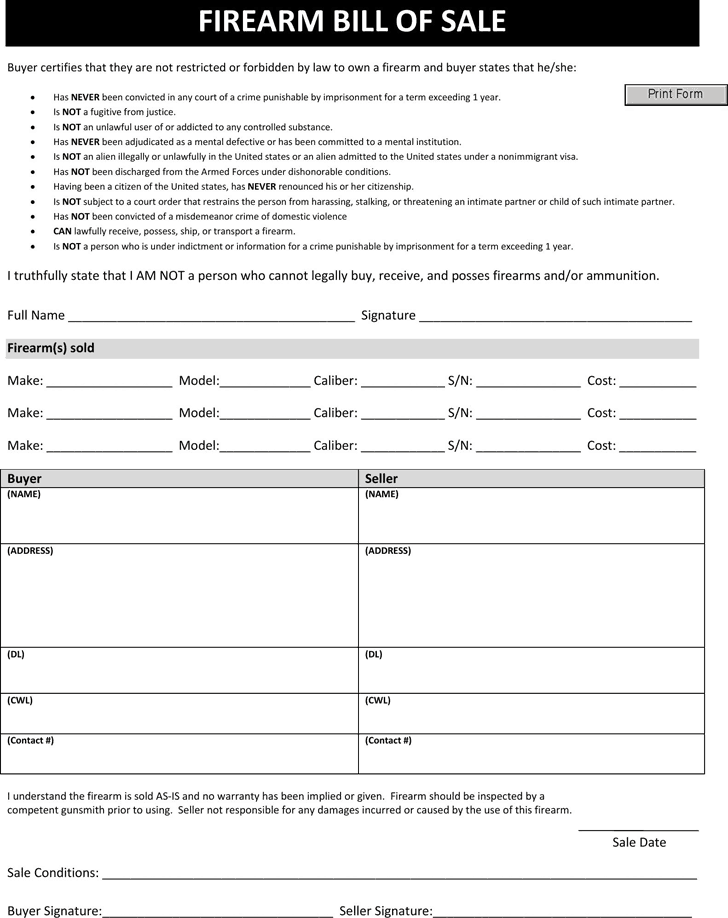

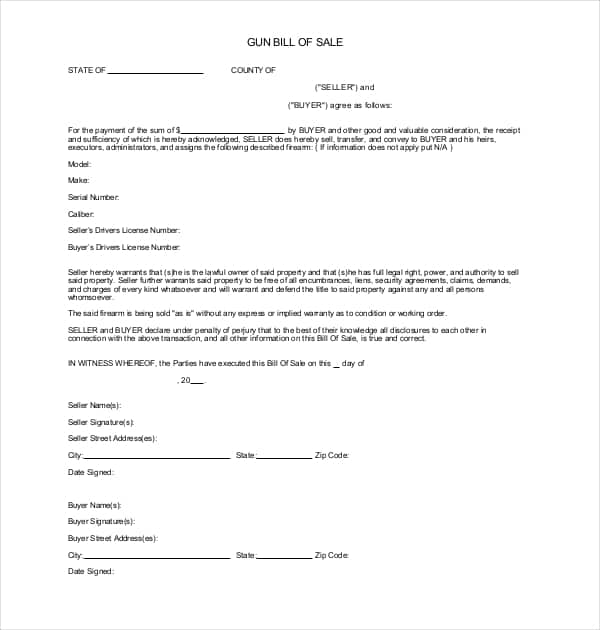
Firearm Bill of Sale Form
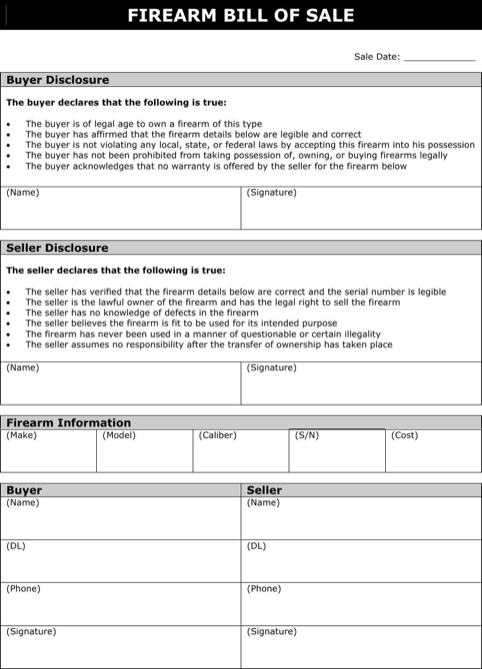
Pistol Bill of Sale Form
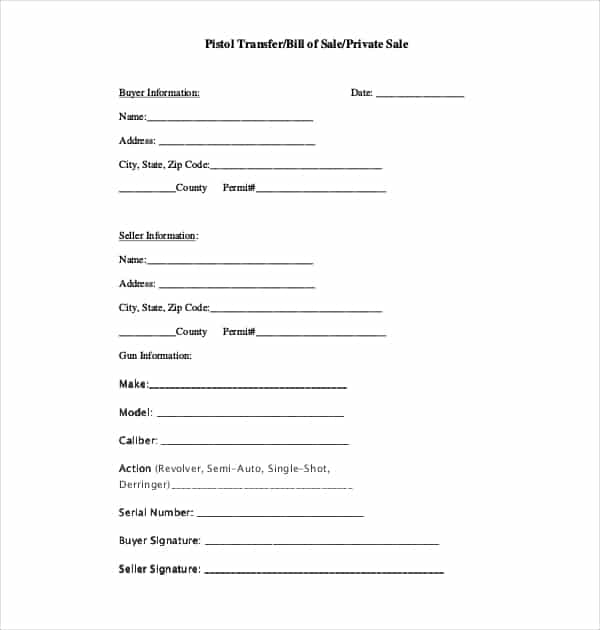
Formal Bill of Sale for Firearms
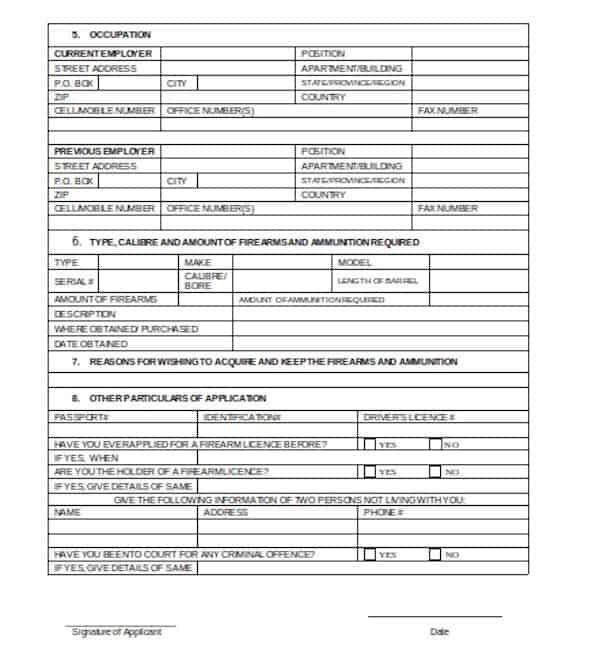
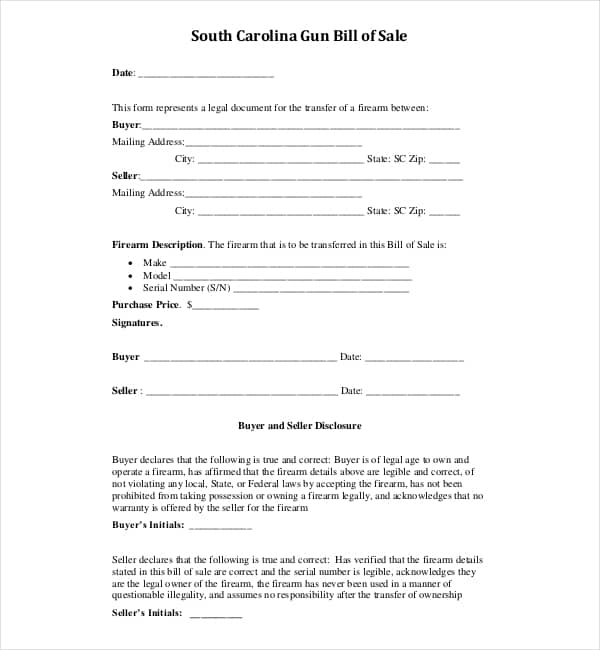
South Carolina Firearm Bill of Sale
North Carolina Pistol Bill of Sale
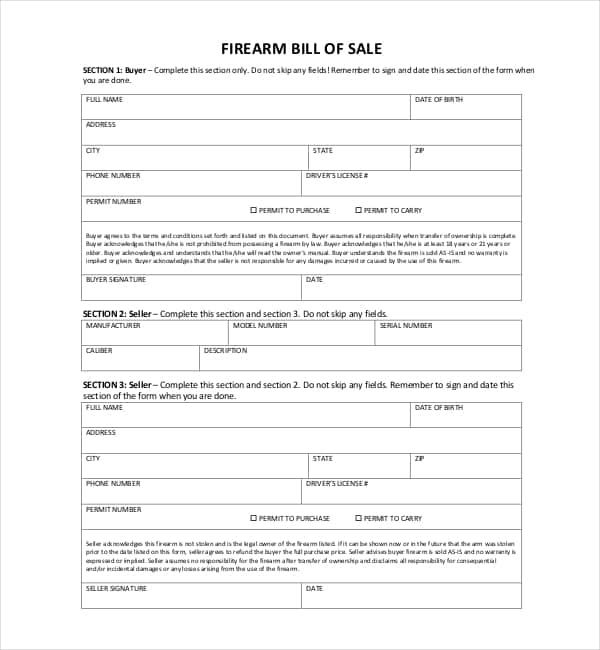
Georgia Firearm Bill of Sale
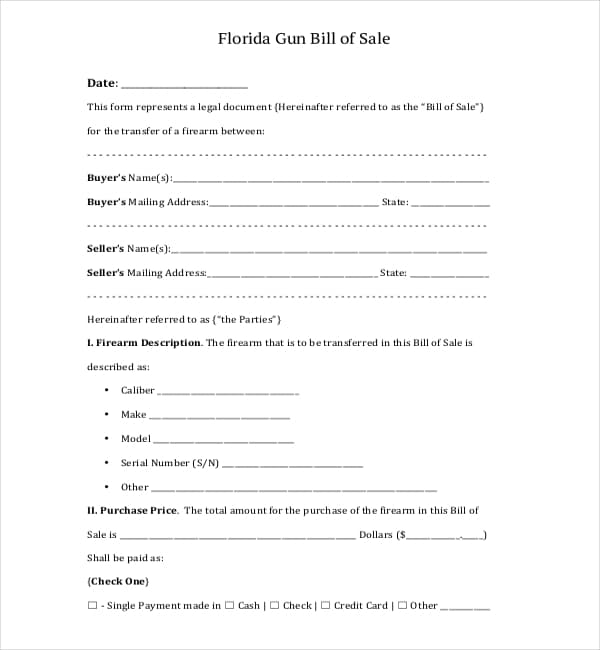
Florida Firearm Bill of Sale
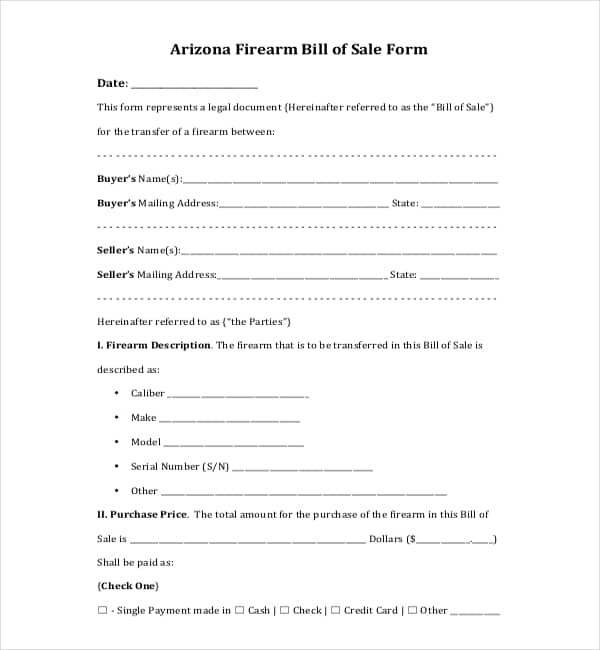
Arizona Firearm Bill of Sale
Personal Firearms Bill of Sale
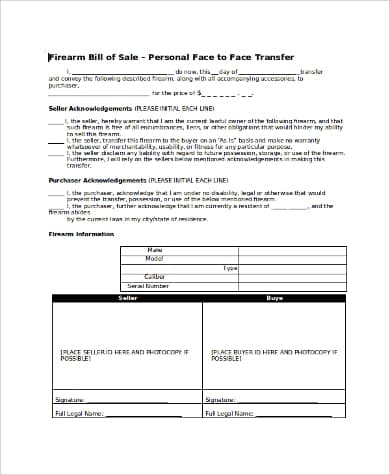
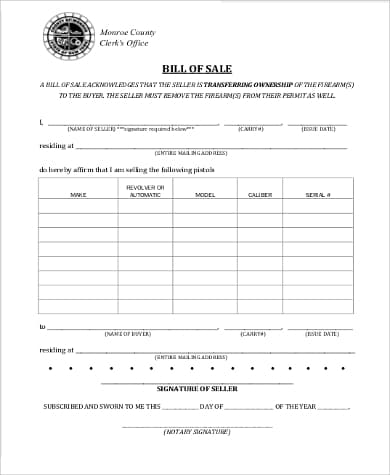
Firearms Bill of Sale With Acknowledgement
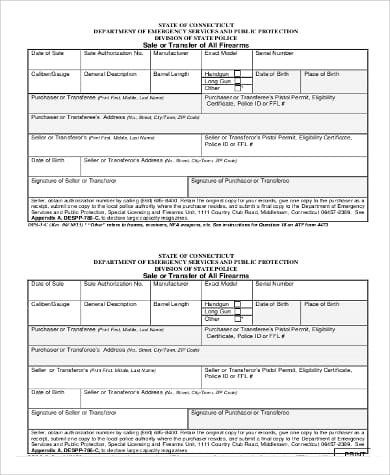
Sale or Transfer of All Firearms
How to Fill Out a Firearm Bill of Sale
- Check the laws in your state or country for private firearm sales, including background check and licensed dealer requirements.
- Choose a template that matches your state or type of firearm.
- Enter the date and location of the sale.
- Write the full legal names and addresses of the seller and buyer.
- Describe the firearm exactly, including make, model, caliber and serial number. Double-check the serial number against the firearm.
- State the purchase price and how it was paid.
- Add the statements or acknowledgements required by the form.
- Have both parties sign and date the form, and add a witness or notary if needed.
- Make a copy for each party and store the original safely.
Use a contact list for relevant licensed dealers or official offices you need to contact about the transaction.
Tips for a Safe, Documented Sale
- Verify the buyer’s identity, and confirm eligibility as required by law.
- Use a licensed dealer to complete the transfer if your state requires it.
- Record the serial number carefully. Any mistake can cause problems later.
- Never leave blanks on the form that could be filled in later.
- Keep your copy for as long as required, and longer if you can.
These templates are general examples and are not legal advice. Firearm laws differ by country, state and locality, and a bill of sale does not replace required background checks, licenses or registrations. Consult local authorities or a qualified attorney before you sell or buy a firearm.
A firearm bill of sale is a simple but valuable record for both parties in a private sale. Choose one of these 12 free templates, fill it out completely and accurately, and make sure you also follow all the legal steps required where you live.
Frequently Asked Questions (FAQs)
What is a firearm bill of sale?
It is a written record of a firearm sale that identifies the buyer, seller, firearm, price and date, and is signed by both parties.
Is a bill of sale required to sell a firearm?
It depends on where you live. Some states require a written record or other steps, while others do not. Even where it is optional, a bill of sale is a smart way to document the transfer.
Do I need to have the bill of sale notarized?
Some forms and states call for a notary, and others do not. Notarization adds a layer of proof but is not always mandatory. Check your local rules.
Are these firearm bill of sale templates free?
Yes. You can download all 12 templates on this page for free.
What information about the firearm should I include?
Include the make, model, type, caliber or gauge and serial number, and any other identifying details. This helps prove exactly which firearm was sold.
Do state-specific forms matter?
Yes. Some states have their own wording or requirements, so it helps to use a form that reflects your state’s rules. Always confirm the current requirements with your state authorities.
How long should I keep a copy of the bill of sale?
Keep it for as long as you own the firearm and, if you are the seller, for a number of years after the sale. Many people keep it indefinitely for protection.