A relationship agreement template can make an awkward conversation more concrete: who pays which bills, how household tasks are shared, and when the arrangement will be reviewed. It works best when both partners can suggest changes freely and the wording reflects their actual priorities.
2 New Editable Templates with Previews
Choose a layout for the task you need to complete. Each preview shows the actual editable Word file. Download the template and replace the placeholders or example inputs with your own details.
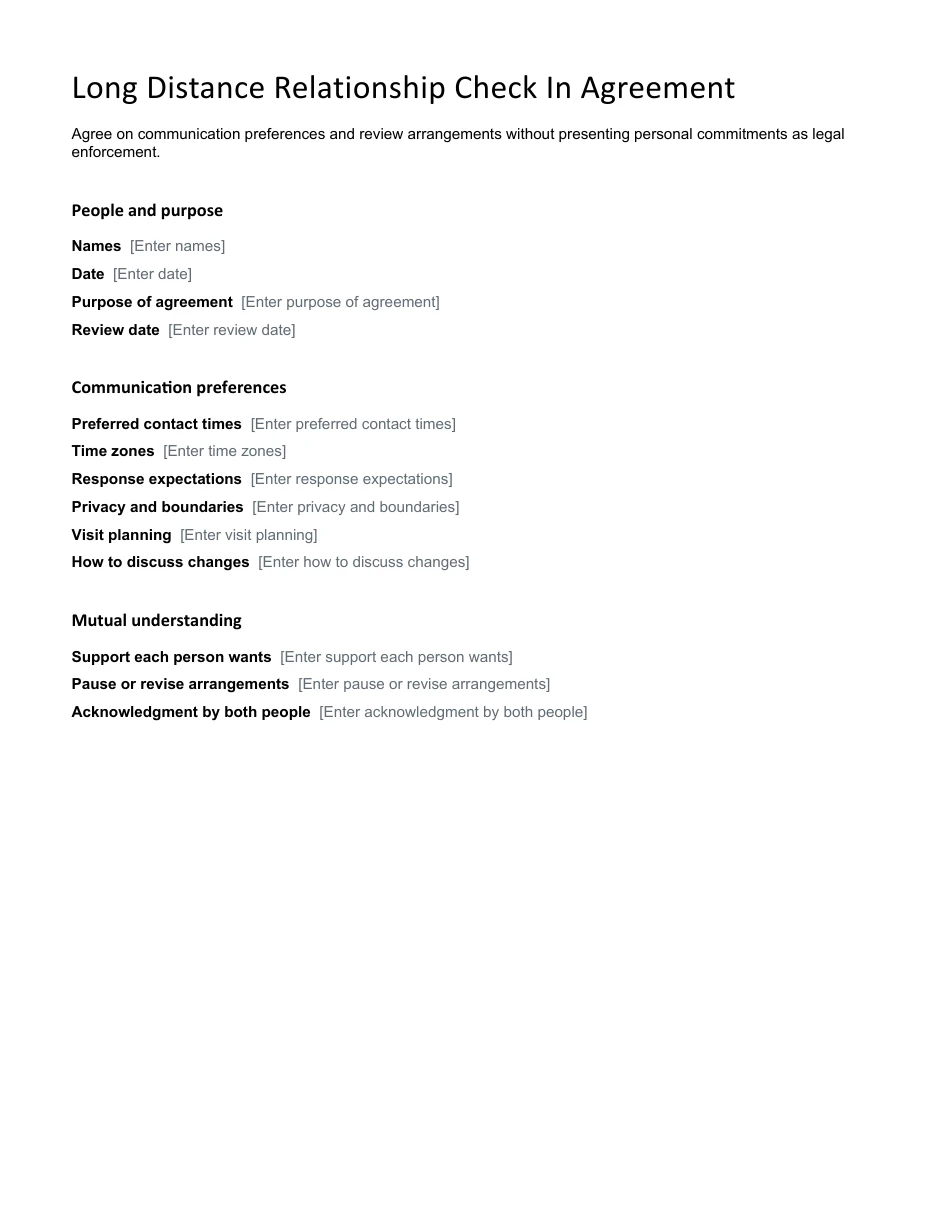
Long Distance Relationship Check In Agreement
Agree on communication preferences and review arrangements without presenting personal commitments as legal enforcement.
Download Editable Word Template
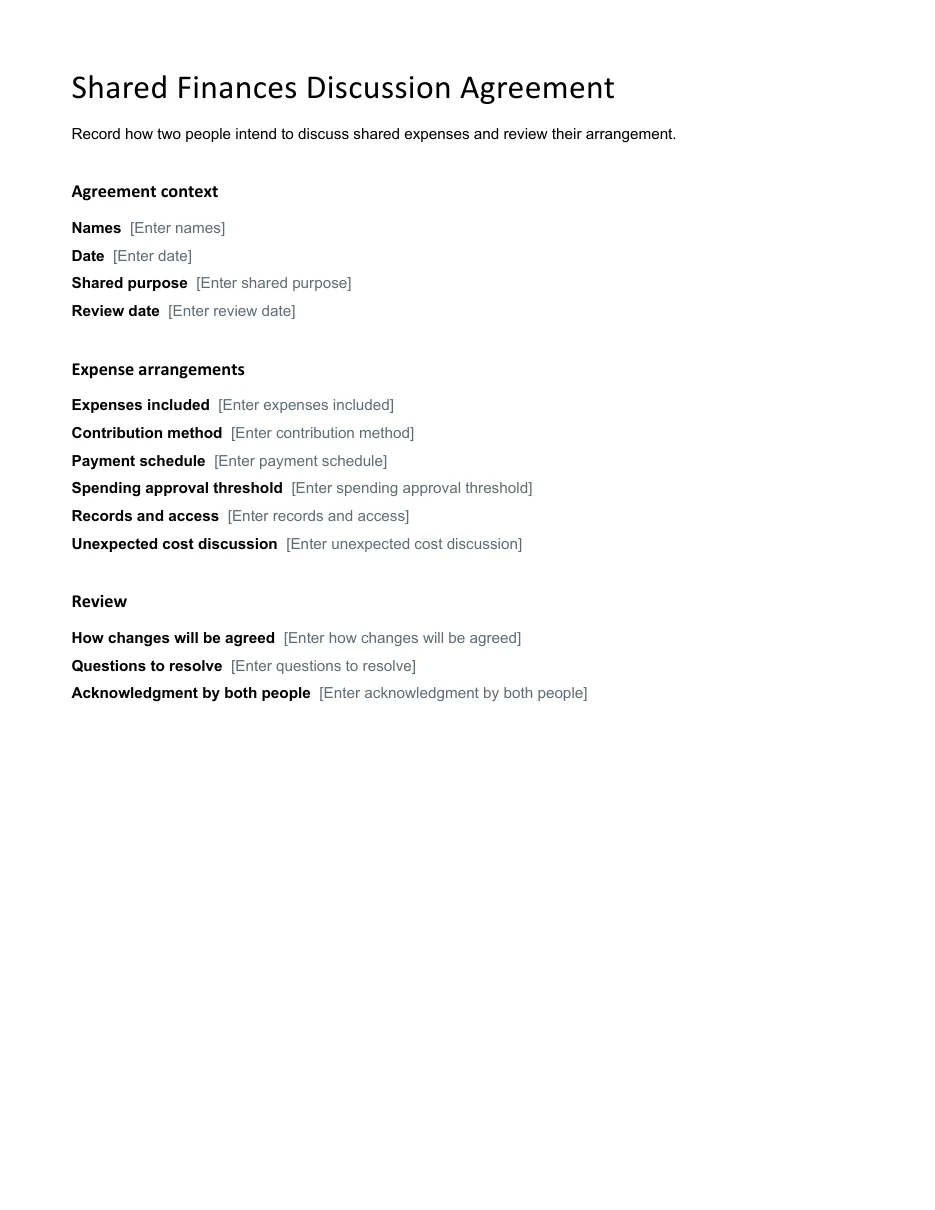
Shared Finances Discussion Agreement
Record how two people intend to discuss shared expenses and review their arrangement.
Use the examples below to begin a discussion rather than copying every clause. Separate everyday expectations from matters involving property, debt, or other legal rights. Give each responsibility a clear description and agree on a review date; a written agreement should leave room for changing circumstances and continued consent.
Go to the two editable templates and preview images and read the practical guidance below.
What Is a Relationship Contract?
A relationship contract is a document that sets out the terms, expectations and responsibilities that two or more parties agree to in a relationship. The most common example is an agreement between a couple who are about to live together before marriage. It can describe how bills will be shared, how household chores will be handled, what happens to property, and how disagreements will be resolved.
Some agreements are personal and informal, more like a statement of expectations. Others are written to be legally binding, such as a cohabitation agreement. The difference matters, and it depends on the wording and on the laws where you live.
Why Couples Use Relationship Agreements
- Clear expectations: Writing down what each partner expects reduces guesswork and misunderstanding.
- Fewer arguments: Agreeing on how chores, bills and time are shared ahead of time can prevent daily friction.
- Financial clarity: A shared plan for rent, groceries, savings and debts protects both partners.
- Property protection: An agreement can record who owns what before moving in together.
- Better communication: The conversation needed to write the agreement often strengthens the relationship.
- A reference point: If circumstances change, the document is a starting point for discussion.
When planning a move together, a moving checklist can help assign practical tasks and deadlines.
What to Include in a Relationship Contract
- Full names of both parties and the date of the agreement.
- The purpose of the agreement and the relationship it covers.
- Living arrangements: who lives where, and how rent or a mortgage is shared.
- Finances: shared expenses, separate accounts, savings goals and how debts are handled.
- Property: what each person owns now and how new purchases will be treated.
- Household responsibilities such as chores, cooking and pet care.
- Personal boundaries, privacy and time for family, friends and hobbies.
- Rules for communication and how conflicts will be resolved, including when to seek counseling or mediation.
- What happens if the relationship ends, including moving out and dividing shared items.
- How and when the agreement can be changed, and signature lines for both parties.
If dividing household responsibilities, use a weekly schedule to record tasks both partners have agreed to.
Types of Relationship Agreements
- Cohabitation agreement: Covers living arrangements, property and finances for couples who live together.
- Relationship expectations statement: A non-legal document that records values, boundaries and goals.
- Prenuptial or postnuptial agreement: A legal contract about property and finances made before or after marriage.
- Strategic relationship agreement: A business-style agreement setting terms between two organizations or partners.
2 Editable Templates with Direct Downloads
Choose one of the two layouts below to suit your needs. Each preview shows the actual editable file, which you can download directly.
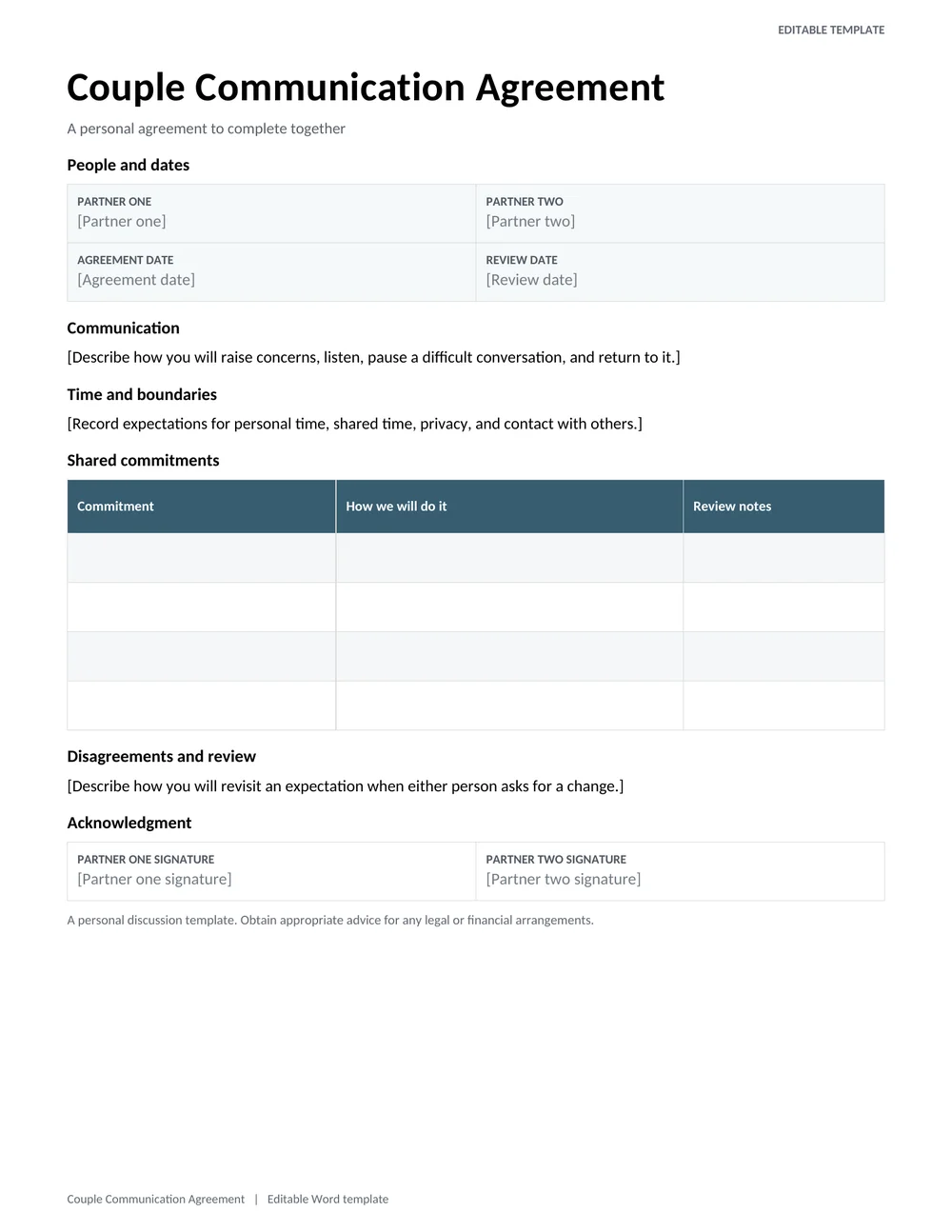
Couple Communication Agreement
A guided personal agreement covering respectful communication, private time, shared decisions, and an agreed review date.
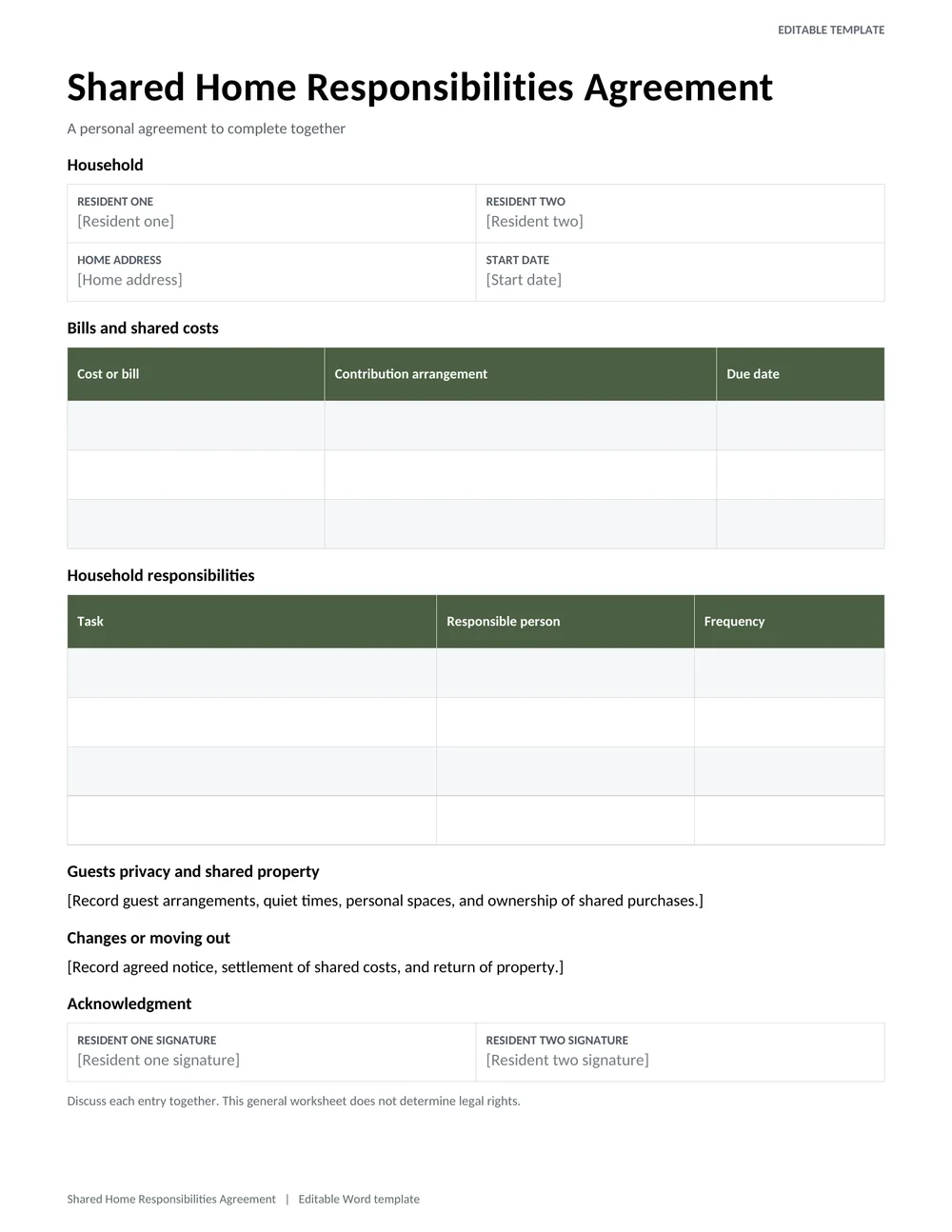
Shared Home Responsibilities Agreement
A practical household agreement that assigns bills, chores, shared purchases, guests, and move-out arrangements.
How to Write a Relationship Contract
- Sit down together and talk openly about what each of you wants and expects.
- Choose a template as a starting structure and open or copy it to a document you can edit.
- Enter both full names and the date.
- Write each section in your own words: living arrangements, money, chores, boundaries and communication.
- Be specific about amounts, dates and responsibilities so nothing is left to interpretation.
- Decide how you will handle disagreements and what happens if the relationship ends.
- Read the whole agreement aloud and make sure both of you are comfortable with every line.
- Sign and date it, and each keep a copy. Review it every so often and update it as your lives change.
For shared living costs, a household budget can turn a general agreement about money into specific amounts.
Turning Broad Expectations Into Clear, Fair Agreements
Statements such as “communicate better” sound positive but are difficult to use during an actual disagreement. A more practical relationship agreement describes what each partner is willing to do. For example: “If a conversation becomes overwhelming, either person can ask for a pause. We will agree when to resume it rather than leaving the issue unresolved.” The wording should leave space for changing circumstances and should be acceptable to both people without pressure.
The communication template focuses on conversations, boundaries, and regular check-ins. The shared-home responsibilities template focuses on household tasks and practical coordination. Choose the one that matches the discussion you need to have first. If household chores are causing tension, an elaborate agreement about every part of the relationship may make the conversation harder. Start with a manageable topic and build from there if both partners find the process useful.
A Household Example and a Simple Review Method
Consider two people sharing a home who have different working hours. Dividing every task equally by number may still leave one person with more time-consuming work. Instead, list recurring tasks, how often each is needed, and the effort involved. One partner might handle weekday shopping and meal preparation while the other manages laundry, weekend cooking, and household appointments. Include the planning work, such as noticing supplies are low, rather than recording only the visible task.
Test the arrangement for an agreed period, then discuss what actually happened. Ask whether the task distribution was realistic, whether either person needed help, and whether changes in work or health affected the plan. Review the arrangement as a shared problem-solving exercise. A missed task should prompt a conversation about the cause and a workable adjustment, rather than an automatic punishment or a running score of personal failures.
Keep private information out of a document unless both people have a clear reason to include it. Agreements should not demand passwords, constant location tracking, unwanted intimacy, or access to personal communications. Either person should be able to raise concerns or withdraw from an informal arrangement. If a proposed document involves ownership, debts, housing rights, or other legal consequences, separate those issues from personal expectations and obtain advice appropriate to the jurisdiction before relying on the wording.
Tips for a Fair Agreement
- Write it together, not for each other. Both people should feel heard.
- Keep the tone respectful and the language simple.
- Avoid terms that are vague, such as “reasonable” or “often.”
- Revisit the agreement after major changes, such as a move, new job or a child.
- If money or property are involved in a significant way, get independent legal advice for each person.
These templates are general examples and not legal advice. Laws about cohabitation and relationship agreements differ by state and country, and some personal terms are not enforceable in court. For a legally binding agreement, consult a licensed attorney in your area.
A relationship contract is really a structured conversation put in writing. Used thoughtfully, it can make expectations clearer and help two people feel secure. Use one of these 2 free templates as a starting point, adapt it to your situation, and seek professional legal advice when legal protection matters.
Frequently Asked Questions (FAQs)
What is a relationship contract?
It is a written agreement in which two people describe how they will handle shared responsibilities, expectations and boundaries in their relationship. It may be informal or written to be legally binding.
Is a relationship contract legally binding?
It depends on the content and the local law. Terms about property, finances and shared housing may be enforceable if the agreement is properly written and signed, while personal or emotional terms usually are not. A lawyer can tell you what applies where you live.
What is a cohabitation agreement?
A cohabitation agreement is a legal contract between partners who live together but are not married. It typically covers rent or mortgage payments, ownership of property, bills and what happens if they separate.
Are these relationship contract templates free?
Yes. The two Word templates at the top are free to download directly and edit. The other samples link to their original sources.
Do we need a lawyer to make a relationship contract?
You can write a personal agreement of expectations on your own. If the agreement involves property, money, children or a home, it is wise to have a lawyer review it so it fits local law.
What should we do if we disagree about a term?
Talk it through, look for a compromise and revise the wording until both of you are comfortable. If you cannot agree, consider a counselor or a neutral mediator.
How often should we update our agreement?
Review it at least once a year, and whenever something big changes, such as moving in together, changing jobs, buying property or having a child.
How do we record a disagreement without forcing agreement?
List the unresolved topic separately and agree when to discuss it again. Leave proposed terms clearly marked as proposals. Each partner should have space to decline or revise a term before it becomes part of the shared agreement.