Every shipment needs paperwork, and the most important document in the process is the bill of lading. A properly completed bill of lading (BOL) proves that goods were received by the carrier, spells out the terms of transport and tells the receiver what to expect at delivery. This page offers 15 free bill of lading templates in Excel and Word, with straight, ocean, trucking, short form, non-negotiable and government versions, along with a clear guide on how to fill one out correctly.
Note: These templates are general samples and not legal advice. Shipping requirements vary by carrier, country and type of freight, so confirm the details with your carrier or a qualified professional.
What Is a Bill of Lading?
A bill of lading is a legal document issued by a carrier or its agent to a shipper. It serves three purposes at once. First, it is a receipt confirming that the carrier has received the goods described. Second, it is a contract of carriage that records the terms under which the goods will be moved from origin to destination. Third, in some cases it is a document of title, meaning the holder can claim the goods at the destination. Because it is so important in trade and logistics, accuracy on a BOL is essential.
Types of Bills of Lading
- Straight bill of lading: non-negotiable and made out to a specific named consignee, who is the only party allowed to receive the goods.
- Order (negotiable) bill of lading: can be transferred by endorsement, which lets ownership of the goods change hands while they are in transit.
- Short form bill of lading: a simplified version that leaves out the full terms and conditions and refers to the carrier’s standard terms instead.
- Ocean bill of lading: used for sea freight and often acts as a title document for international shipments.
- Inland or trucking bill of lading: used for domestic road transport.
- Clean bill of lading: states that goods were received in good condition, without damage or shortage noted.
- Government bill of lading: a specific form used when shipping goods on behalf of a government agency.
Information Included on a Bill of Lading
- Shipper’s name, address and contact details.
- Consignee’s name, address and contact details.
- Carrier’s name and, where applicable, vehicle or vessel details.
- Bill of lading number, shipment date and reference or purchase order numbers.
- Description of goods, including number of packages, weight, dimensions and packaging type.
- Freight class, special handling instructions and any hazardous materials notes.
- Pickup and delivery locations.
- Freight charges and payment terms, such as prepaid or collect.
- Signature lines for the shipper, the carrier and the consignee.
Bill of Lading Templates in Excel
These Excel templates are ideal if you need calculations, repeated use or a structured layout for many shipments.
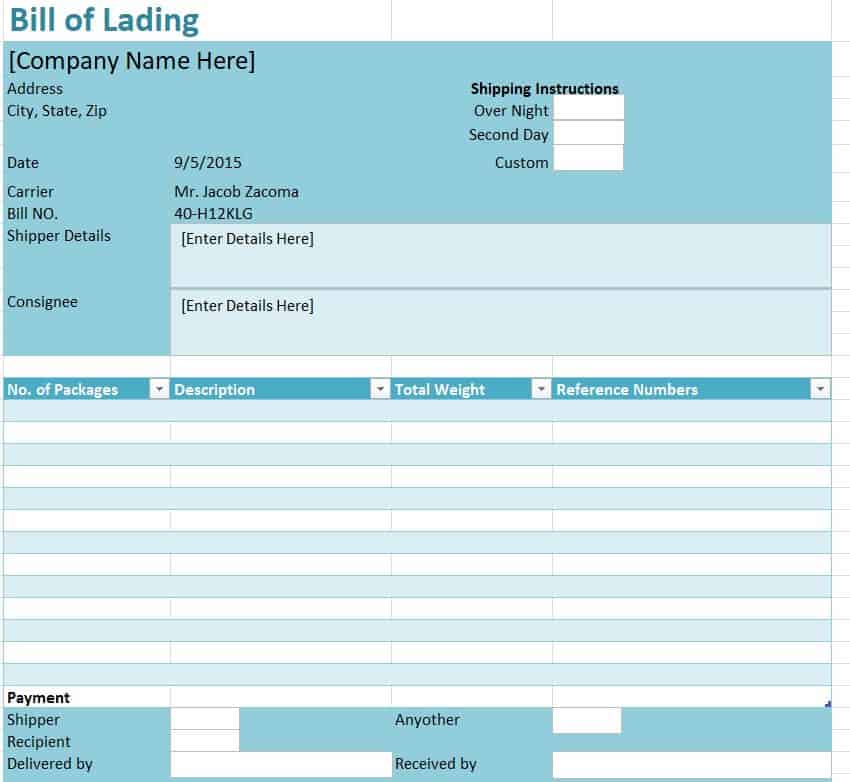
Company’s Bill of Lading Template
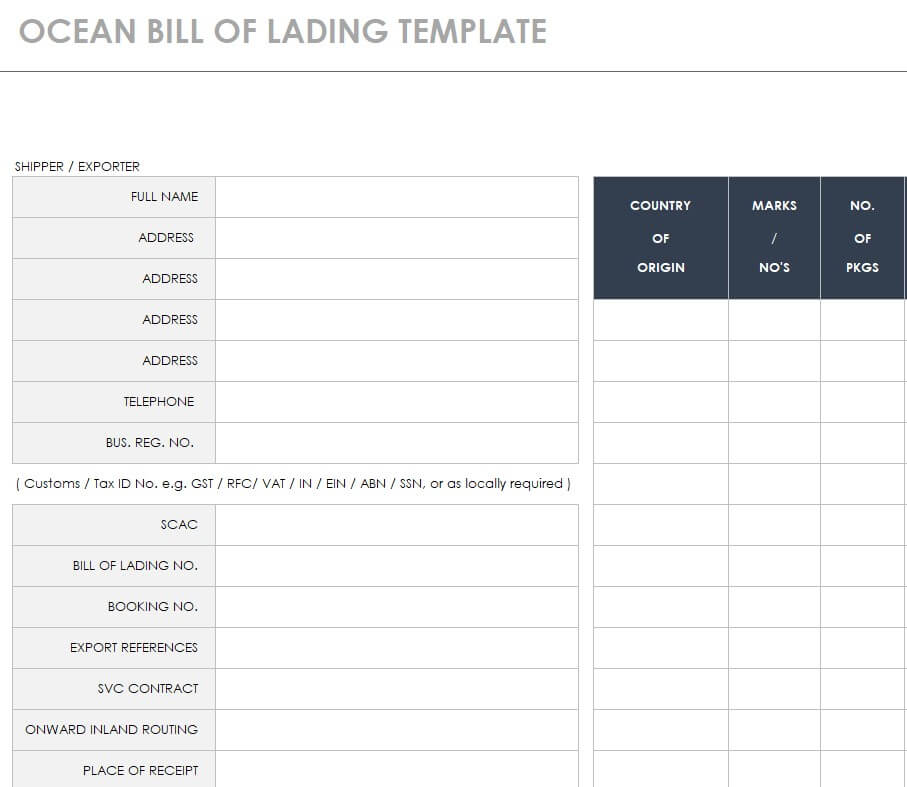
Ocean Bill of Lading Excel Template
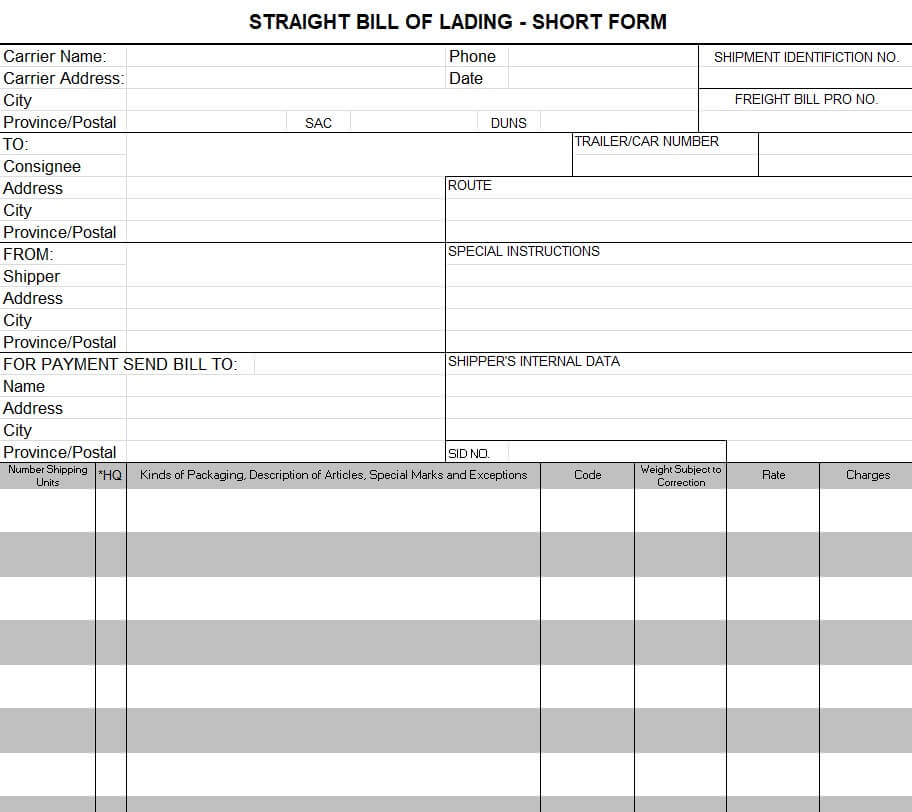
Straight Bill of Lading Template Short Form
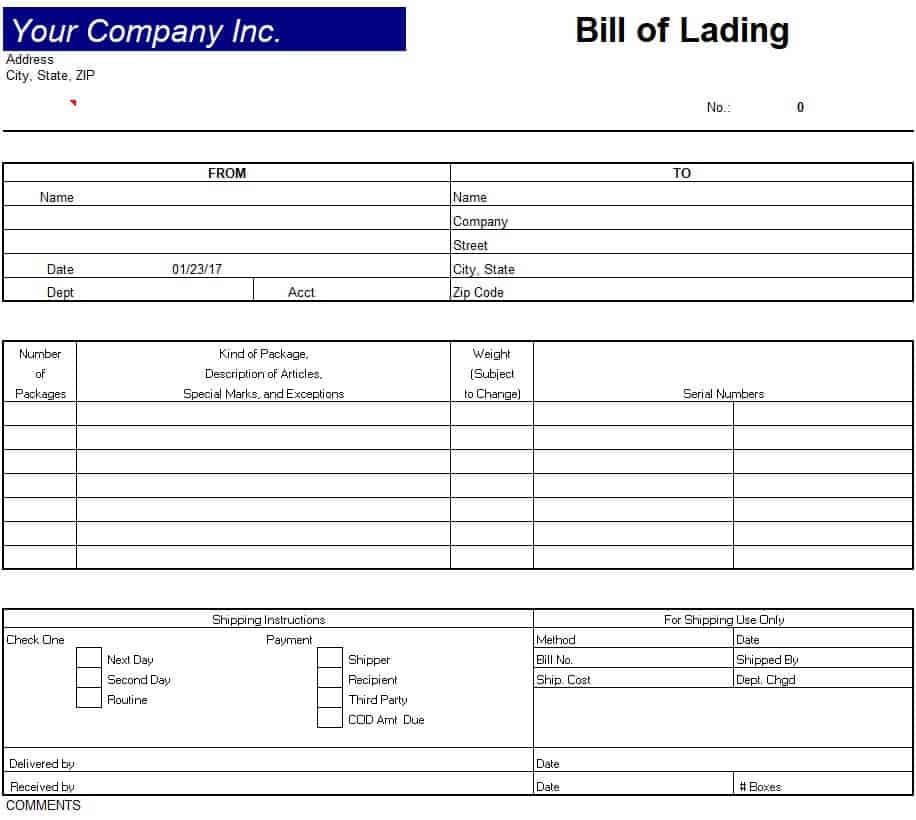
Basic Bill of Lading Layout Excel
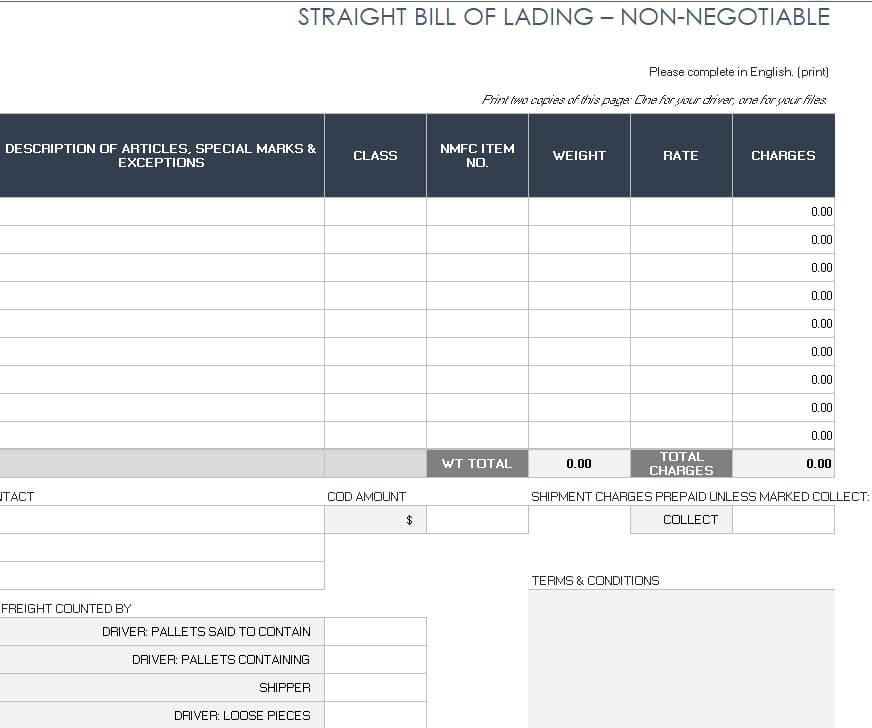
Non-Negotiable Straight Bill of Lading Template
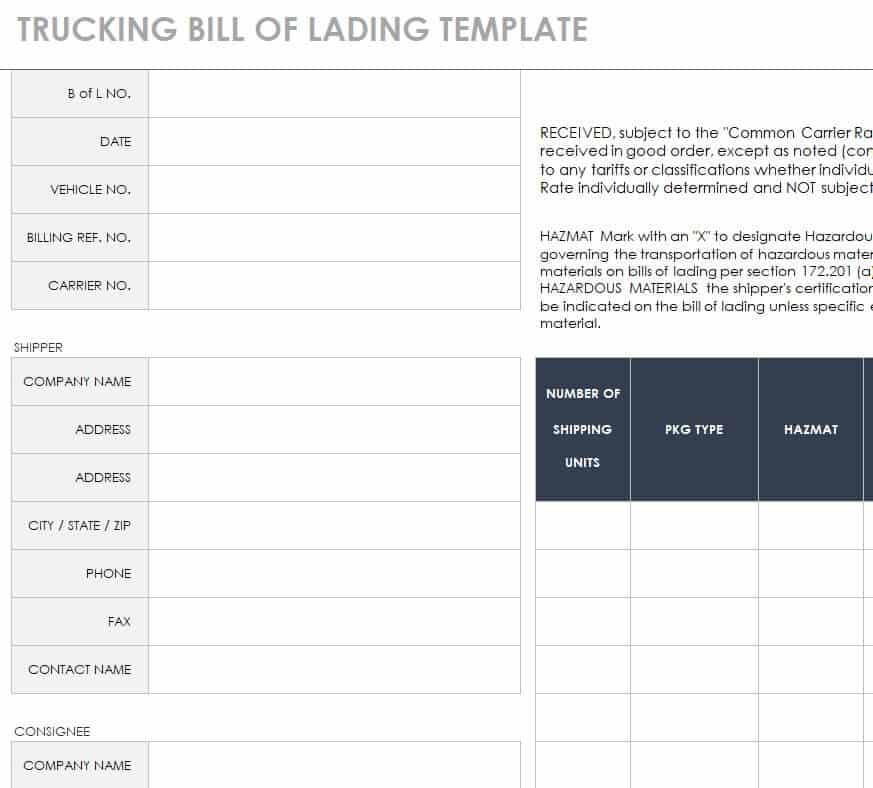
Trucking Bill of Lading Template in XLSX Format
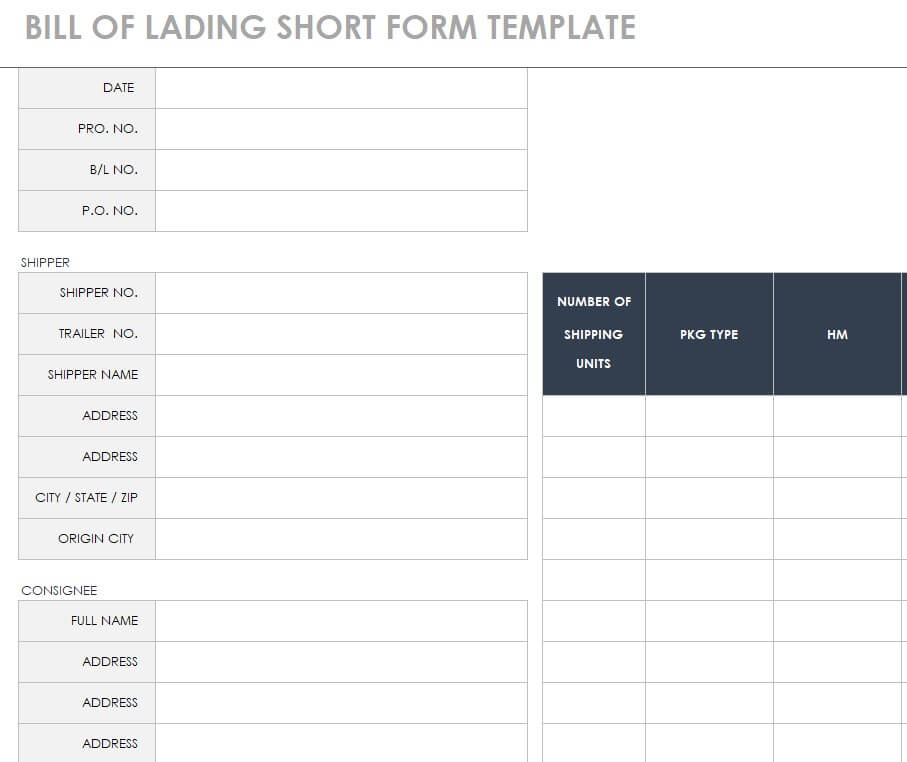
Sample Short Form Bill of Lading
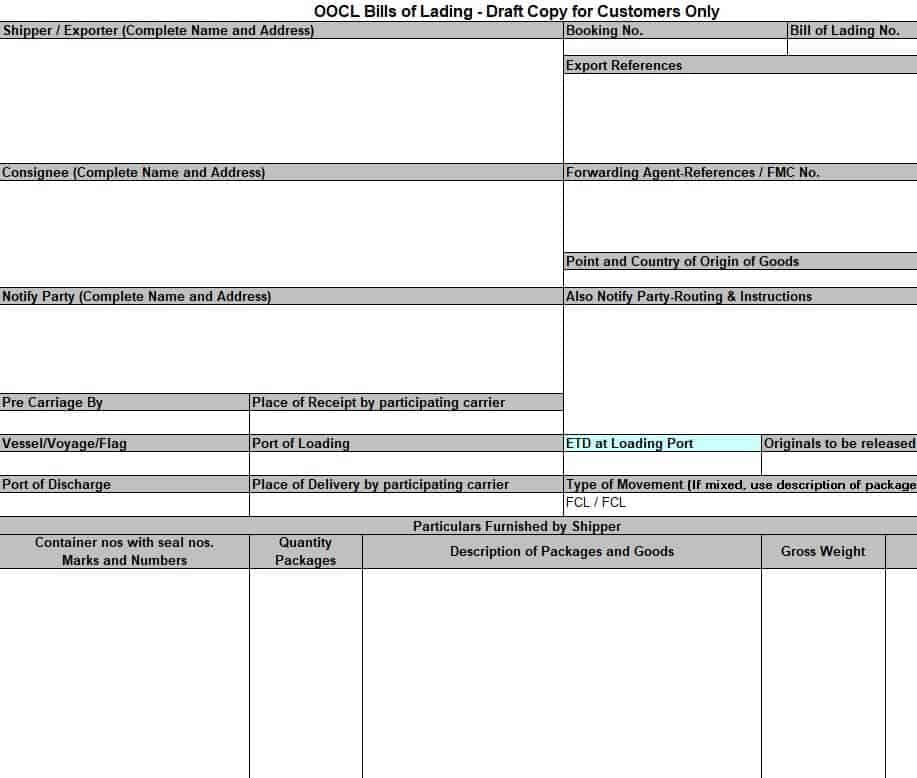
Bill of Lading Drafts Copy for Customers
Bill of Lading Templates in Word
Word versions are excellent for printing and for filling in by hand or by typing directly into the form.
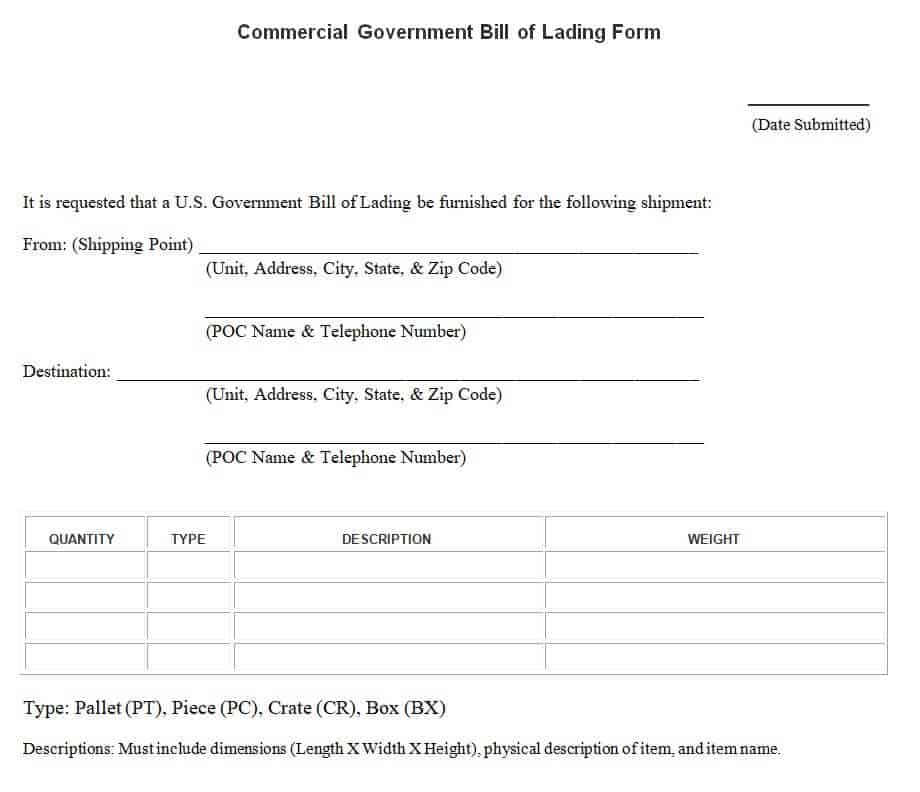
Commercial Government Bill of Lading Form
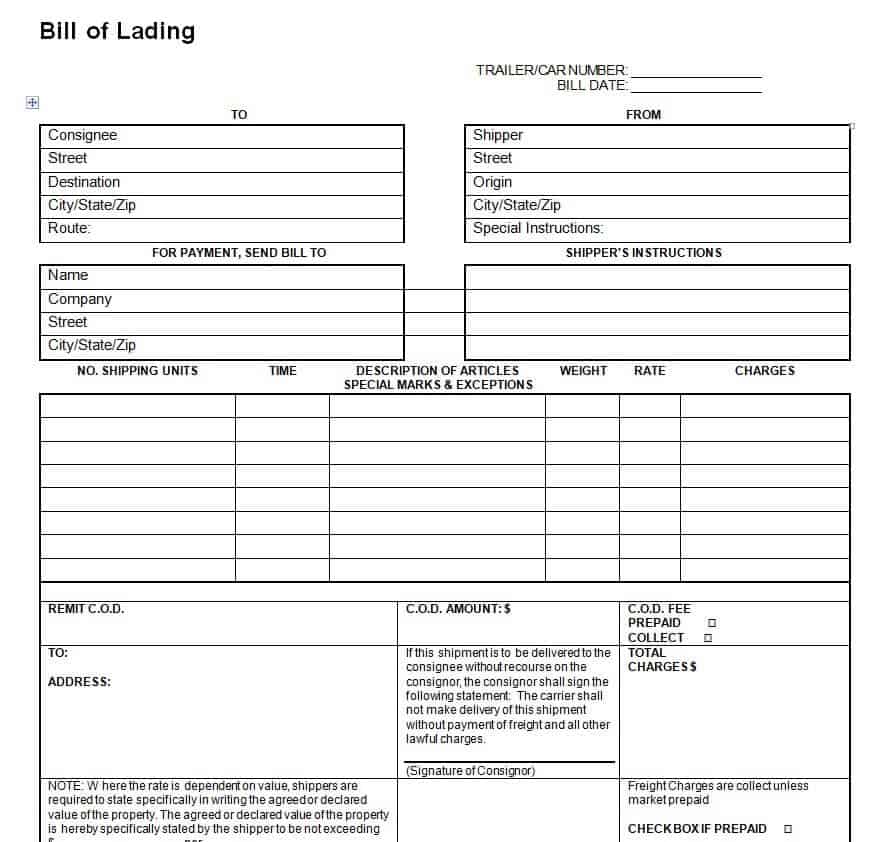
Blank Bill of Lading Word Template
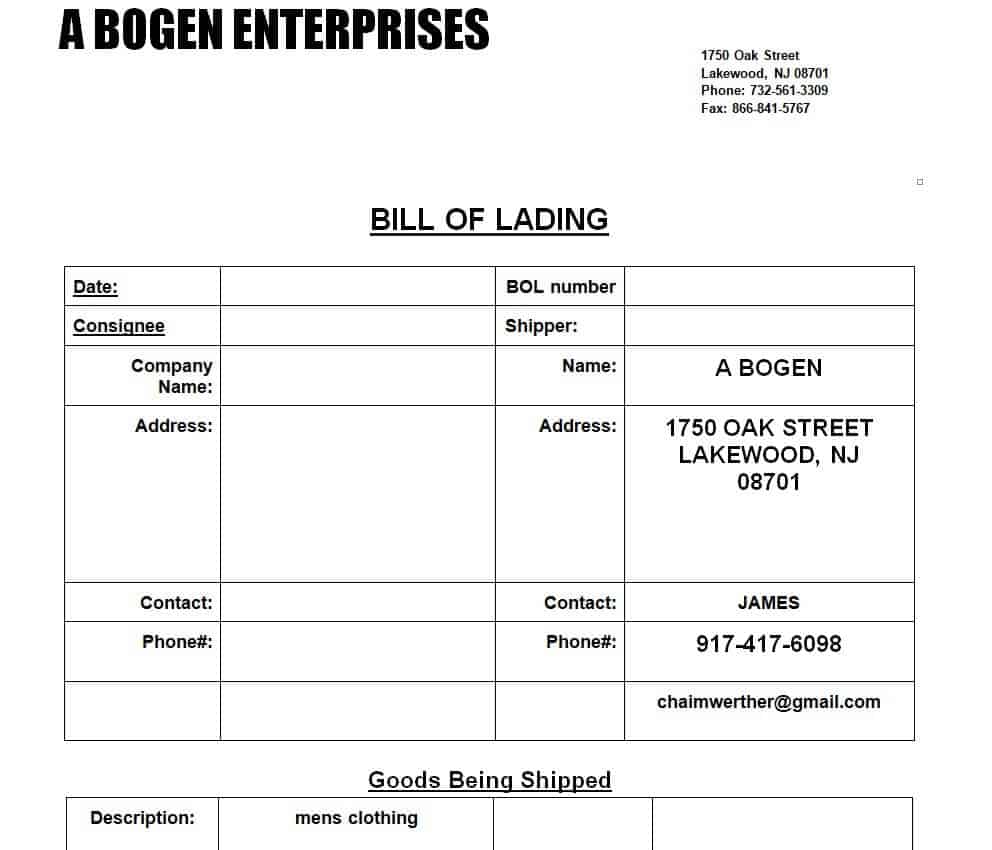
Bill of Lading Template of an Enterprise
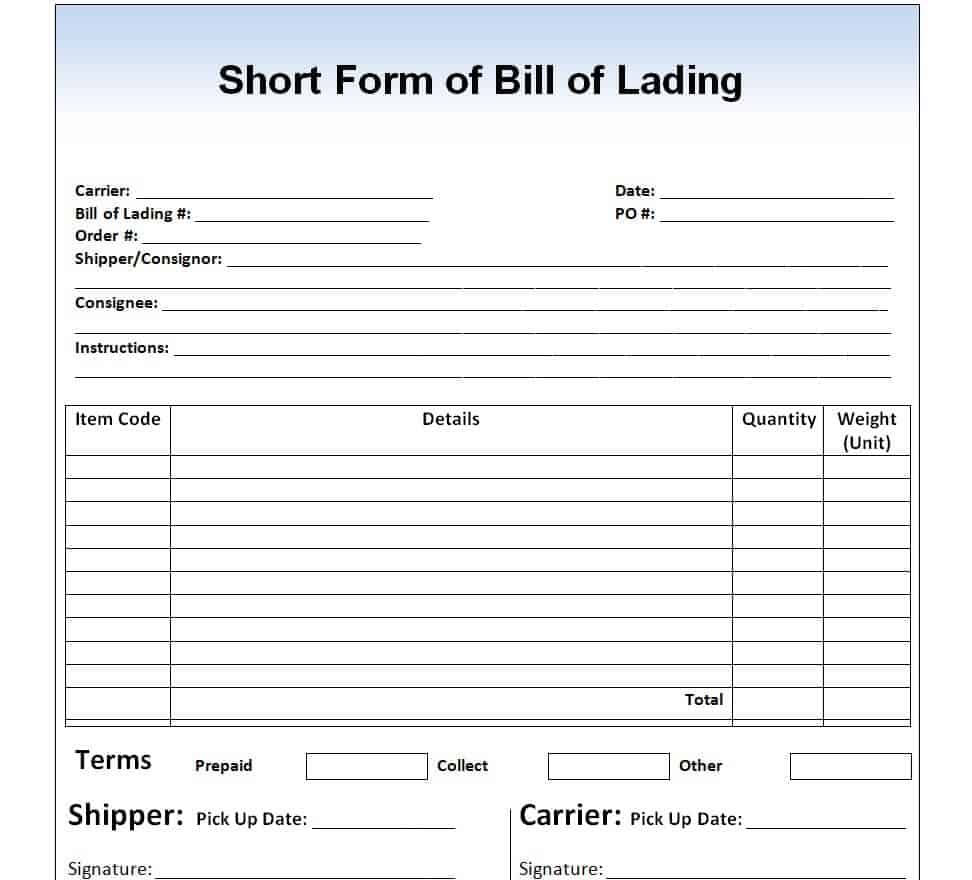
Short Form Bill of Lading in DOC Format
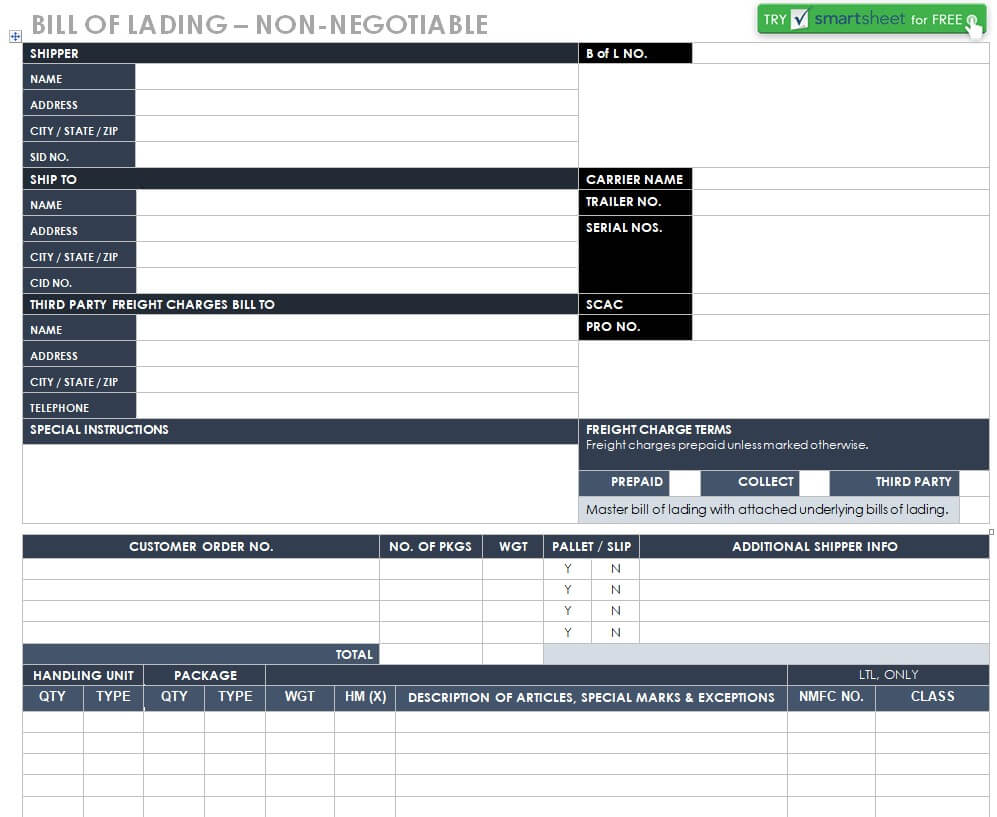
Bill of Lading Non Negotiable Example in MS WORD
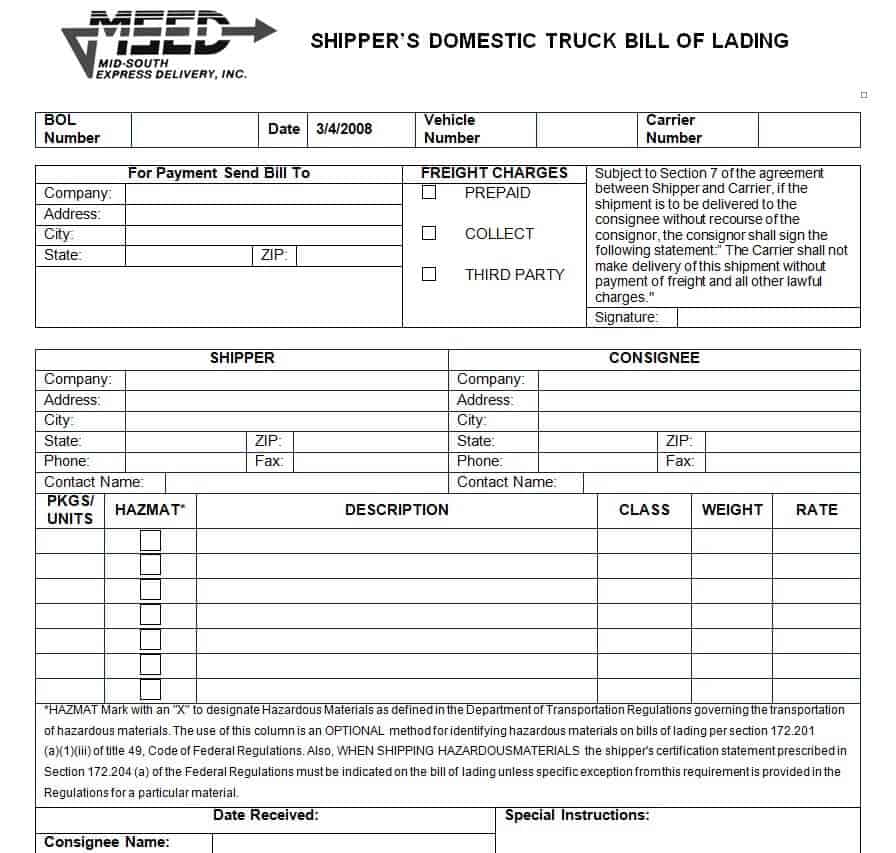
Shipper’s Domestic Bill of Lading Template WORD
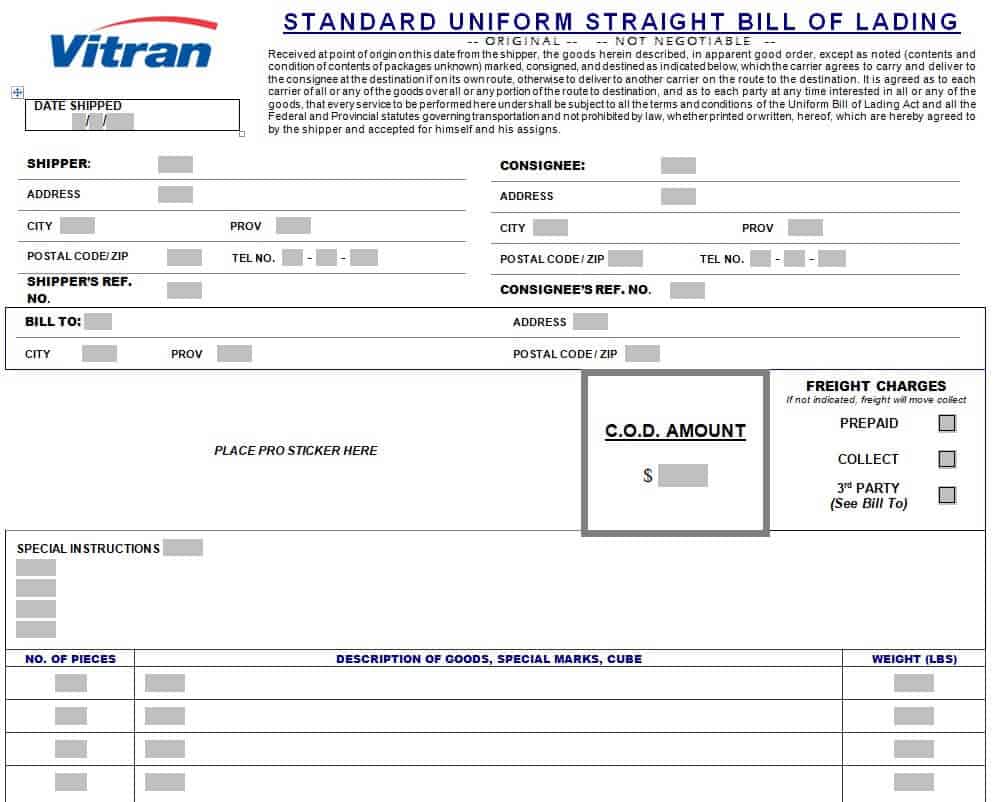
Standard Straight Bill of Lading Example
How to Fill Out a Bill of Lading Step by Step
- Enter the BOL number and date. Use a unique number so the shipment can be tracked later.
- Add shipper details. Write the full name, address and phone number of the sender.
- Add consignee details. Enter the receiver’s name, delivery address and contact information.
- Identify the carrier. Include the carrier’s name and, if applicable, the truck, trailer or vessel information.
- Describe the goods. List the number of packages, type of packaging, weight, dimensions and a clear description of the contents.
- Note special instructions. Mention fragile items, temperature control or hazardous materials handling requirements.
- State freight terms. Indicate whether charges are prepaid or collect, and list any declared value.
- Sign and distribute copies. The shipper and carrier sign, and each party keeps a copy. The consignee signs on delivery after checking the goods.
Why the Bill of Lading Matters in Shipping
The BOL protects everyone involved. Shippers have proof that goods were handed over. Carriers have a record of what they agreed to move and under what terms. Receivers can verify that what arrived matches what was shipped. In case of loss, damage or dispute, the bill of lading is often the main document used to settle claims. In international trade, it is also used for customs clearance and for banks to release payment under letters of credit.
Tips for an Accurate Bill of Lading
- Double-check every name, address and quantity before signing.
- Be specific when describing goods; vague descriptions can cause delays or claims problems.
- Record damage or shortages on the BOL at delivery before signing.
- Keep copies of all bills of lading for your records for at least several years.
- Match the BOL to the commercial invoice and packing list.
- Use the correct type of BOL for the shipment, such as straight for named consignees or order for transferable cargo.
Frequently Asked Questions (FAQs)
What is a bill of lading template?
It is a pre-formatted form with fields for shipper, consignee, carrier, goods description and charges. Using a template saves time and helps make sure no critical details are left out.
Are these bill of lading templates free?
Yes. Every template on this page is free to download and edit. Click Download under any preview, unzip the file and open it in Excel or Word.
What is the difference between a straight bill of lading and an order bill of lading?
A straight bill of lading is non-negotiable and delivers goods only to the named consignee. An order bill of lading is negotiable and can be transferred to another party by endorsement, which is useful when goods are sold while in transit.
Is a bill of lading a legal document?
Yes. It acts as a receipt, a contract of carriage and, for some types, a document of title. Because of that, accuracy and signatures are important, and you should keep copies.
What is a short form bill of lading?
A short form bill of lading includes only the key shipment details and refers to the carrier’s standard terms and conditions instead of printing them in full. It is common for routine domestic shipments.
Who fills out the bill of lading?
Usually the shipper completes the form with details about the goods and parties, and the carrier reviews, signs and issues it. The consignee signs upon receiving the goods.
Can I use these templates for trucking and ocean freight?
Yes. This collection includes trucking and ocean bill of lading templates as well as general and domestic forms. Choose the one that matches your shipment and confirm any special requirements with your carrier.
Final Thoughts
A clear, accurate bill of lading keeps shipments moving and protects every party from misunderstandings. Choose the template that matches your freight type, enter the details carefully and keep copies for your records. With the right form and attention to detail, your shipping paperwork will be professional, complete and dependable.




You must be logged in to post a comment.