On a construction project, questions come up all the time. A drawing may be unclear, a specification may conflict with another document, or a contractor may need a supplier to explain exactly what materials are available. A request for information, or RFI, is the formal way to ask those questions in writing and get a documented answer. It keeps the project moving and creates a clear record of decisions.
This page offers 8 free construction RFI templates. Three of them can be downloaded as editable Word files, and five more are image examples you can use as layout inspiration. Choose one, adapt it to your project and write a clear, professional RFI in minutes.
What Is a Construction RFI?
A construction RFI is a written request used to obtain information, clarification or direction about a construction project. It is usually sent by a contractor or subcontractor to the architect, engineer, owner or another party responsible for the answer. RFIs are also used by buyers to collect information from vendors and suppliers about their capabilities, products or materials before an order or contract is awarded.
In either case, the RFI states what is unclear, refers to the relevant drawing or specification, and asks for a response by a certain date. The answer becomes part of the project record.
Why RFIs Matter on Construction Projects
- Prevents costly mistakes: Clarifying a detail before the work starts is cheaper than fixing it afterward.
- Keeps a paper trail: Questions, answers and dates are documented in case of disputes.
- Speeds up decisions: A clear, standard format helps the reviewer respond faster.
- Improves communication: Everyone sees the same question and the same answer.
- Supports scheduling and cost control: RFIs track potential delays and changes early.
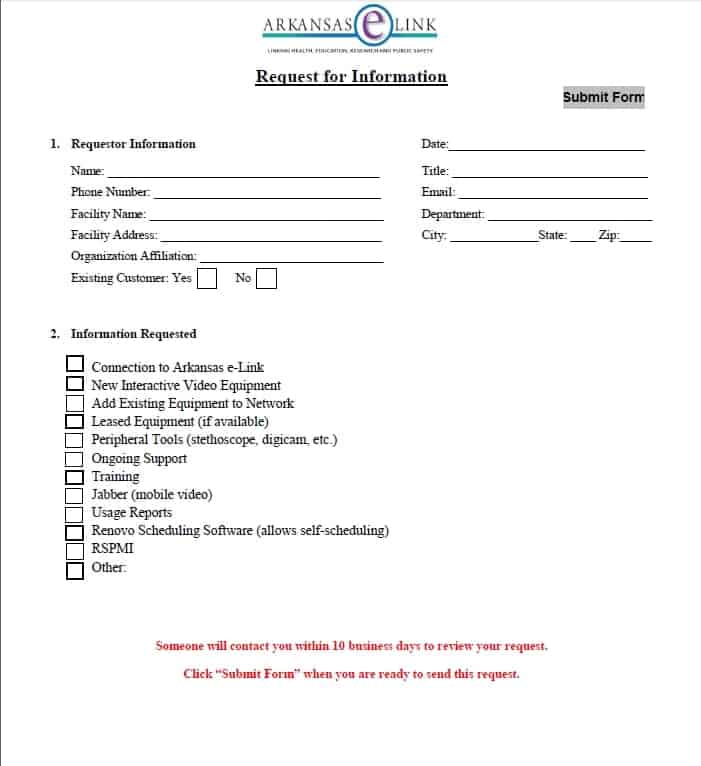
- Helps vendor selection: Buyers can compare what suppliers offer before choosing one.
What to Include in a Construction RFI
- Project name, number and location.
- RFI number and date submitted.
- Names and contact details of the sender and the recipient.
- A short subject line that describes the question.
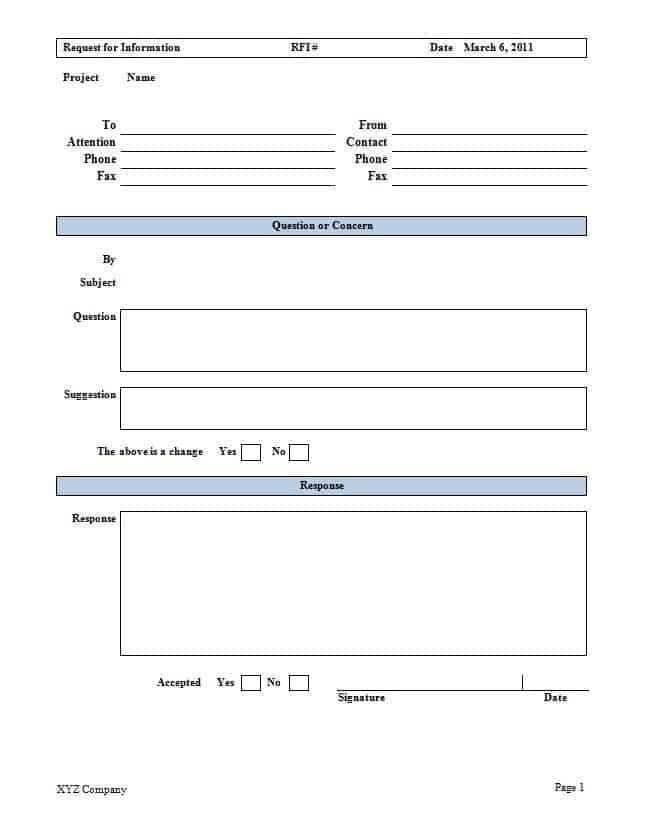
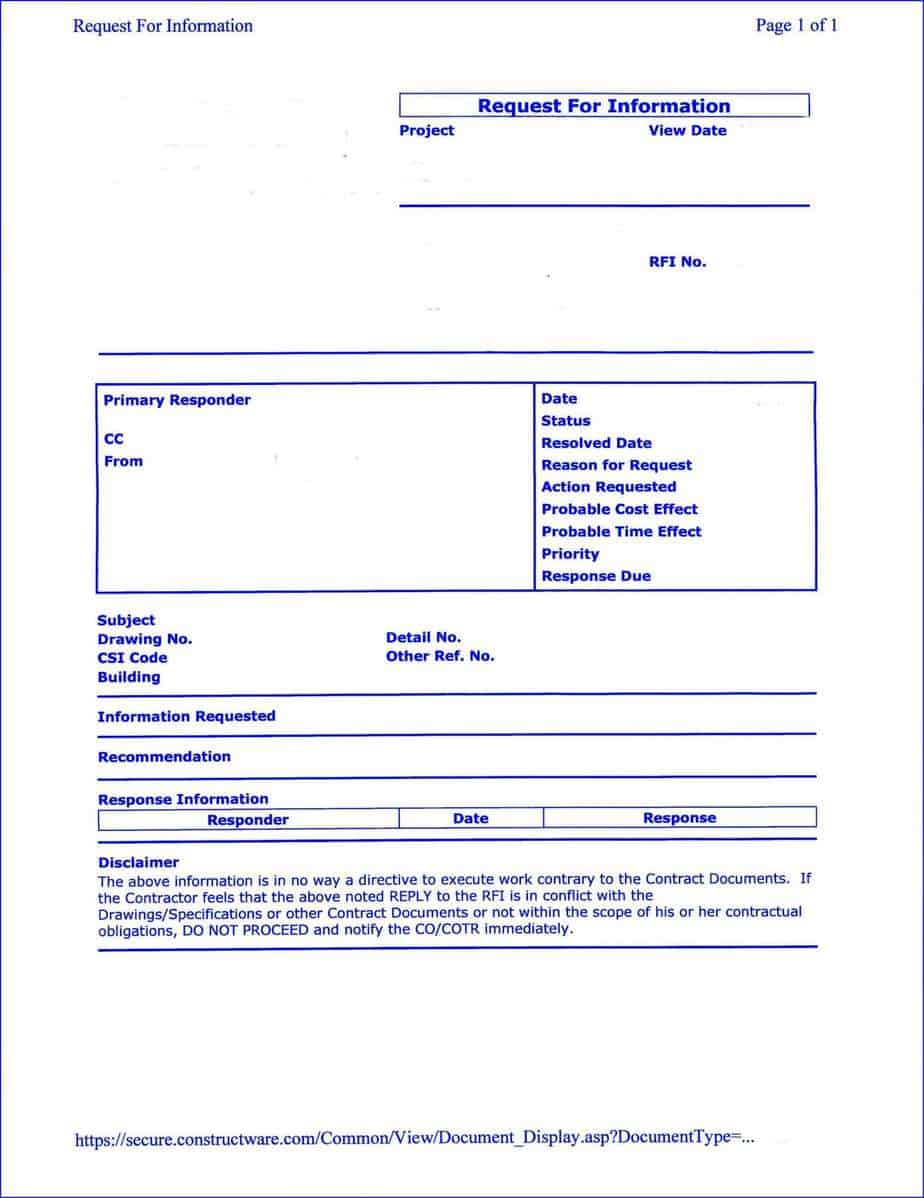
- Reference to the drawing, sheet number, specification section or detail in question.
- A clear, specific description of the question or issue.
- Any proposed solution or suggestion from the sender.
- Impact on cost or schedule, if known.
- Required response date.
- Attachments such as photos, markups or sketches.
- Response section with the answer, name, date and signature of the responder.
RFI vs RFQ vs RFP
These terms are often confused. An RFI asks for information and does not commit anyone to a purchase. A request for quotation (RFQ) asks suppliers for a price on specific items. A request for proposal (RFP) asks for a full proposal, including approach and pricing, to solve a defined need. RFIs often come first, helping the buyer decide whether to issue an RFQ or RFP.
8 Free Construction RFI Templates
The first three templates include a download button for an editable Word file. The remaining five are image examples that show different layouts.
Construction RFI Form (Word)


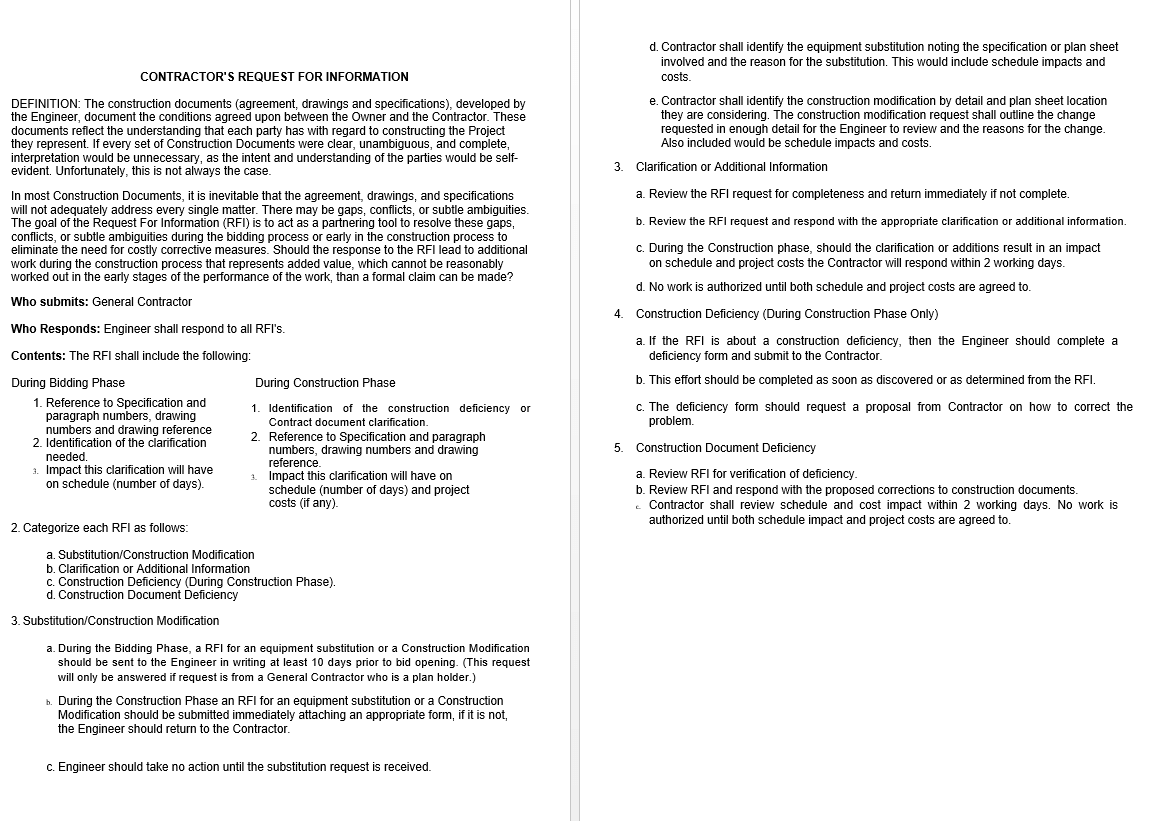
Contractor’s Request for Information Template (Word)
Sample Construction Request for Information (Word)
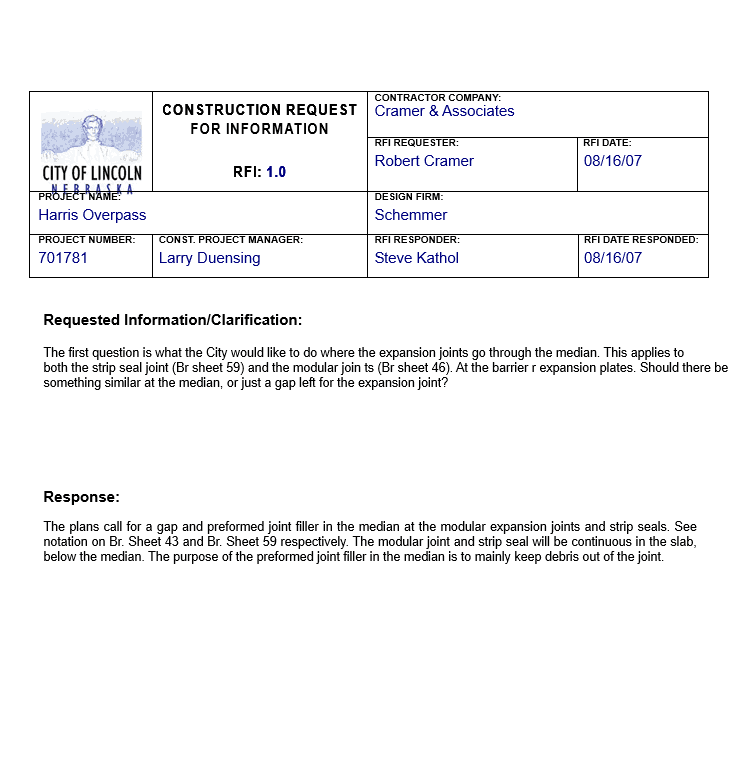
Image Examples of Request for Information Construction Templates
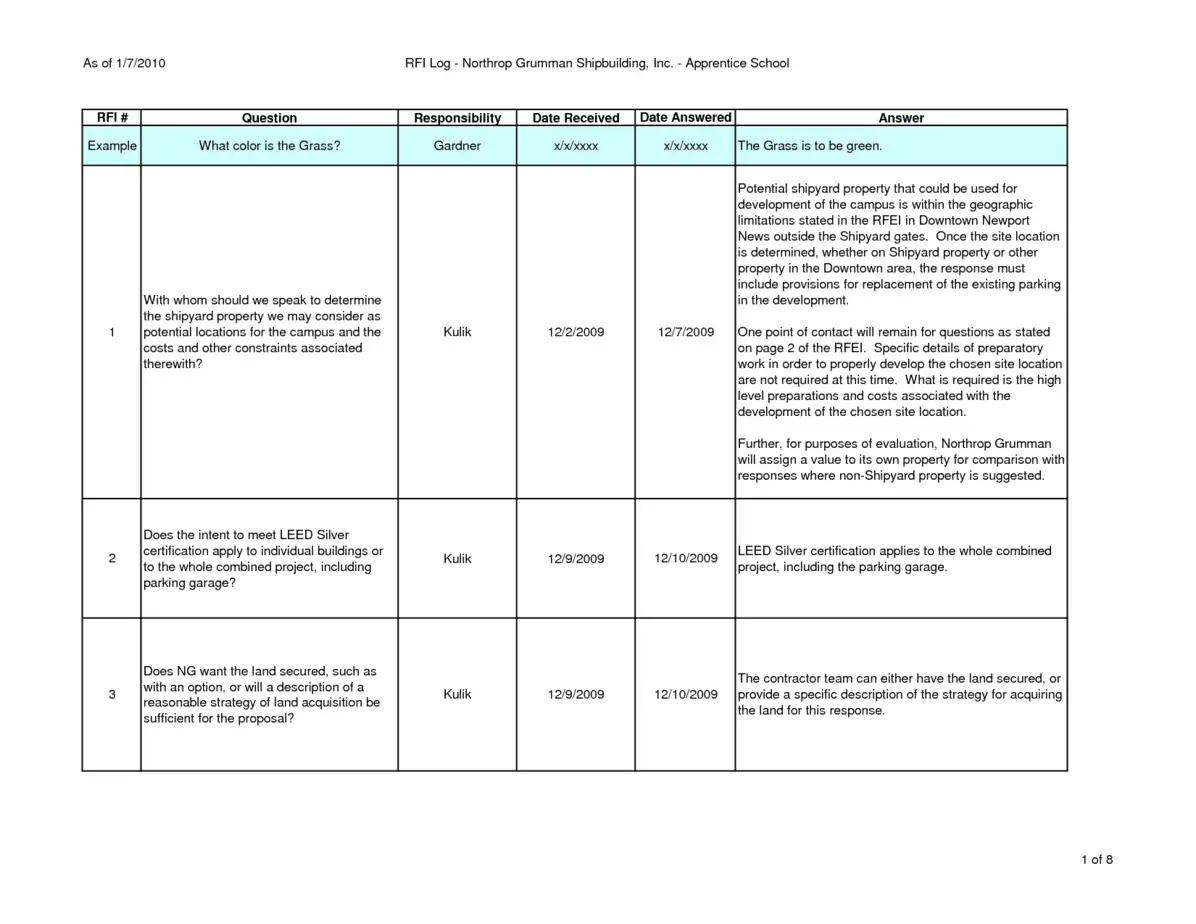
The following five examples are provided as images for reference and design ideas.
Construction RFI Example 1
Construction RFI Example 2
Construction RFI Example 3
Construction RFI Example 4

Construction RFI Example 5
How to Write a Construction RFI
- Choose a template and add your project name, number and contact details.
- Give the RFI a unique number so it can be tracked.
- Write a short, specific subject line, such as “Conflict between Sheet A-201 and Section 09 30 00”.
- Identify the drawing, detail or specification section involved.
- Describe the question or conflict as clearly and briefly as you can.
- Suggest a possible solution if you have one, and state any impact on cost or schedule.
- Set a reasonable response date that fits the schedule.
- Attach photos, sketches or marked-up drawings.
- Send the RFI to the correct person, and log it in your project tracker.
- When the answer arrives, record the response date and follow any changes it requires.
Tips for Better RFIs
- Ask only one question per RFI, so the answer is clear.
- Check the documents first. Do not send an RFI if the answer is already in the plans or specifications.
- Be specific with sheet numbers, grid lines and dimensions.
- Include visuals whenever possible.
- Follow up on overdue RFIs, since delays can affect the schedule.
- Keep a log of all RFIs with dates, status and responses.
Frequently Asked Questions (FAQs)
What does RFI stand for in construction?
RFI stands for request for information. It is a formal written question sent to clarify plans, specifications or other project details.
Who submits an RFI?
Usually the general contractor or a subcontractor submits it to the architect, engineer or owner. Buyers may also send RFIs to suppliers and vendors to gather information before ordering.
Are these construction RFI templates free?
Yes. All 8 templates are free. Three include downloadable Word files, and the other five are image examples that you can use as a reference when building your own form.
How long does it take to respond to an RFI?
It depends on the contract. Many projects specify a response time of a few working days to two weeks. State a due date on every RFI and follow up if it passes.
Does an RFI change the contract?
Not by itself. An RFI asks for clarification. If the answer changes the scope, cost or schedule, it may lead to a change order or other formal contract change, so review responses carefully.
How is an RFI different from a submittal?
An RFI asks a question. A submittal is a package that the contractor sends for review, such as shop drawings, product data or samples, to show that the work will meet the requirements.
Can I use these templates for non-construction projects?
Yes. The structure works for any project where you need to request information from a vendor or another party. Just change the wording to fit your industry.
Final Thoughts
A well-written RFI saves time, protects your budget and gives the whole project team a clear record of decisions. Start with one of these 8 free construction RFI templates, tailor it to your project and keep your questions clear, specific and well documented.