When work piles up, a schedule is the difference between staying in control and constantly reacting. A work schedule shows who is working, when, and on what, so tasks get done on time and nobody is surprised by a shift or deadline.
This page shares 8 free work schedule templates for weekly, monthly, and employee scheduling. You will also learn what to include, how to build a schedule step by step, and tips for keeping it fair and easy to follow.
What Is a Work Schedule?
A work schedule is a plan that lists working days, hours, shifts, and assigned tasks for one person or a team. Businesses use schedules to cover shifts and manage labor costs. Individuals use them to organize daily work, study, or personal projects. A good schedule fits the workload, respects breaks and time off, and is shared early enough for people to plan.
Benefits of Using Work Schedule Templates
- Better time management: See your whole week or month at a glance.
- Fair coverage: Make sure each shift has the right number of people.
- Fewer conflicts: Clear shift times reduce confusion and missed work.
- Higher productivity: Assigned tasks and deadlines keep everyone focused.
- Easy planning: Reuse a template every week or month and update only the changes.
Types of Work Schedules
| Type | Description | Best for |
|---|---|---|
| Fixed schedule | Same days and hours every week | Offices, regular shifts |
| Rotating schedule | Shifts change on a set cycle | Hospitals, factories, 24/7 operations |
| Flexible schedule | Employees choose start and end times within limits | Remote and creative work |
| Split shift | Work is divided into two parts with a break between | Restaurants, transit |
| On-call schedule | Workers are available when needed | Healthcare, IT support |
What to Include in a Work Schedule
- Employee or team member names
- Dates and days of the week
- Start and end times, or shift names
- Breaks and meal periods
- Job roles or assigned tasks
- Total hours per person
- Time off, holidays, and vacations
- Manager approval or notes
Note: Work hours, overtime, breaks, and predictive scheduling rules vary by state and country. Check local labor laws or consult HR or legal advice when scheduling employees.
Free Work Schedule Templates
Each download button opens the template’s original source on the provider’s website.
Monthly Work Schedule (Wide Row)
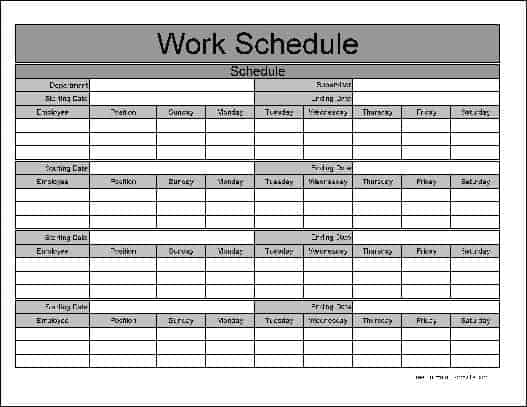

Simple Work Schedule Template
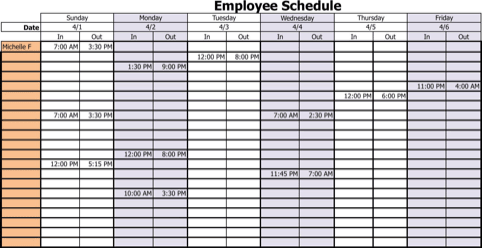
Work Schedule Templates in Word and Excel
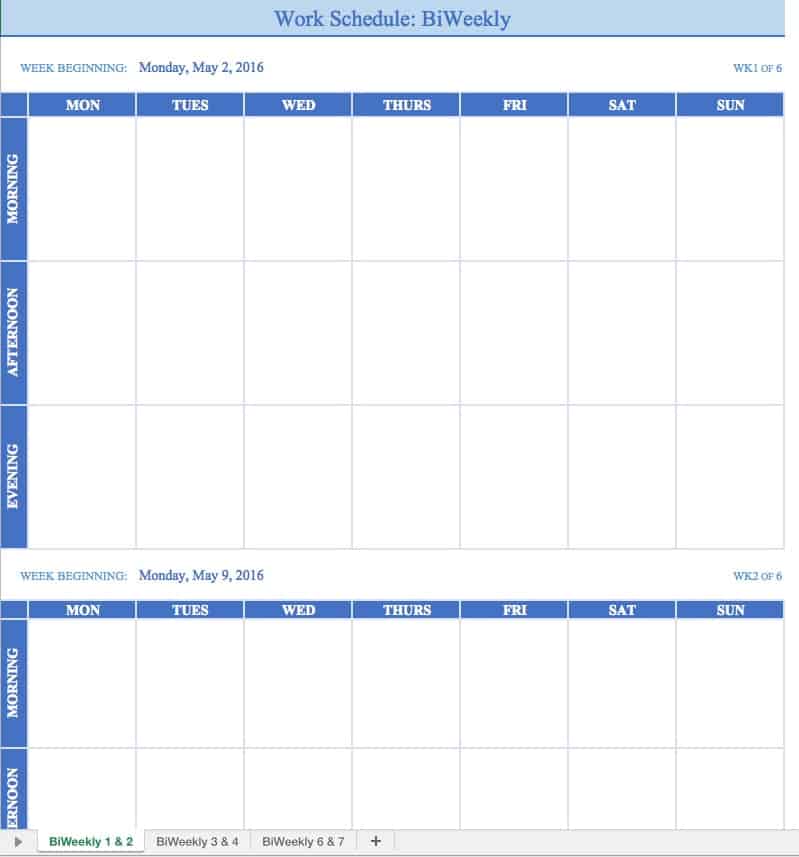
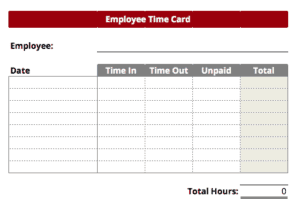
Employee Work Schedule Template
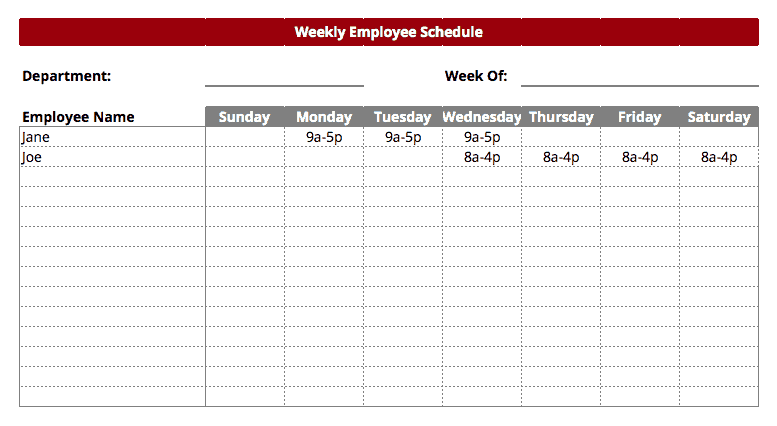
Free Printable Work Schedule
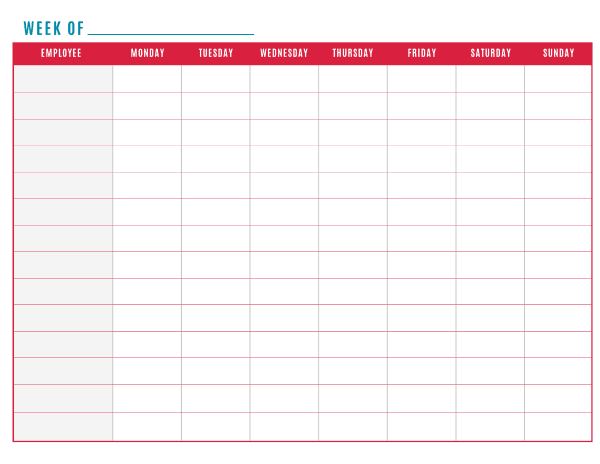
Weekly Work Schedule Template
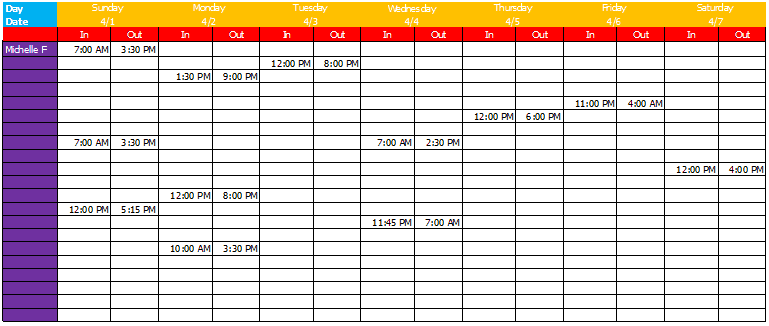
Printable Work Schedule (Large Format)
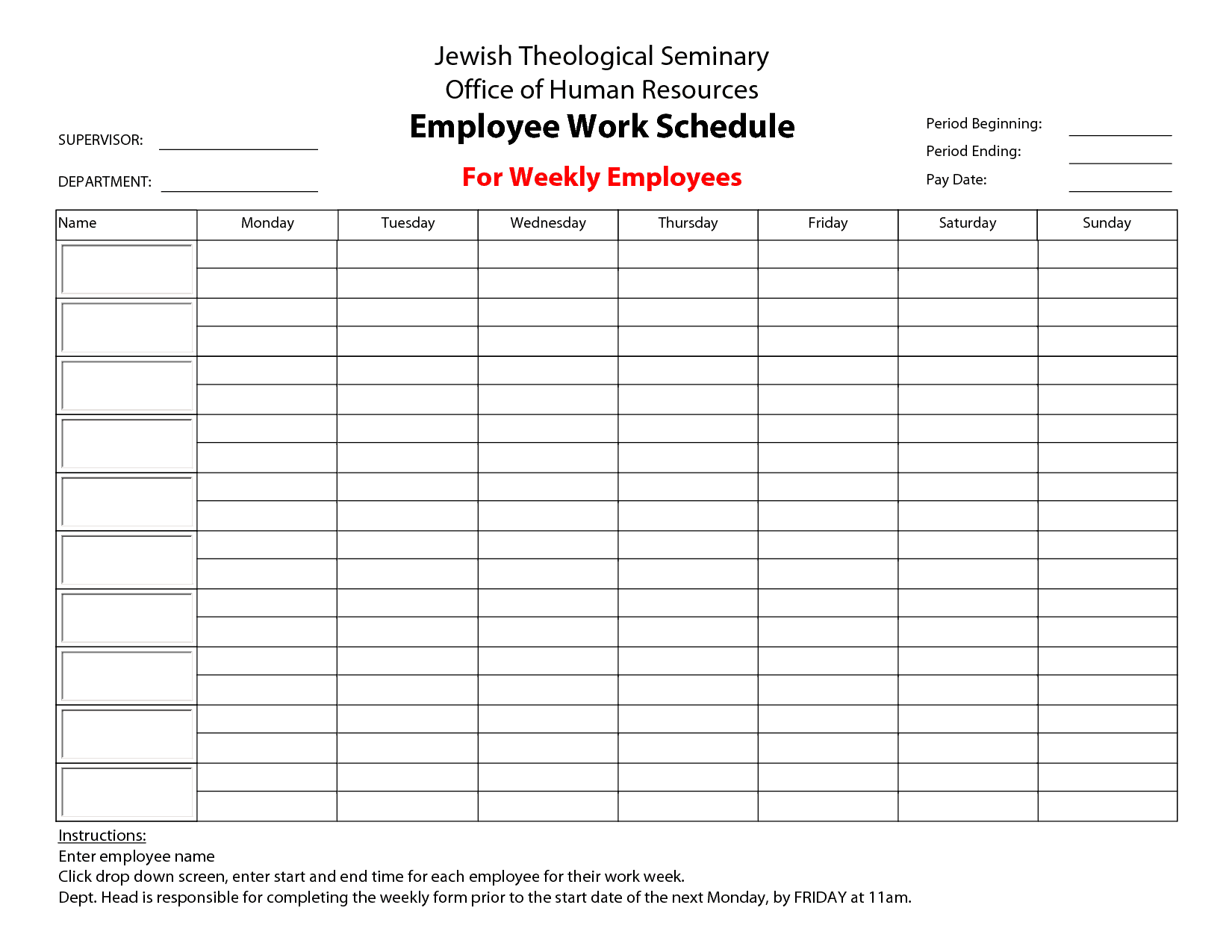
Employee Work Schedule Form
How to Make a Work Schedule
- Define coverage needs. Decide how many people you need each day and hour.
- Collect availability. Ask employees about their availability and time-off requests.
- Pick a template. Choose weekly, monthly, or shift-based layouts.
- Fill in shifts. Assign people fairly, balancing skills and hours.
- Add breaks and roles. Include meal breaks and job assignments.
- Check the rules. Confirm overtime, rest period, and labor law compliance.
- Share and confirm. Publish the schedule early and ask for confirmation.
- Adjust as needed. Note shift swaps and update the schedule quickly.
Tips for Better Scheduling
- Publish schedules at least one to two weeks in advance where possible.
- Rotate undesirable shifts fairly.
- Keep a backup list of people who can cover last-minute gaps.
- Color-code roles or departments for easier reading.
- For personal schedules, block time for deep work and breaks.
Frequently Asked Questions (FAQs)
What is a work schedule?
It is a plan showing when and where people work and which tasks they handle, usually laid out by day, week, or month.
How do I make a weekly work schedule?
List days across the top and employee names down the side, then fill in shift start and end times in each cell.
Are these work schedule templates free?
Yes. The templates listed here are free to view and download from their original sources.
Can I use a work schedule template in Excel?
Yes. Excel templates let you calculate total hours and copy formulas across weeks.
What is the difference between a work schedule and a timesheet?
A schedule plans future working time. A timesheet records the hours actually worked.
How far in advance should a schedule be posted?
Best practice is one to two weeks, and some places have laws requiring advance notice. Check your local rules.
How can I create a personal work schedule?
List your tasks, estimate the time each needs, and assign them to time blocks in a daily or weekly planner, leaving room for breaks and surprises.
Final Thoughts
A clear work schedule reduces stress and keeps work on track for you and your team. Pick a template above, fill in your shifts or tasks, and share it so everyone knows what to expect.



You must be logged in to post a comment.