An academic curriculum vitae (CV) is the document that opens doors to university positions, research roles, teaching jobs, fellowships and graduate programs. Unlike a short one-page resume, an academic CV gives a complete record of your education, research, publications, teaching experience, grants and professional service. This page offers 16 free academic CV templates in Word and PDF formats, including examples for professors, teachers, PhD candidates and fresh graduates, along with a practical guide to writing a CV that gets noticed.
What Is an Academic CV?
An academic CV is a detailed summary of your scholarly and professional achievements. It is used when applying for faculty positions, postdoctoral roles, research assistantships, teaching jobs, scholarships and admission to graduate school. Because academic hiring committees want to see the full picture of your work, an academic CV can run to two, three or even many more pages, depending on your career stage.
Academic CV vs. Resume
A resume is usually a one- or two-page summary tailored for a specific non-academic job, highlighting skills and recent experience. An academic CV is longer and more comprehensive. It lists every degree, publication, presentation, grant, award, course taught and professional membership. In many countries, including the UK, Europe and parts of Asia, the word CV is used for both, so always check the instructions in the job advertisement.
Free Academic CV Templates in Word and PDF
Choose a template that matches your career stage. All files are editable in Microsoft Word, so you can replace the sample text with your own details. Click Download under any template to save it.
Academic CV Template Word
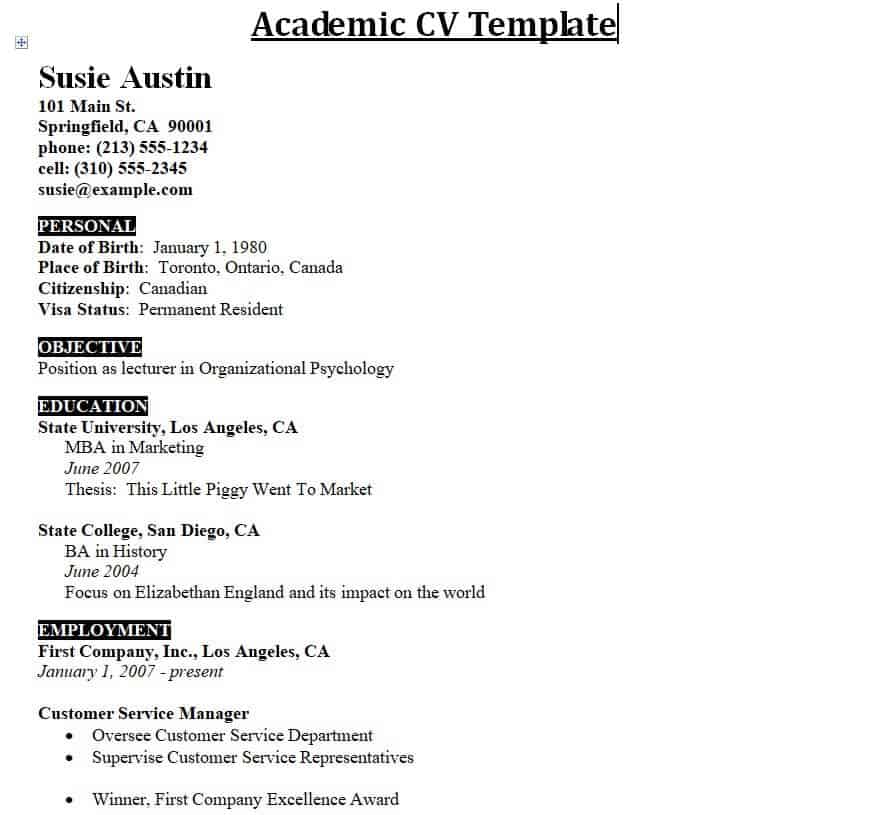
Official Academic CV Template
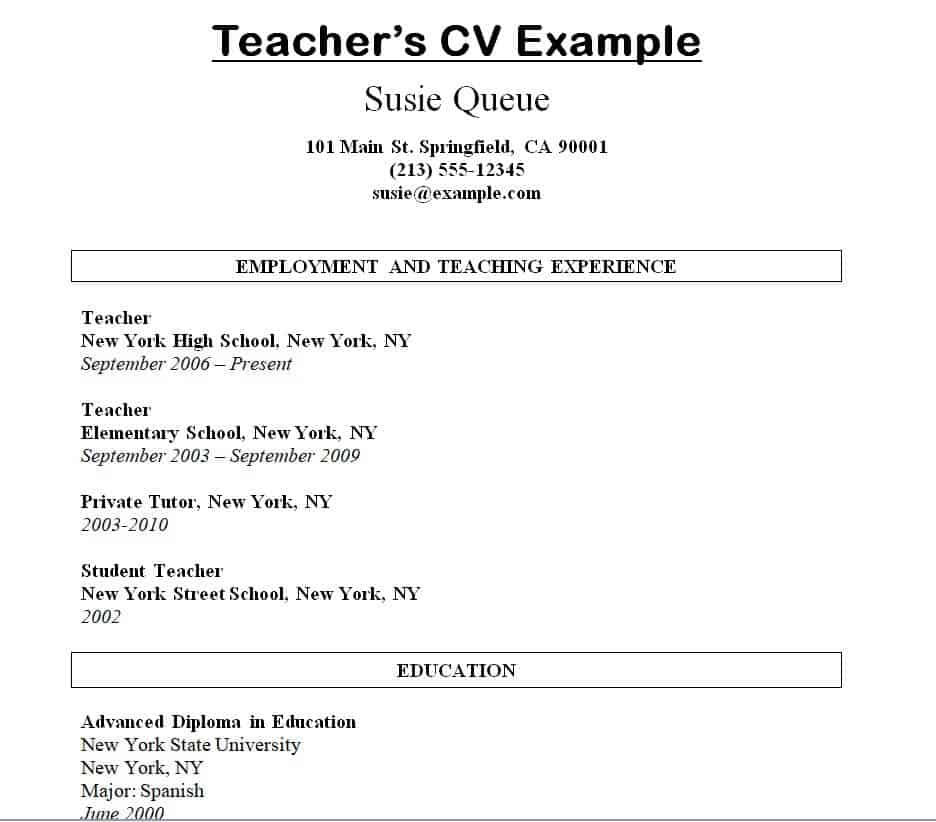
Teacher’s CV Example in MS WORD
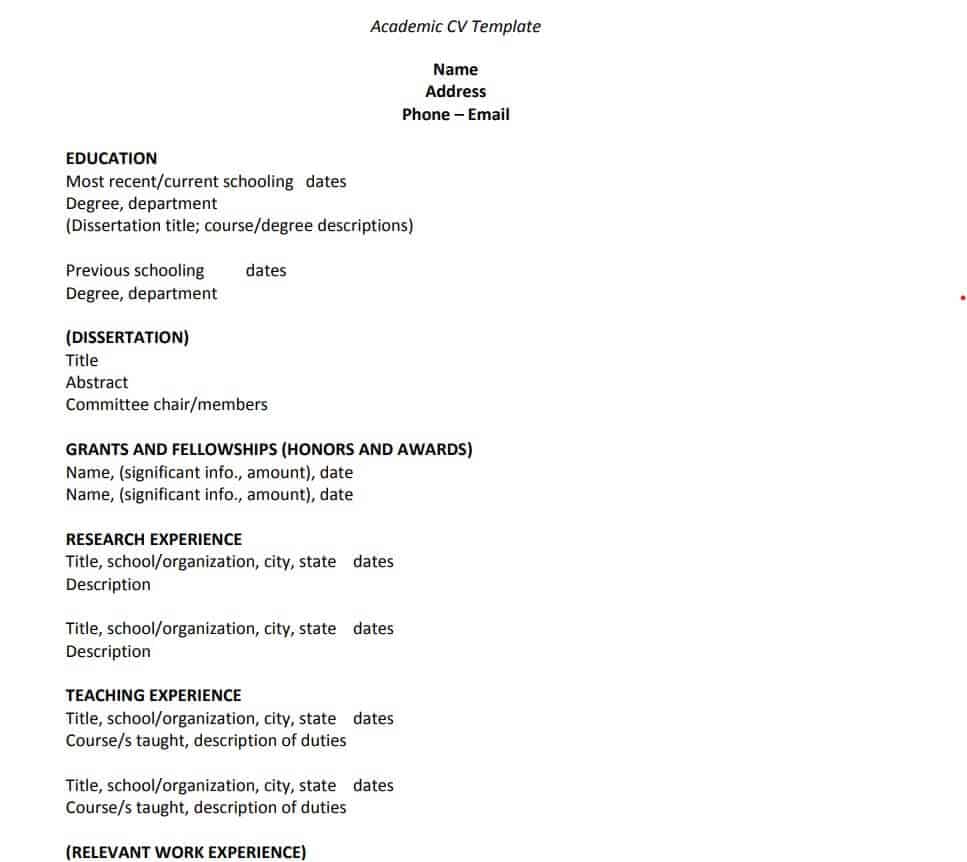
Academic CV Template PDF
Academic Careers CV Template
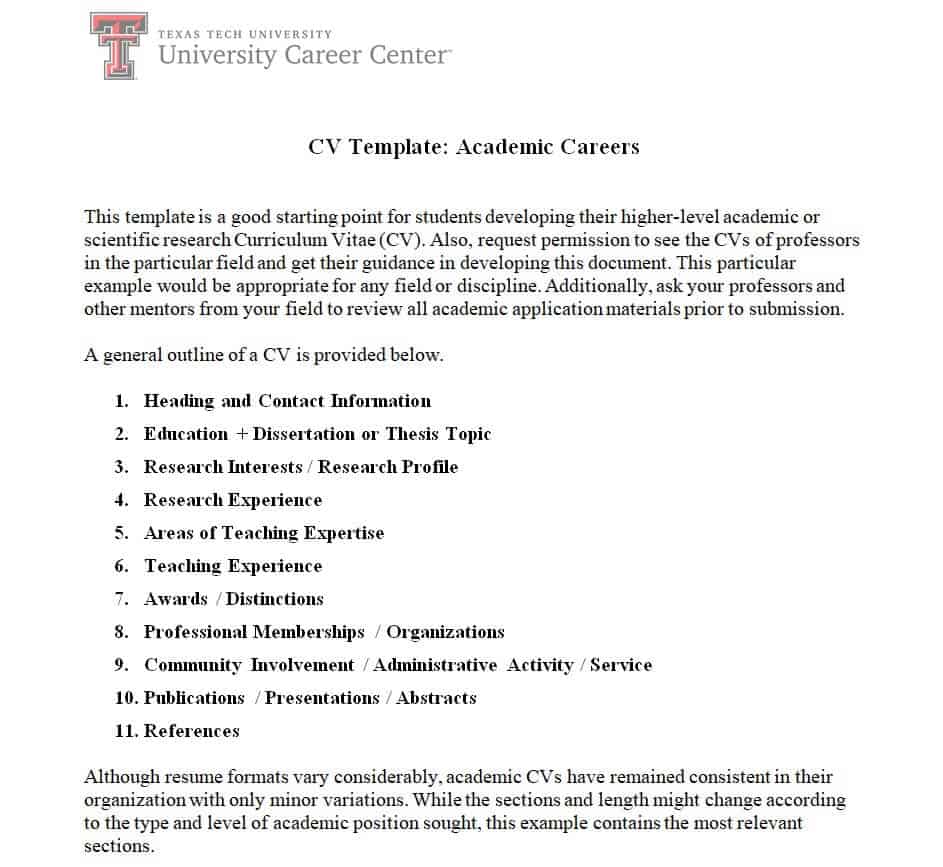
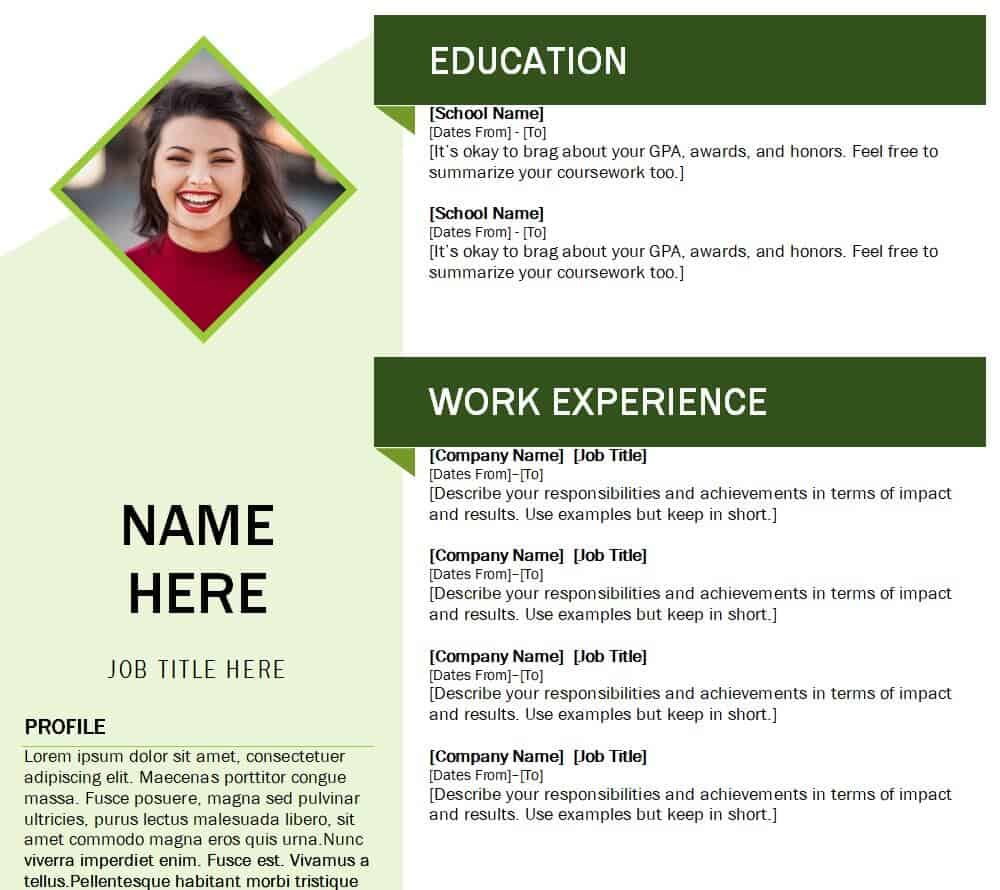
Special Academic CV Sample
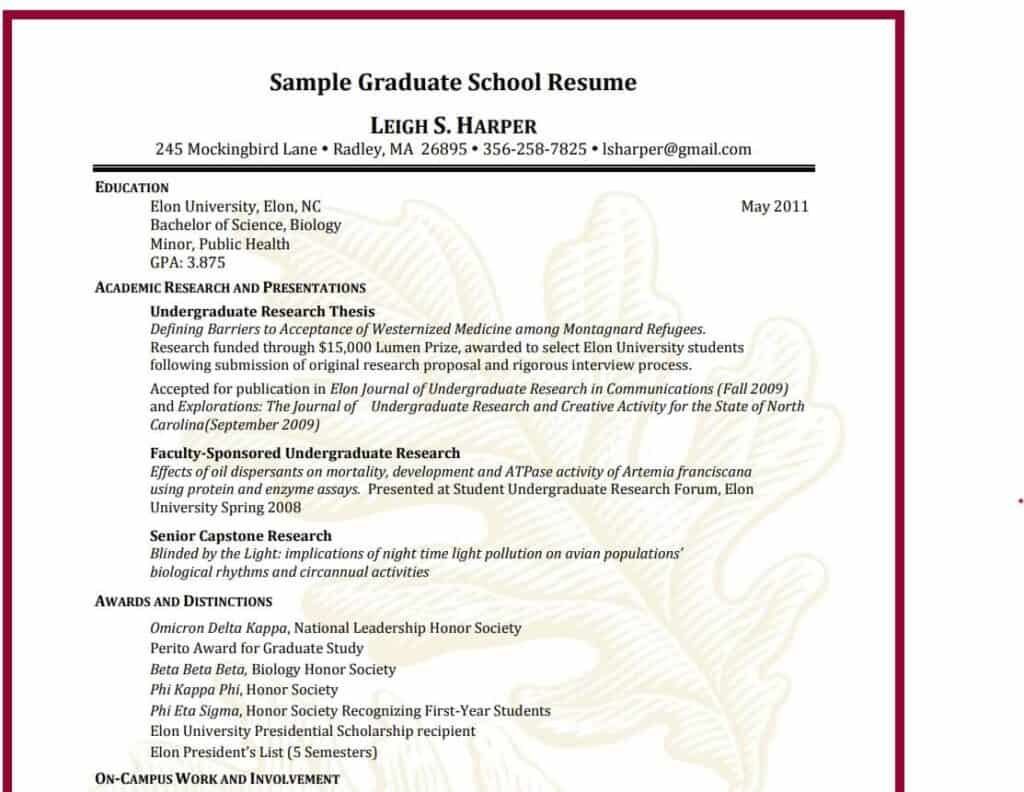
Sample Graduate School Resume in PDF Format
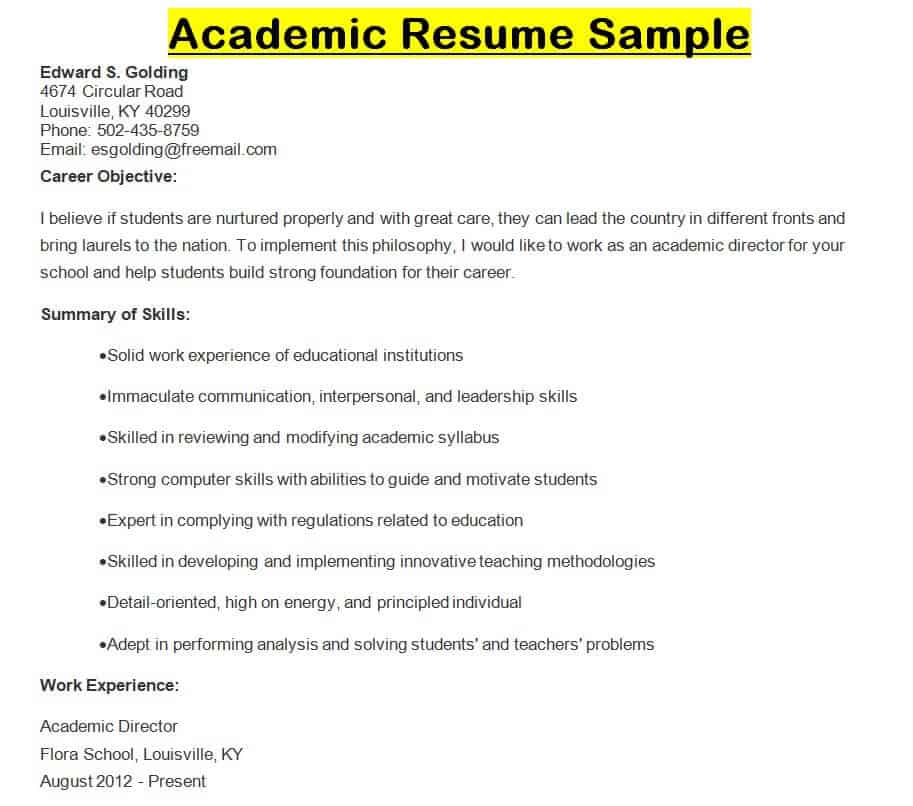
Practical Academic Resume Sample in DOC Format
Standard Academic CV Template Layout
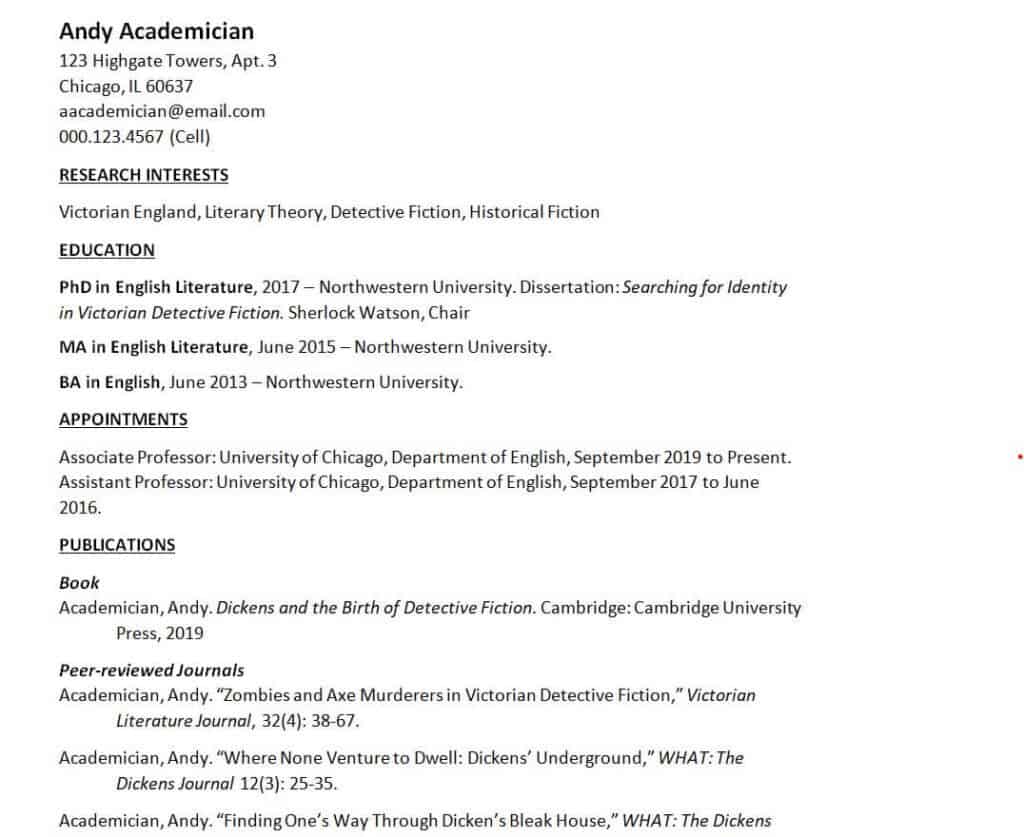
Professor’s Academic CV Example MS WORD
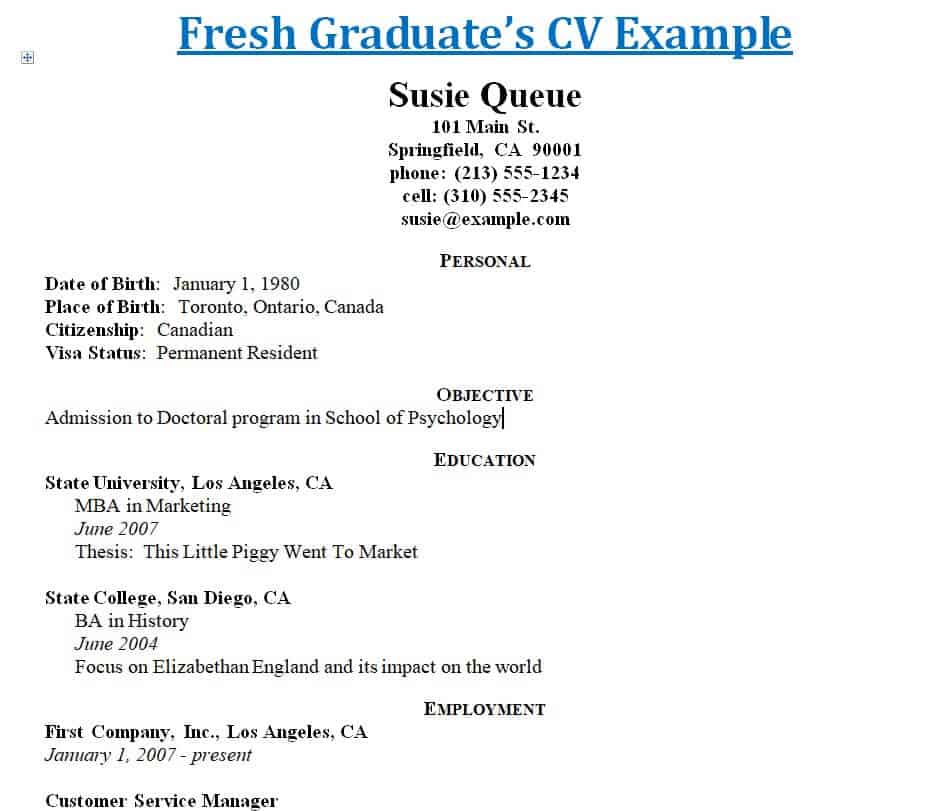
Fresh Graduate’s CV Example
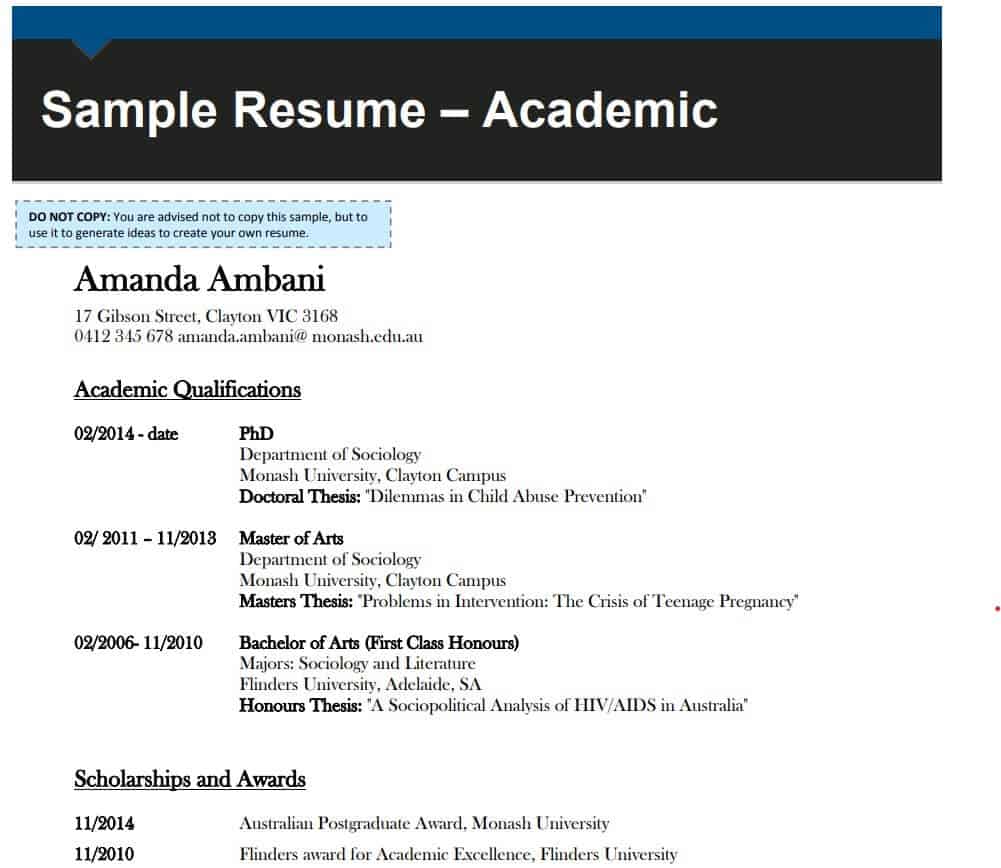
Sample Academic Resume Printable
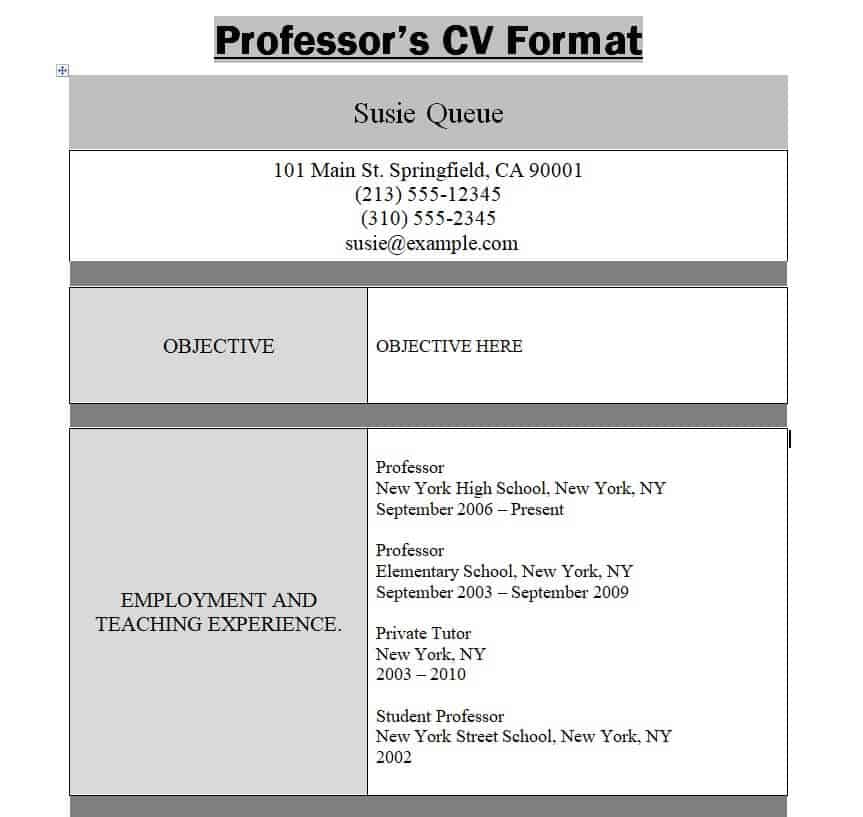
Free Editable Professor’s CV Format
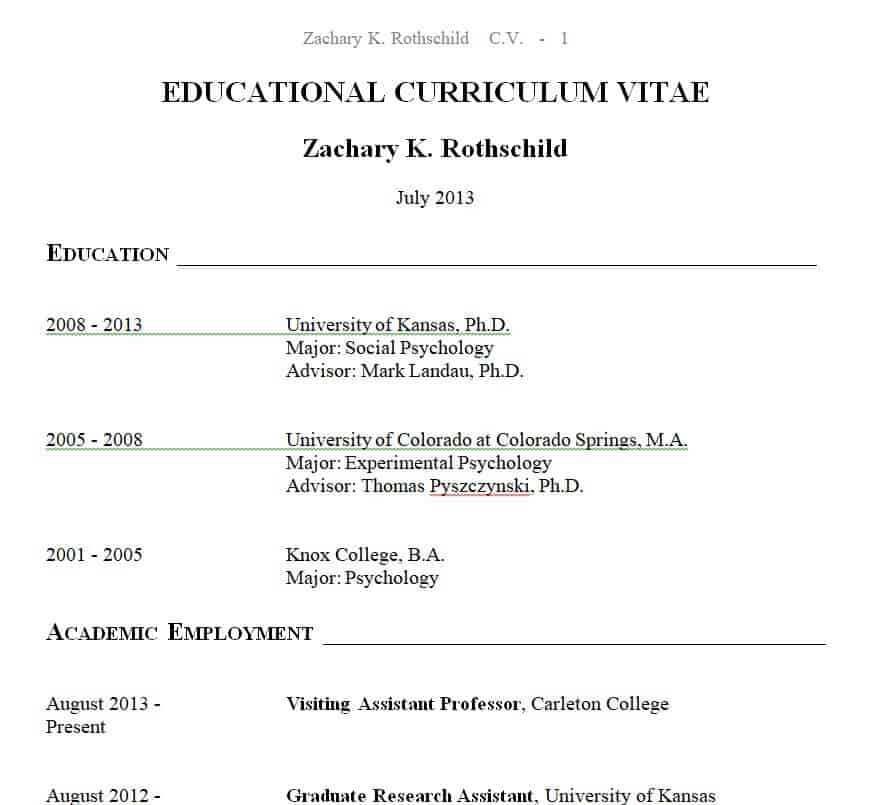
Practical Educational CV Template WORD
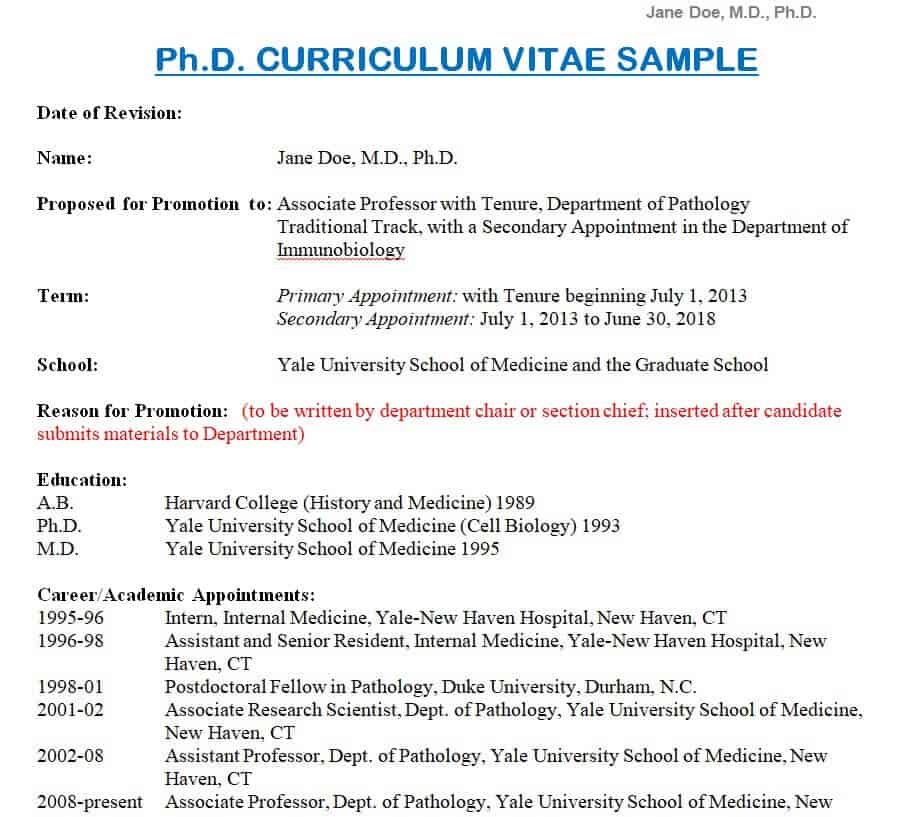
Ph.D.’s Official CV Sample
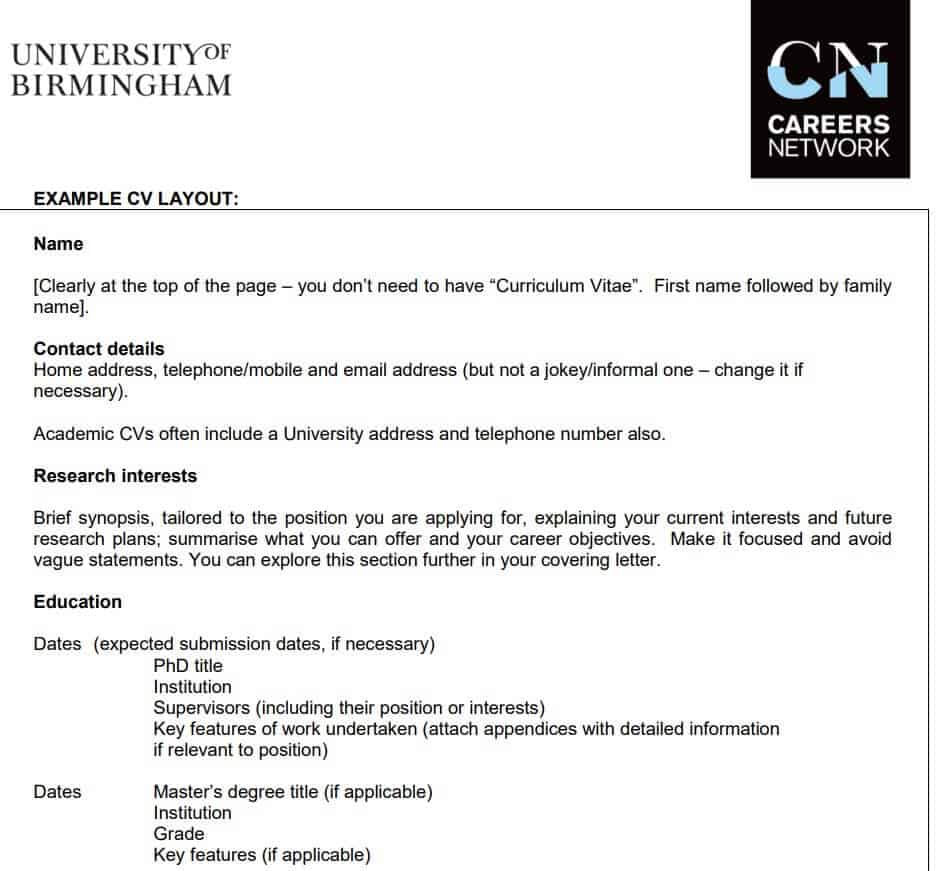
Example Academic CV Layout
What to Include in an Academic CV
- Contact information: full name, professional email, phone number, institutional affiliation and a link to your academic profile or website.
- Personal profile or research statement: a short paragraph summarizing your research interests and career goals.
- Education: degrees in reverse chronological order, with institution, year and, where relevant, dissertation title and advisor.
- Academic and professional experience: positions held, institutions, dates and key responsibilities.
- Publications: journal articles, books, chapters and conference papers in a consistent citation style.
- Grants, fellowships and awards: funding received, scholarships and honors.
- Teaching experience: courses taught, levels, student numbers if relevant, and any curriculum development.
- Conference presentations and invited talks: title, event and date.
- Professional service and memberships: committees, peer review, editorial work and associations.
- Skills: languages, technical tools, laboratory methods or software.
- References: two or three referees, or a note that they are available on request.
How to Write an Academic CV Step by Step
- Read the job or program requirements. Note the priorities, such as research, teaching or funding, and the requested format and length.
- Choose a template. Download one of the samples above that matches your career stage, such as fresh graduate, PhD or professor.
- Start with your education. List degrees in reverse chronological order with dates and institutions.
- Add experience and achievements. Include positions, teaching, research projects and results, using action verbs like designed, led, published and taught.
- Organize publications carefully. Use a single citation style and separate peer-reviewed work from other outputs.
- Tailor the order of sections. Put the most relevant section first, such as teaching for a teaching post or publications for a research post.
- Format for readability. Use consistent fonts, headings and spacing, with plenty of white space and page numbers.
- Proofread and update. Check dates, names and spelling, and ask a mentor to review it before you apply.
Tips for a Strong Academic CV
- Be accurate; hiring committees often verify publications and grants.
- Use reverse chronological order within each section, with the most recent items first.
- Keep formatting simple and professional, avoiding photos or heavy graphics unless required.
- Highlight your most important contributions and quantify results where possible, such as grant amounts or citation counts.
- Update your CV every semester so it stays current.
- Save a PDF version to preserve formatting when applying online.
- Avoid unnecessary personal details unless the country or institution expects them.
Frequently Asked Questions (FAQs)
How long should an academic CV be?
Early-career applicants usually have two to three pages, while established professors may have many more. Focus on relevance and clarity, and follow any length guidance from the institution.
What is the difference between a CV and a resume in academia?
A resume is a short, targeted summary, while an academic CV is a comprehensive record of your education, research, publications, teaching and service. Academic hiring typically requires a CV.
Are these academic CV templates free?
Yes. All templates on this page are free to download and edit in Microsoft Word. Click the Download button below your chosen template, unzip the file and start typing.
Can a fresh graduate use an academic CV?
Yes. If you are applying for graduate school, a research assistantship or a teaching role, a fresh graduate CV can highlight your education, projects, internships, coursework, awards and skills. The fresh graduate example above is a good starting point.
What should I put in the personal profile of an academic CV?
Write two to four sentences that state your field, key strengths, research interests and the type of position you seek. Tailor it to each application and avoid vague claims that are not supported by your experience.
Should I include references on my academic CV?
Many institutions expect two or three academic referees with names, titles and contact details, though some ask for references separately. Always get permission from your referees first.
How do I list publications on an academic CV?
Use a consistent citation style such as APA, MLA or the style common in your field. List the most recent first, bold your name if you like, and separate peer-reviewed articles, books, chapters and conference papers under clear subheadings.
Final Thoughts
Your academic CV is often the first impression a hiring committee or admissions panel has of you. Choose a clean template, tailor it to each opportunity, and keep it accurate and up to date. With the right structure and clear presentation, your CV will show the full value of your academic journey and help you stand out.

You must be logged in to post a comment.