Looking for a reward chart template that helps your child build good habits? This page offers free, printable reward chart templates, including colorful chore charts, star charts, potty training charts, and behavior charts for toddlers, preschoolers, and school-age kids. You will also learn how to set one up, which rewards work best, and how to keep your child motivated without turning the chart into a battle.
A reward chart is one of the simplest parenting tools available. It shows children exactly what is expected each day and gives them a visible way to track their progress. When used with praise and consistency, it can make routines such as brushing teeth, making the bed, and doing homework feel more fun and less like a fight.
What Is a Reward Chart?
A reward chart, sometimes called a chore chart, star chart, or sticker chart, is a simple table that lists tasks or goals and lets a child mark each one when it is completed. After a set period, such as a day or a week, the child earns a reward if enough boxes are checked. Because kids can see their progress, the chart turns abstract expectations into something concrete and satisfying.
Reward charts work best for specific, observable behaviors, like brushing teeth, packing a school bag, feeding a pet, or staying in bed until morning. They are less effective for vague goals like “be good.” The clearer the task, the easier it is for a child to succeed.
Find Free Reward Chart Templates Below
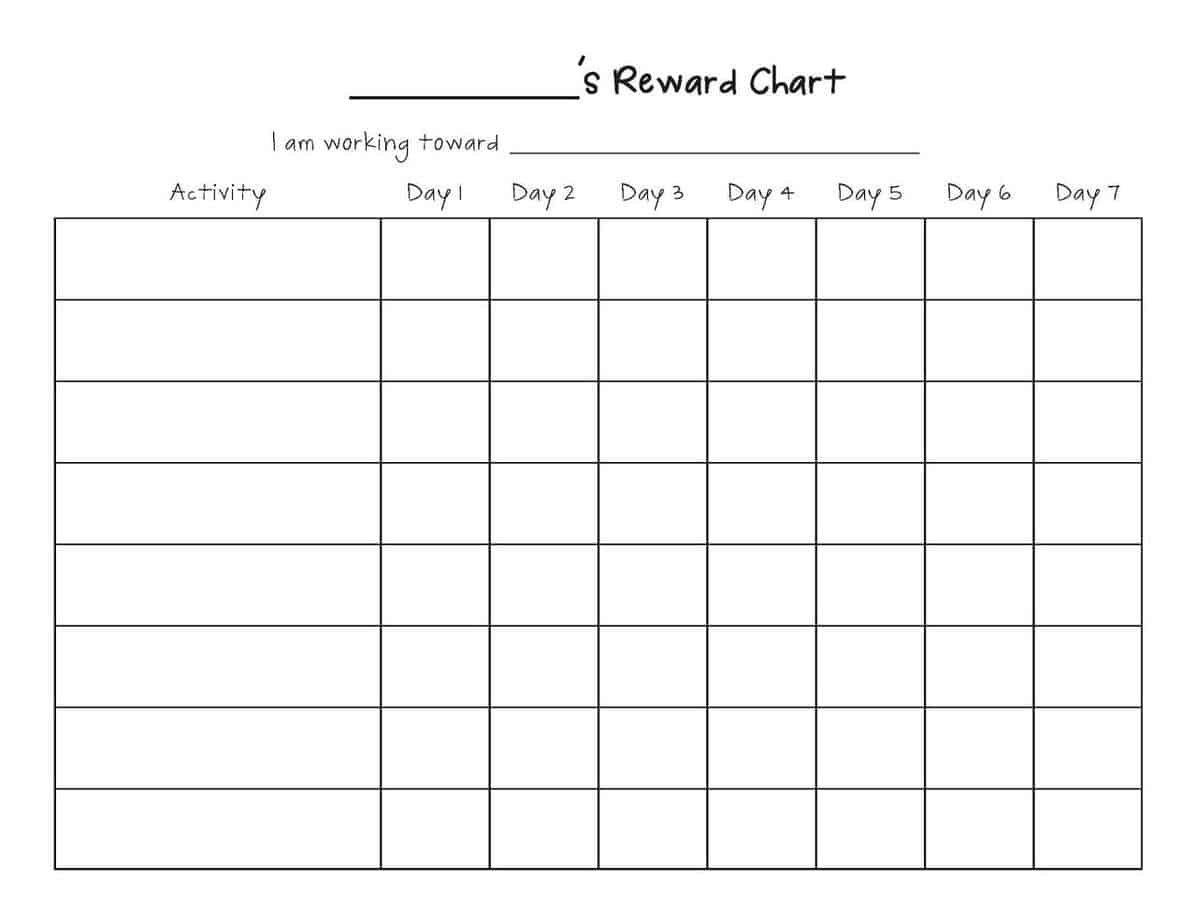
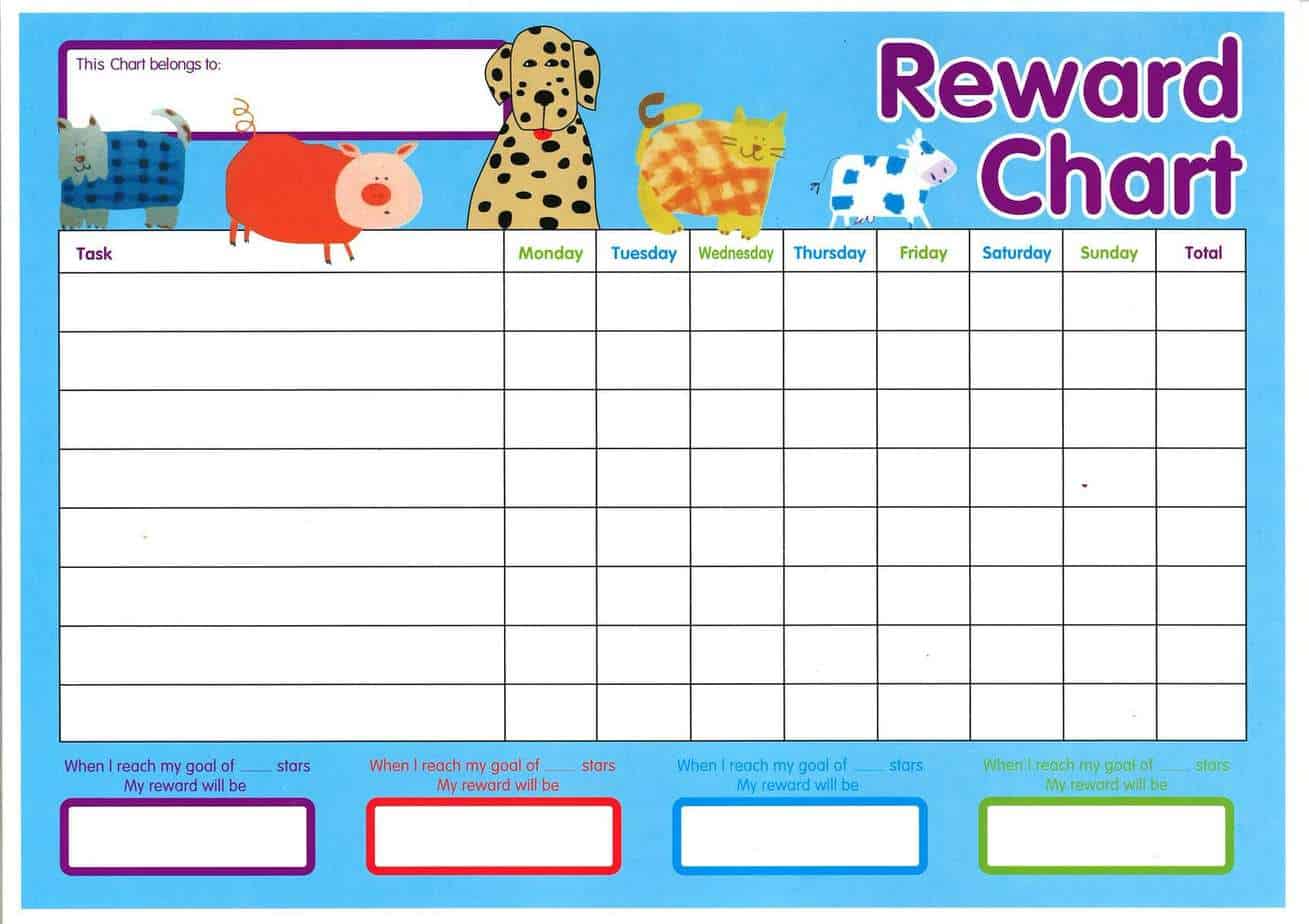
Browse the designs below and click the download button to open or print your favorite. Choose a chart with a theme your child loves, since a chart they enjoy looking at is a chart they will actually use.



How to Make a Reward Chart Step by Step
- Pick two to five goals. Too many tasks overwhelm children. Start with the routines that matter most, such as brushing teeth, getting dressed, tidying toys, and bedtime.
- Involve your child. Let them choose stickers, colors, or the theme. Ownership boosts motivation.
- Choose a simple layout. A grid with days across the top and tasks down the side is easy to read at any age. Use pictures for children who cannot read yet.
- Decide on the reward. Agree in advance on what the child will earn and how many stars or checkmarks are needed.
- Print and display it. Put the chart at your child’s eye level in a place they see every day, such as the kitchen or their bedroom.
- Mark progress right away. Give the star or sticker as soon as the task is done, and pair it with specific praise.
- Review and refresh. After a few weeks, update the goals or design so the chart stays interesting.
Reward Chart Ideas by Age
Toddlers (2 to 3 years): Focus on one or two simple goals, like potty use or putting toys in a basket. Use big stickers and immediate rewards. Preschoolers (4 to 5 years): Add short routines such as getting dressed, brushing teeth, and feeding a pet. School-age kids (6 to 10 years): Include homework, reading time, and household chores, and consider a weekly instead of daily reward. Pre-teens: Use the chart to track responsibilities and earn privileges, such as extra screen time or a family outing, and let them help design the system.
Good Reward Ideas That Are Not Expensive
Rewards do not need to cost money. Many children respond well to extra bedtime stories, choosing the family movie, a trip to the park, baking together, a special breakfast, or one-on-one time with a parent. Small prizes, like a new book or a sticker sheet, can also work. Experts often suggest balancing tangible prizes with praise and experiences, so children learn to value the habit itself and not only the prize.
Tips to Make Reward Charts Work
- Keep goals realistic and age-appropriate so your child can succeed often.
- Focus on positive behaviors to start, rather than a list of things not to do.
- Be consistent. Mark the chart every day, even when you are busy.
- Never take away earned stars as a punishment, since that can discourage effort.
- Celebrate effort and improvement, not just perfection.
- Gradually fade the chart as habits become automatic.
Reward Chart Template FAQs
What is a reward chart template?
It is a ready-made layout you can print or edit to track a child’s tasks and award stars, stickers, or checkmarks for completing them.
At what age can I start using a reward chart?
Many parents start around age two or three with simple picture-based charts. The tasks and rewards become more detailed as children grow.
How many tasks should be on a reward chart?
Two to five tasks are usually enough. Too many can feel overwhelming and lower motivation.
Should reward charts use money or toys as prizes?
You can, but many parents prefer experiences, privileges, and small treats. The best reward is one your child truly wants and that you can deliver reliably.
How long should I keep using a reward chart?
Use it until the habit is steady, often several weeks to a few months. Then reduce the rewards and rely more on praise.
What if my child loses interest in the chart?
Refresh the design, change the rewards, or add a new goal. Involving your child in the update often revives interest.
Can I use reward charts in the classroom?
Yes. Teachers use them for attendance, participation, reading goals, and positive behavior, either for individual students or the whole class.



You must be logged in to post a comment.